

Blotto
"Stan fakes receiving a telegram so he can go to a club with Ollie and a bottle of his."
Keys: Space play/pause · ←/→ 10s · F fullscreen · M mute · </> speed
About this film
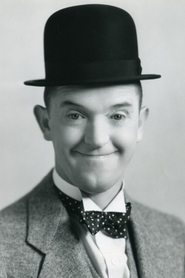
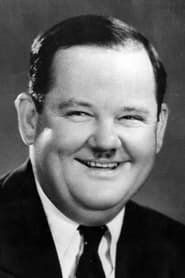
Stan fakes receiving a telegram so he can go to a club with Ollie and a bottle of his unsuspecting wife's liquor, but she overhears his plans.
Cast & crew
More films like this
More Comedy films
View all →







More from James Parrott
View all →

More about this film
About the production
Release dateFebruary 8, 1930
ProductionHal Roach Studios, Metro-Goldwyn-Mayer (MGM)
Filmed inHal Roach Studios, Culver City, California, USA
Originally released as a three-reel short, but the version most commonly seen today is the 1937 two-reel reissue. This reissue removed approximately one reel of material to comply with stricter Hays Office censorship codes and added a background music score that was absent in the 1930 original. The title 'Blotto' is a British slang term for being extremely intoxicated, which was still in common use in the 1930s. Notably, this is one of the few films where Stan is the one who is married while Ollie is a bachelor. The production also filmed full-length foreign language versions (Spanish and French) simultaneously, featuring different supporting actresses for the role of the wife.
Themes
ProhibitionDomestic ConflictDeceptionMale BondingInfectious Laughter
Themes & topics
ProhibitionDrunkennessTelegramNightclubShotgunHenpecked HusbandTeaPrank
Historical background
Made in 1930, in United States, under James Parrott, Blotto belongs to comedy film filmmaking as studio systems and national cinemas competed for audiences. Blotto is a 1930 American pre-Code comedy film directed by James Parrott and starring Stan Laurel and Oliver Hardy.
Why this film matters
Within comedy film history, James Parrott's name attaches to the work; 1930 film by James Parrott; The short was produced by Hal Roach and originally distributed by Metro-Goldwyn-Mayer..
Making of
The production of 'Blotto' was part of Hal Roach's ambitious effort to produce foreign-language versions of Laurel and Hardy shorts to maintain their international popularity during the transition to sound. Because dubbing technology was primitive, the actors had to perform the scenes multiple times in different languages, often reading their lines from phonetic cue cards hidden off-camera. This resulted in the foreign versions often being longer and containing different gags. The nightclub set was one of the more elaborate sets built at the Roach studio at the time, designed to accommodate the large-scale 'Rainbow Club' sequences. Director James Parrott, a frequent collaborator, encouraged the duo to improvise, leading to the extended laughing sequence that was largely unscripted in its duration.
What critics said
Contemporary reviews of Blotto are sparse in open sources; later catalog entries chiefly summarize plot and credits.
Did you know?
- First instance of Laurel and Hardy's famous 'hysterical laughing' routine, which became a staple of their comedy.
- The original 1930 version contained no background music except for the opening and closing themes; the music heard in modern prints was added for the 1937 reissue.
- George Stevens, who later became a Oscar-winning director (A Place in the Sun, Giant), served as the cinematographer.
- The Spanish version, titled 'La Vida Nocturna,' features a much longer sequence of an exotic dancer at the Rainbow Club.
- Anita Garvin, who played Mrs. Laurel, stated in interviews that the laughing scene was one of the greatest comedy sequences ever filmed.
- The 1937 reissue cut a scene where Stan uses an electric fan to get 'fresh air' because the original negative was damaged.
- A primary inspiration for the 'The Honeymooners' episode where Ralph and Norton think they are getting drunk on grape juice.
- In the Spanish version, Linda Loredo plays the wife, while Georgette Rhodes plays her in the French version.
Visual style
The cinematography by George Stevens is functional but effective, utilizing the static camera setups typical of early sound films to ensure clear audio recording. However, Stevens manages to inject some visual flair during the nightclub sequences, using lighting to create the atmosphere of a bustling 1930s 'speakeasy.' The use of close-ups during the laughing scene is particularly effective in capturing the nuanced facial expressions of Stan and Ollie.
Innovations
A notable example of the 'Multi-Language Version' (MLV) production technique. It also features early examples of sound synchronization for comedic effect, such as the timing of the shotgun blast and the destruction of the taxi cab at the end of the film.
Music
The original 1930 release featured only the 'Dance of the Cuckoos' theme by Marvin Hatley. The 1937 reissue added a full orchestral score featuring compositions by Leroy Shield, which became the 'standard' sound for Laurel and Hardy films. The Rainbow Club scene features a baritone singer (Frank Holiday) performing a melancholic song that ironically moves Stan to tears.
Famous quotes
Stan: 'She's so dumb she'll never know the difference.'
Ollie: 'I've got a table reserved at the Rainbow Club... it's opening tonight.'
Mrs. Laurel: 'So, you're having a good time, are you?'
Ollie: 'We're just having a little business celebration, my dear!'
Memorable scenes
- The 'Laughing Fit' at the Rainbow Club where Stan and Ollie become hysterically convinced they are drunk on tea.
- The opening scene where Stan tries to hide his phone conversation from his wife using a series of transparent lies.
- The final sequence where Mrs. Laurel destroys the boys' getaway taxi with a single shotgun blast.
- The scene where Stan is moved to tears by a sad singer while 'intoxicated'.
What audiences thought
Audiences in 1930 responded enthusiastically to the film's relatable 'henpecked husband' theme and the slapstick climax. The film was a significant hit for Hal Roach and MGM, further cementing Laurel and Hardy as the premier comedy team of the early sound era. Today, it remains a favorite at 'Sons of the Desert' (the international Laurel and Hardy appreciation society) meetings, often screened for its high energy and ending.
Film connections
Influenced by
- Vaudeville sketches
- Early silent slapstick
- Leo McCarey's situational comedy
This film influenced
- The Honeymooners (TV Series)
- The 13th Letter (1951)
- Various sitcom 'drunk' tropes
Film restoration
The original 1930 three-reel version is considered partially lost or 'non-extant' in its complete form. The version most commonly available is the 1937 censored reissue. However, the Spanish version 'La Vida Nocturna' has been preserved and provides a glimpse into the missing scenes from the English original.
Where to watch
- YouTube (Public Domain)
- Amazon Prime Video (via Laurel and Hardy collections)
- DVD/Blu-ray: 'Laurel and Hardy: The Essential Collection'