'Blue Blazes' Rawden
"William S. Hart's lumberjack faces a dance-hall feud."
Keys: Space play/pause · ←/→ 10s · F fullscreen · M mute · </> speed
About this film
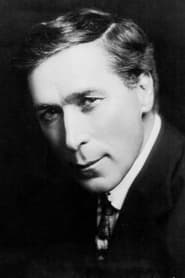
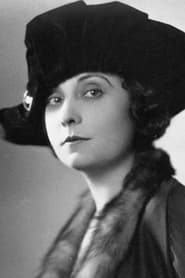
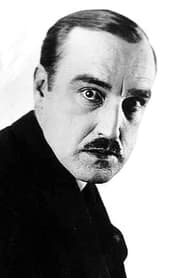
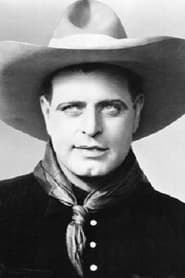
In the remote North woods, lumberjack 'Blue Blazes' Rawden (William S. Hart) finds himself in a deadly conflict with crooked dance hall owner 'Ladyfingers' Hilgard (Robert McKim) over the affections of the beautiful Babette DuFresne (Maude George). When their confrontation turns fatal and Hilgard is killed, Rawden's life is forever changed by guilt and regret. When Hilgard's unsuspecting mother and younger brother Eric arrive in town to settle his affairs, Rawden creates an elaborate fiction, portraying Hilgard as a well-loved community leader who died of natural causes to spare the family pai…
Cast & crew
More films like this
More Western films
View all →

More from William S. Hart
View all →
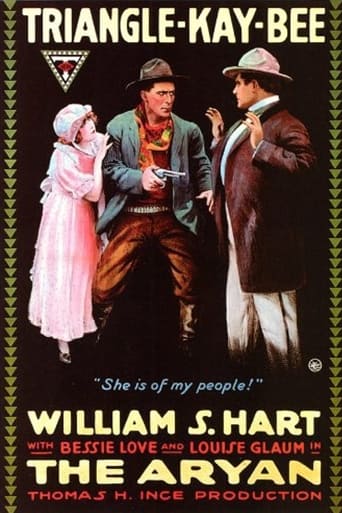
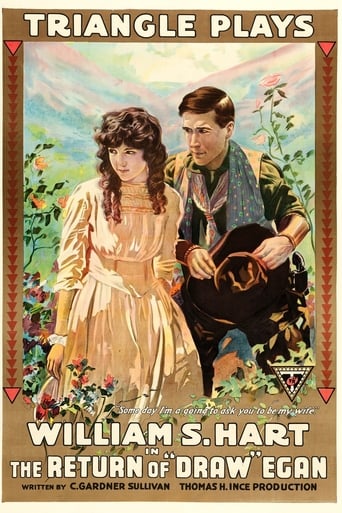

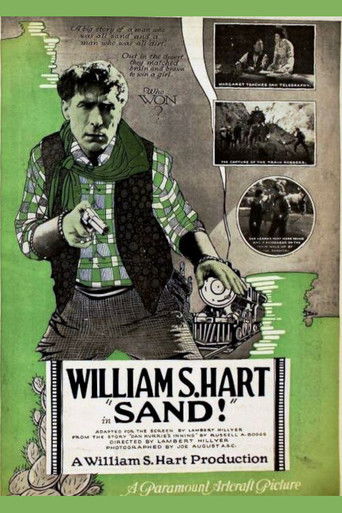
More about this film
About the production
Release dateMarch 17, 1918
ProductionWilliam S. Hart Productions
Filmed inBig Bear Lake, California, San Bernardino Mountains, California
William S. Hart was known for his insistence on authenticity in his Westerns, often filming on location in rugged terrain rather than on studio backlots. For the production, Hart and his crew endured harsh conditions in the mountainous regions of California to achieve the realistic North woods atmosphere. The production utilized real lumberjacks as extras and authentic logging equipment to enhance the film's verisimilitude. Hart was deeply involved in all aspects of production, from script development to final editing, maintaining complete creative control over his films.
Themes
Themes & topics
Historical background
'Blue Blazes' Rawden (1918) reached screens through William S. Hart Productions. Exhibitors of the time built silent-era bills that mixed shorts, features, and live acts, so a clear premise helped 'Blue Blazes' Rawden travel between cities and exchange markets.
Why this film matters
Archivists and revival programmers still cite 'Blue Blazes' Rawden (1918) when tracing studio habits, casting pools, and the visual rhetoric audiences once took for granted. Even modest surviving prints help map how 'Blue Blazes' Rawden fit beside competing releases of its day.
Making of
William S. Hart was a meticulous filmmaker who demanded authenticity in every aspect of his productions. For 'Blue Blazes' Rawden,' he insisted on filming in actual mountain locations rather than studio sets, requiring cast and crew to work in difficult weather conditions. Hart was known for his method approach to acting, often living in character during filming. He maintained a stable of regular actors, including Maude George and Robert McKim, who understood his particular style and vision. The film's production was typical of Hart's work: efficient, focused, and completed in a matter of weeks rather than months. Hart was heavily involved in the editing process, often working late into the night to ensure the final cut matched his vision. His attention to extended emotional sequences and dramatic pauses was unusual for the time but became a signature element of his films.
What critics said
Trade coverage around 1918 discussed 'Blue Blazes' Rawden for pacing, clarity, and program fit rather than blockbuster grosses. Later writers value it as evidence of period style and as a reference point beside other films from the same era.
Did you know?
- This was one of over 60 films that William S. Hart directed and starred in during his career, establishing him as one of the first major Western film stars.
- The nickname 'Blue Blazes' was a common expression in the early 20th century meaning 'hell' or 'damnation,' reflecting Hart's tendency to give his characters colorful, authentic frontier names.
- William S. Hart was 54 years old when he made the production, yet continued to perform his own stunts and action sequences.
- The film's theme of a flawed protagonist seeking redemption became a hallmark of Hart's Westerns, distinguishing them from the more simplistic good-versus-evil narratives common in later Westerns.
- Hart's production company was one of the first star-owned production companies in Hollywood, giving him unprecedented creative control.
- The character of 'Ladyfingers' Hilgard was played by Robert McKim, who frequently appeared as Hart's antagonist in multiple films.
- The dance hall scenes were filmed in a specially constructed set that replicated the rough-hewn establishments common in logging towns of the era.
- Hart was a former Shakespearean actor who brought theatrical gravitas to his Western roles, elevating the genre beyond simple action entertainment.
Visual style
The cinematography by Joseph H. August utilized the natural beauty of the California mountain locations to create an authentic North woods atmosphere. August employed innovative techniques for capturing the rugged landscape, including dramatic wide shots that emphasized the isolation of the logging community. The interior scenes, particularly those in the dance hall, used careful lighting to create shadows and atmosphere that enhanced the film's dramatic tension. August's work demonstrated a sophisticated understanding of how visual composition could support emotional storytelling, using the contrast between the vast wilderness and the confined spaces of human settlement to reinforce the film's themes. The cinematography was particularly effective in the confrontation scenes, where the use of close-ups and dynamic camera movement heightened the dramatic impact.
Innovations
While not revolutionary in technical terms, 'Blue Blazes' Rawden' demonstrated several notable achievements for its time. The location filming in difficult mountain terrain required innovative approaches to equipment transport and setup. The film's use of natural lighting in outdoor scenes was advanced for the period, creating a more realistic visual style than the flat lighting common in studio productions. The production's ability to maintain continuity and quality while filming in challenging conditions spoke to the professionalism of Hart's crew. The film also featured sophisticated editing techniques, including effective use of cross-cutting between parallel actions to build suspense. These technical elements, while not groundbreaking individually, combined to create a polished and effective production that stood out among contemporary Westerns.
Music
As a silent film, 'Blue Blazes' Rawden' would have been accompanied by live musical performance during its original theatrical run. The typical score would have included popular songs of the era, classical pieces, and specially composed mood music. Theater organists or small orchestras would have followed cue sheets provided by the studio, synchronizing the music with the on-screen action and emotional beats. The music would have emphasized the film's dramatic moments with swelling crescendos during confrontations and softer melodies during emotional scenes. Unfortunately, no specific information about the original musical accompaniment for this particular film has survived, which was common for silent era productions where the music was often improvised or adapted by local musicians.
Famous quotes
A man's got to live with what he's done, even if it kills him." - Rawden
In these woods, we make our own justice and pay our own debts." - Rawden
Some truths are heavier than any lie." - Rawden
Memorable scenes
- The intense confrontation between Rawden and 'Ladyfingers' Hilgard in the dance hall, culminating in the accidental killing that sets the moral dilemma in motion.
- Rawden's emotional struggle as he lies to Hilgard's mother about her son's death, showcasing Hart's ability to convey complex emotions through subtle facial expressions.
- The final showdown between Rawden and Eric Hilgard, where truth and vengeance collide in the rugged wilderness setting.
What audiences thought
The film was well-received by audiences of 1918, who had come to expect quality entertainment from William S. Hart productions. Hart's popularity was at its peak during this period, and his films consistently drew large crowds. The moral complexity of the story resonated with audiences who appreciated Hart's more realistic approach to Western themes. The film's exploration of guilt and redemption struck a chord with viewers living through the final year of World War I, a time when questions of morality and consequence were particularly relevant. Audience response letters published in trade papers of the era frequently mentioned being moved by Hart's performance and the film's emotional depth. The film's success helped solidify Hart's position.
Film connections
Influenced by
- D.W. Griffith's moral complexity
- Contemporary literature about the North Woods
- Hart's own theatrical background
- Realist literary traditions
This film influenced
- Later Hart Westerns
- Psychological Westerns of the 1940s-50s
- Anthony Mann's Westerns
- Revisionist Westerns of the 1960s
Film restoration
The film is preserved in the Library of Congress collection, though some sources suggest only incomplete prints or fragments may exist. As with many silent films, particularly those from the late 1910s, the complete original version may not have survived intact. The William S. Hart Museum and various film archives have worked to preserve what remains of Hart's filmography. The preservation status highlights the ongoing challenges of maintaining silent era films, many of which were lost due to the unstable nitrate film stock used during the period and the practice of destroying films after their theatrical runs ended.
Where to watch
- Library of Congress (research access)
- Film archives with special screenings
- Potential inclusion in William S. Hart collections
- Not currently available on commercial streaming platforms