



Body and Soul
"A righteous minister hides corruption behind his pulpit."
Keys: Space play/pause · ←/→ 10s · F fullscreen · M mute · </> speed
About this film
Corrupt minister malevolent and sinister behind his righteous facade. He consorts with, and later extorts from, the owner of a gambling house, and betrays an honest girl, eventually driving them both to ruin.
Cast & crew
More films like this

More Drama films
View all →







More from Oscar Micheaux
View all →
More about this film
About the production
Release dateNovember 9, 1925
Box officeBox office figures not documented for this independent production
ProductionMicheaux Film Corporation, Reol Productions
Filmed inNew York City, New Jersey, Chicago
Shot in just three weeks on an extremely limited budget, Micheaux utilized natural lighting and improvised sets. The film was one of the first to feature an all-Black cast in serious dramatic roles rather than stereotypical parts. Micheaux faced significant challenges distributing the film due to its controversial themes criticizing Black religious institutions.
Themes
Religious hypocrisyMoral corruptionInnocence betrayedCommunity deceptionDual nature of humanity
Themes & topics
corrupt ministergamblingextortionbetrayaldeceptionfaithinnocenceHarlem Renaissancerace filmsilent cinema
Historical background
Released around 1925, Body and Soul emerged while exhibitors were still defining how longer narratives could hold nickelodeon audiences.
Why this film matters
Archivists and festival programmers revisit Body and Soul (1925) because it documents performance styles and craft choices that later mainstream releases refined or replaced.
Making of
Oscar Micheaux, working with virtually no budget, recruited Paul Robeson after seeing his stage performance in 'The Emperor Jones'. Robeson was initially hesitant about film work but was convinced by Micheaux's vision. The production faced numerous challenges, including limited equipment, constant funding issues, and threats from religious groups who opposed the film's themes. Micheaux often had to shoot scenes in secret locations and use non-professional actors for minor roles due to budget constraints. The film's controversial content led to difficulties with censorship boards across the country, requiring Micheaux to make multiple cuts and even film alternative scenes for different markets.
What critics said
Audience surveys from 1925 are scarce; reception for Body and Soul must be inferred from reissue patterns and how often programmers still book it.
Did you know?
- This was Paul Robeson's film debut, marking his transition from stage actor to film star
- The film was considered so controversial that many theaters refused to show it
- Micheaux was forced to add an alternate happy ending for some Southern audiences
- Only fragments of the original film survive today, making it a partially lost film
- The character of Reverend Jenkins was based on real-life corrupt ministers Micheaux had encountered
- Robeson played both the corrupt minister and his honest twin brother in the film
- The film was banned in several cities for its negative portrayal of religious figures
- Micheaux sold the distribution rights to cover production costs, losing creative control
- The gambling house scenes were filmed in an actual Harlem speakeasy
- This was one of the first films to directly address corruption within Black churches
Visual style
As a low-budget independent production, the film utilized available light and simple camera techniques typical of early independent cinema. The visual style emphasized stark contrasts between light and shadow, particularly in scenes depicting the minister's dual nature. Micheaux and his cinematographer used close-ups effectively to capture Robeson's expressive performance, particularly in scenes showing the minister's hypocrisy. The gambling house sequences featured more dynamic camera movement than was typical for the period, creating a sense of danger and moral ambiguity.
Innovations
Despite severe budgetary limitations, Micheaux achieved several technical innovations for independent filmmaking of the era. The film featured sophisticated cross-cutting between the minister's public and private lives, creating dramatic irony. Micheaux also employed double exposure techniques for scenes showing the minister's internal conflict. The film's pacing and narrative structure were more advanced than many contemporary productions, demonstrating Micheaux's understanding of cinematic storytelling techniques.
Music
As a silent film, Body and Soul would have been accompanied by live musical performances during theatrical screenings. The typical score would have included popular spirituals, jazz music from the Harlem Renaissance period, and classical pieces selected to match the film's dramatic tone. Specific musical cues were suggested in Micheaux's shooting script, with different themes for the corrupt minister, innocent heroine, and various dramatic situations.
Famous quotes
The devil can quote scripture for his own purposes.
A man's character is what he does in the dark.
The longest journey begins with a single step toward truth.
When the shepherd is a wolf, the flock is doomed.
Memorable scenes
- The opening sermon where Reverend Jenkins captivates the congregation while secretly eying women in the pews
- The dramatic confrontation in the gambling house where Jenkins's true nature is revealed
- The heartbreaking scene where Isabelle realizes she has been betrayed by the man she trusted
- The final dual performance where Paul Robeson plays both brothers in the same frame
What audiences thought
African American audiences responded enthusiastically to the film in urban centers like New York, Chicago, and Philadelphia, where it played to packed houses in segregated theaters. Many viewers appreciated seeing authentic representations of their community on screen rather than the caricatures common in mainstream cinema. However, the film faced boycotts and protests from some church groups who objected to its critical portrayal of religious leadership. Despite the controversy, the film was commercially successful enough to encourage Micheaux to continue producing socially conscious race films.
Film connections
Influenced by
- D.W. Griffith's controversial techniques (repurposed for positive representation)
- Stage plays of the Harlem Renaissance
- Contemporary newspaper exposes of religious corruption
- African American oral storytelling traditions
This film influenced
- The Emperor Jones (1933) - Robeson's follow-up film
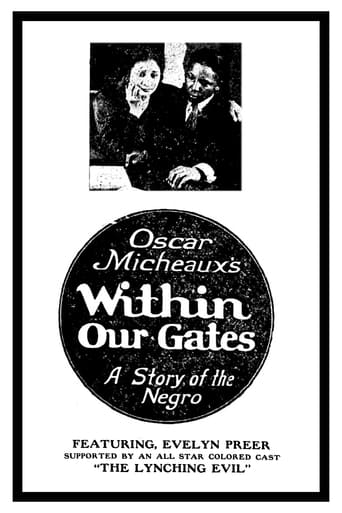
- Within Our Gates (1920) - Micheaux's earlier work on similar themes
- later race films addressing religious hypocrisy
- Spike Lee's School Daze (1988) - similar themes of institutional corruption
Film restoration
Body and Soul is considered a partially lost film. Only fragments and selected scenes survive, with approximately 30 minutes of footage preserved at the Museum of Modern Art and other archives. The Academy Film Archive holds what is believed to be the most complete existing print. Efforts continue to locate and restore additional footage, but the film in its original complete form is believed to be lost.
Where to watch
- Available in fragmentary form on DVD collections of Oscar Micheaux films
- Screenings at film archives specializing in African American cinema
- Selected scenes available through academic film databases
- Occasionally shown at film festivals featuring restored or preserved classic cinema