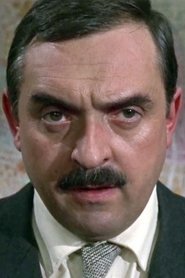

Charade
"While on holiday in the French Alps"
Keys: Space play/pause · ←/→ 10s · F fullscreen · M mute · </> speed
About this film
While on holiday in the French Alps, Regina "Reggie" Lampert, an American expatriate working as a simultaneous interpreter, tells her friend Sylvie that she is divorcing her husband Charles. She also meets Peter Joshua, a charming American. On her return to Paris, she finds her apartment stripped bare.
Cast & crew
More Comedy films
View all →






More from Stanley Donen
View all →
More about this film
About the production
Release dateDecember 5, 1963
Budget$4 million
Box office$13.5 million (North America)
ProductionUniversal Pictures, Stanley Donen Films
Filmed inParis, France, Megève, French Alps, Studio de Boulogne, Boulogne-Billancourt, France
The film was shot entirely on location in Paris, which was unusual for American productions at the time. Cary Grant was initially hesitant to play opposite Audrey Hepburn due to their 25-year age difference, but the script was rewritten to make the age gap part of the humor. The film's title sequence was designed by Maurice Binder, who would later become famous for his James Bond title designs. Production faced challenges with Paris weather, requiring several scenes to be shot on sets when outdoor conditions proved difficult.
Themes
Identity and deceptionTrust and betrayalThe nature of truthRomance and dangerMoral ambiguity
Themes & topics
Historical background
Charade (1963) emerged during postwar international cinema. While on holiday in the French Alps, Regina "Reggie" Lampert, an American expatriate working as a simultaneous interpreter, tells her friend Sylvie that she is divorcing her husband Charles. Archival records and catalog entries help place the work within film-history surveys of the period.
Why this film matters
Preserved under Wikidata ID Q496266, Charade is valued as a animated work within catalog and archive collections. Wikipedia's "Charade (1963 film)" entry connect it to broader histories of cinema exhibition and restoration.
Making of
The production of Charade faced several unique challenges during its Paris location shoot. The French film industry was initially resistant to the American production, requiring extensive negotiations for filming permits. Cary Grant, known for his professionalism, was reportedly difficult during filming, often questioning director Stanley Donen's decisions. However, this tension reportedly contributed to the film's dynamic energy. Audrey Hepburn, who was pregnant during production, had her costumes specially designed to conceal her condition. The film's famous shower scene where Hepburn's character is attacked was particularly challenging to shoot, requiring special waterproof cameras and careful choreography. The Paris locations, including the Seine River banks and the Palais-Royal gardens, were chosen specifically to showcase the city's romantic atmosphere, though filming in public spaces often drew crowds of onlookers. The chemistry between Grant and Hepburn developed gradually during filming, with both actors initially finding the age gap awkward but eventually embracing it as part of their characters' dynamic.
What critics said
Critical writing on Charade emphasizes its craft and historical interest. Charade was praised by critics for its screenplay and the chemistry between Grant and Hepburn.
Did you know?
- Cary Grant initially turned down the role because he felt he was too old to be Audrey Hepburn's romantic lead at age 59. The script was rewritten to make their age difference a running joke in the film.
- The film is often called 'the best Hitchcock movie Hitchcock never made' due to its suspenseful mystery elements, though it's actually a romantic comedy thriller.
- Henry Mancini's score for Charade was nominated for an Academy Award, and the theme song became a jazz standard, recorded by many artists including Andy Williams and Sarah Vaughan.
- This was the only film in which Cary Grant and Audrey Hepburn appeared together, despite both being major stars during the same era.
- The film entered the public domain in the United States due to a copyright notice error, which is why it has appeared on numerous low-budget DVD releases.
- Audrey Hepburn's wardrobe was designed by Hubert de Givenchy, continuing their successful collaboration that began with 'Sabrina'.
- The film's original title was going to be 'The Unsuspecting Wife' before being changed to 'Charade'.
- Walter Matthau's role as the CIA administrator was one of his first major film roles and helped establish his career.
- The famous orange in the final scene was ad-libbed by Cary Grant during filming.
- Director Stanley Donen considered the film one of his personal favorites among all the movies he directed.
Awards & recognition
- Golden Globe nomination for Best Actress - Audrey Hepburn
- Writers Guild of America Award nomination for Best Written American Comedy - Peter Stone
- Laurel Award for Top Female Dramatic Performance - Audrey Hepburn
Visual style
The cinematography by Charles Lang Jr. showcases Paris as both a beautiful backdrop and an active participant in the story. Lang employed a naturalistic style that contrasted with the more artificial look of many Hollywood films of the era, taking full advantage of the authentic Paris locations. The film uses a variety of visual techniques to enhance its dual nature as both romance and thriller, including romantic, soft-focus lighting for the intimate scenes between Grant and Hepburn, and harsher, more dramatic lighting for the suspense sequences. The famous chase scene through the Paris Metro uses innovative camera work and editing to create tension while maintaining visual clarity. Lang's use of color is particularly noteworthy, with Hepburn's wardrobe often providing pops of color against the more muted Paris backgrounds. The film's visual style helped establish the template for location-based thrillers that would follow.
Innovations
While not groundbreaking in terms of technical innovation, Charade demonstrated excellence in several technical aspects of filmmaking. The film's location shooting in Paris required innovative approaches to sound recording, particularly in public spaces where ambient noise was an issue. The special effects, while minimal, were effectively used in scenes such as the fight in the elevator and the final confrontation. The film's editing by Jim Clark was particularly notable for its ability to balance the different genre elements, using faster cuts during suspense sequences and more leisurely pacing for romantic moments. The costume design by Givenchy, while not a technical achievement per se, required innovative solutions for Hepburn's changing figure during filming. The film's title sequence, designed by Maurice Binder, was influential in its use of abstract imagery and typography to set the film's tone. The production's ability to maintain visual consistency across diverse Paris locations was technically impressive for its time.
Music
Henry Mancini's score for Charade is considered one of his finest works, perfectly capturing the film's blend of romance, mystery, and comedy. The main theme, 'Charade,' with lyrics by Johnny Mercer, became an instant jazz standard and has been recorded by numerous artists including Andy Williams, Ella Fitzgerald, and Mel Tormé. Mancini incorporated French musical elements, including accordion and musette influences, to evoke the Paris setting. The score uses leitmotifs for different characters and situations, with Peter's theme being sophisticated and slightly mysterious, while Regina's theme is more romantic and vulnerable. The music during suspense scenes uses dissonant harmonies and unusual instrumentation to create tension, while the romantic scenes feature lush string arrangements. The soundtrack album was highly successful and helped establish Mancini's reputation as one of Hollywood's premier composers. The score's ability to shift seamlessly between different moods while maintaining a cohesive identity is often cited as a masterclass in film scoring.
Famous quotes
Peter Joshua: 'Do you know what's wrong with you?' Regina Lampert: 'No, what?' Peter Joshua: 'Nothing.'
Regina Lampert: 'I already know an awful lot of people and until one of them dies I couldn't possibly meet anyone else.'
Peter Joshua: 'Of course, you won't be able to lie on your back for a while but then you can lie from any position, can't you?'
Regina Lampert: 'How do you shave in there?' Peter Joshua: 'Oh, I don't. I just grow a beard and then I shave it off.'
Regina Lampert: 'I'm not very good at being noble, but it doesn't take much to see that the problems of three little people don't amount to a hill of beans in this crazy world.'
Peter Joshua: 'I'm a poor, pathetic, harmless slob who couldn't hurt a fly.'
Regina Lampert: 'You know what's wrong with you? Nothing!'
Cesar: 'She bounces, she checks, she moves... she's playing with us!'
Peter Joshua: 'Well, what did you expect? A choir of angels?'
Regina Lampert: 'I feel like such a fool.' Peter Joshua: 'Don't worry, we all feel like fools sometimes.'
Memorable scenes
- The opening sequence where Regina's husband is thrown from a moving train, setting the mystery in motion with dramatic visual flair.
- The first meeting between Regina and Peter on the ski slopes, where their witty banter establishes immediate chemistry.
- The shower scene where Regina is attacked, combining vulnerability with sudden terror in a claustrophobic setting.
- The chase through the Paris Metro, utilizing the underground tunnels and trains for maximum suspense.
- The scene at the flea market where Regina discovers the valuable stamps hidden among her husband's letters.
- The final confrontation in the embassy office where all identities are revealed and the mystery is solved.
- The rooftop fight scene combining action with comedy as Peter struggles with his attackers.
- The romantic boat ride on the Seine where Peter and Regina's relationship deepens despite the danger.
- The scene at the embassy where Regina learns the truth about her husband's past and the stolen money.
- The final kiss scene with the orange, perfectly encapsulating the film's blend of romance and humor.
What audiences thought
Charade was a commercial success, earning $13.5 million against its $4 million budget, making it one of the more profitable films of 1963. Audiences responded particularly well to the star power of Grant and Hepburn, whose pairing was seen as a dream team despite the age difference. The film's blend of humor, romance, and suspense appealed to a broad demographic, from teenagers to older moviegoers. Over the decades, Charade has developed a strong cult following, with many considering it a perfect date movie. Its frequent television broadcasts and wide availability due to public domain status have made it familiar to multiple generations. Modern audiences continue to discover the film through streaming platforms and classic film revivals, with many praising its timeless appeal and sophisticated entertainment value. The film's reputation has grown over time, with many considering it superior to many contemporary thrillers despite its age.
Film connections
Influenced by
- North by Northwest
- To Catch a Thief
- The 39 Steps
- Notorious
- The Third Man
- Rear Window
- Vertigo
This film influenced
- The Thomas Crown Affair (1968)
- The Pink Panther series
- What's Up, Doc?
- Foul Play
- Romancing the Stone
- The Man Who Knew Too Little
- The Saint
- Austin Powers series
Film restoration
Charade has been well-preserved and restored multiple times. The film entered the public domain in the United States due to a copyright notice error, which has ironically contributed to its preservation through numerous releases. The Criterion Collection released a restored version in 1999, and Universal Pictures has released digitally restored versions on Blu-ray and 4K Ultra HD. The original camera negatives are preserved at the Universal Studios archives, and the film has been selected for preservation in the United States National Film Registry for its cultural, historical, and aesthetic significance. The film's elements remain in excellent condition, allowing for high-quality restorations that showcase Charles Lang Jr.'s cinematography in its full glory.
Where to watch
- The Criterion Channel
- HBO Max
- Amazon Prime Video (for rent/purchase)
- Apple TV (for rent/purchase)
- Google Play Movies
- YouTube Movies
- Blu-ray and DVD from Universal Pictures
- The Criterion Collection Blu-ray
- 4K Ultra HD from Universal Pictures
- Various classic film streaming services