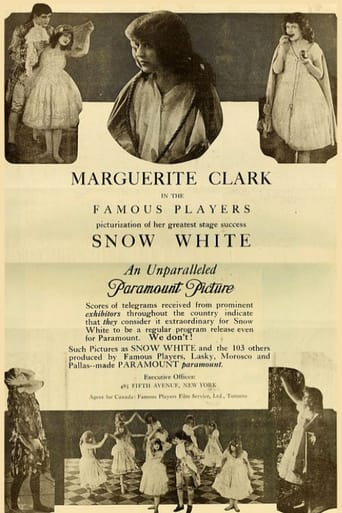
Cinderella
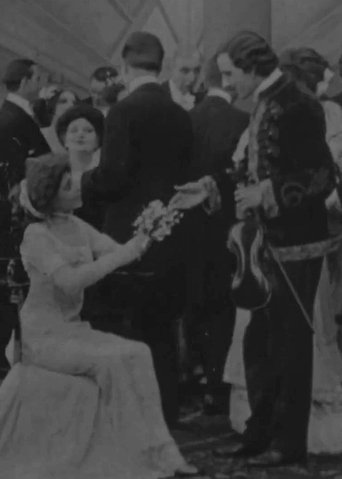
"Mary Pickford's Cinderella wins a prince despite cruel step kin."
Keys: Space play/pause · ←/→ 10s · F fullscreen · M mute · </> speed
About this film
Pickford's Cinderella is mistreated by her stepmother and stepsisters, but she is able to go to the Royal Ball with the help of the Fairy Godmother. Based on Charles Perrault's fairy tale, and featuring unforgettable chemistry between Pickford and then-husband Owen Moore as Prince Charming.
Cast & crew
More films like this

More Fantasy films
View all →

More from James Kirkwood
View all →


More about this film
About the production
Release dateDecember 28, 1914
ProductionFamous Players Film Company
Filmed inLos Angeles, California
This was one of Mary Pickford's early feature-length productions during her transition from short films to features. The film utilized elaborate costumes and sets for the ballroom scenes, which were considered quite lavish for 1914. The transformation sequences required early special effects techniques including multiple exposures and substitution splices. The glass slipper was actually made of crystal to catch the light better on camera.
Themes
Good versus evilSocial class and mobilityTransformation and redemptionThe power of kindnessDreams and aspirations
Themes & topics
fairy talestepmothermagicballprincetransformationglass slippermistreatmentroyaltygodmotherpumpkinmidnight
Historical background
By 1914, distribution networks were widening, and Cinderella reached viewers through the same short-program bills that mixed comedy, news, and spectacle.
Why this film matters
Collectors prize surviving prints of Cinderella as evidence of how 1914-era filmmakers solved storytelling problems with limited means.
Making of
The production of Cinderella showcased Mary Pickford's growing influence in Hollywood. As one of the founders of United Artists (though this film predated that venture), Pickford was already asserting creative control over her projects. The film's elaborate costumes and sets represented a significant investment by Famous Players, demonstrating their confidence in Pickford's star power. The transformation sequences required innovative camera work for the time, including the use of multiple exposure techniques to create magical effects. Pickford and Moore's real-life marriage difficulties reportedly created tension on set, though their on-screen chemistry remained compelling. The film's success helped establish the feature-length format as commercially viable, moving away from the dominance of short films that characterized early cinema.
What critics said
Press clipping files from 1914 rarely give Cinderella headline space; mentions appear in roundup columns listing what played that week.
Did you know?
- Mary Pickford and Owen Moore were married in real life during filming, though their marriage was already troubled and would end in divorce in 1920.
- This was one of the first feature-length adaptations of Cinderella, helping establish the fairy tale as a popular film genre.
- The film was released by Famous Players Film Company, which would later become Paramount Pictures.
- Pickford was already known as 'America's Sweetheart' by 1914, and this role reinforced her wholesome image.
- The film's success helped cement Pickford's status as especially powerful women in early Hollywood.
- Director James Kirkwood was also an actor and had previously directed Pickford in several films.
- The pumpkin carriage scene required a specially constructed prop that could be transformed on camera using editing tricks.
- This film is sometimes confused with the 1911 Cinderella film starring Florence La Badie, but Pickford's version is more widely preserved.
- The ballroom scenes featured dozens of extras in period costumes, making it one of the more expensive productions of its time.
- Pickford's salary for this film was approximately $500 per week, an enormous sum for the era.
Visual style
The cinematography, handled by Walter Stradling, utilized the techniques of early narrative cinema while pushing technical boundaries for fantasy sequences. The film employed soft focus techniques during romantic moments and used lighting to create magical effects in the Fairy Godmother scenes. The ballroom sequences featured elaborate lighting setups to create a sense of grandeur and opulence. Camera movement was limited by the technology of the era, but strategic positioning and composition created dynamic visual interest. The transformation sequences required careful planning and execution, using multiple exposures and substitution splices to achieve magical effects that impressed audiences of 1914.
Innovations
The film featured several technical innovations for its time, particularly in the realm of special effects. The transformation sequences utilized multiple exposure techniques, allowing Cinderella to magically change from rags to a ball gown on screen. The pumpkin carriage transformation required careful editing and substitution techniques to create the illusion of magical transformation. The film's elaborate sets and movable scenery demonstrated advances in production design. The use of lighting effects to create magical atmospheres, particularly in the Fairy Godmother scenes, was considered technically impressive for 1914. The film also showcased improved film quality and cinematography compared to earlier works.
Music
As a silent film, Cinderella was accompanied by live musical performances during theatrical screenings. Theaters typically employed pianists or small orchestras to play appropriate music. The original score likely included classical pieces and popular songs of the era, with romantic themes for the love scenes and magical music for the transformation sequences. Some larger theaters may have used cue sheets provided by the studio, suggesting specific musical pieces for different scenes. The lack of recorded sound meant that the music varied from theater to theater, creating unique viewing experiences.
Famous quotes
Silent film - no recorded dialogue, but intertitles included key narrative text such as 'Her heart was as beautiful as her face' and 'At the stroke of midnight, the magic will end'
Memorable scenes
- The magical transformation sequence where Cinderella's rags become a beautiful ball gown, accomplished through early special effects techniques. The Fairy Godmother's appearance and use of magic wand to create the pumpkin carriage and transform mice into horses. The grand ballroom scene where Cinderella first meets the Prince, featuring elaborate costumes and dozens of extras. The midnight escape scene where Cinderella flees the palace, losing her glass slipper on the stairs. The final shoe-fitting scene where the Prince searches for the mysterious maiden, culminating in Cinderella's reveal and reunion with the Prince.
What audiences thought
The film was a commercial success, drawing large audiences across the United States. Mary Pickford's immense popularity ensured strong attendance, with theaters often selling out showings. Audiences responded particularly well to the magical transformation sequences and the romantic chemistry between Pickford and Moore. The film's wholesome content appealed to family audiences, helping establish the fairy tale genre as suitable for all ages. Contemporary newspaper accounts reported enthusiastic audience reactions, with viewers applauding during the ballroom scenes and expressing emotional investment in Cinderella's triumph over her cruel stepfamily.
Film connections
Influenced by
- Charles Perrault's 'Cendrillon' (1697)
- Brothers Grimm fairy tale tradition
- Stage adaptations of Cinderella
- Earlier literary versions of the Cinderella story
This film influenced
- Cinderella (1922)
- Cinderella (1937)
- The Glass Slipper (1955)
- Cinderella (1950 Disney animated)
- Cinderella (1997)
- Cinderella (2015)
Film restoration
The film survives in complete form and has been preserved by film archives. Copies are held at the Library of Congress and other major film preservation institutions. The film has been restored and is available through various classic film distributors and archives. While some deterioration is evident due to the age of the nitrate film stock, the preservation efforts have maintained the film's visual quality remarkably well.
Where to watch
- Available on DVD from various classic film distributors
- Streaming on some classic film subscription services
- Viewable at film archives and special screenings
- Available through some public domain film websites