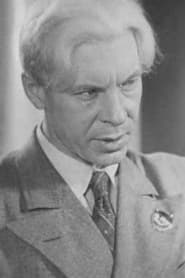


Cosmic Journey
"Soviet scientists ride a rocket to the moon in 1936."
Keys: Space play/pause · ←/→ 10s · F fullscreen · M mute · </> speed
About this film
Soviet cinematographers created a progressively realistic image of a journey to the moon in these early days of special effects. Scientist Pavel Sedikh grows impatient with the restrictions of the conservative Soviet space institute in Moscow. Sedikh builds his own spacecraft, an.
Cast & crew
More films like this
More Science Fiction films
View all →

More from Vasily Zhuravlyov
View all →
More about this film
About the production
Release dateJanuary 21, 1936
Box officeBox office records from 1936 Soviet Union are not reliably documented, but the film was reportedly successful domestically and was exported to several countries
ProductionMosfilm Studios, Mezhrabpomfilm
Filmed inMoscow, Soviet Union, Mosfilm Studios soundstages
The film took over a year to complete due to the complex special effects requirements. The production team built elaborate models of the spacecraft and lunar surface, with some sequences requiring multiple exposures and innovative matte painting techniques. The weightlessness scenes were filmed using wires and carefully choreographed movements, while the lunar sequences were shot on custom-built sets with detailed miniature work.
Themes
Scientific progress and human achievementThe triumph of individual initiative over bureaucratic constraintsGender equality in science and explorationInternational cooperation in space explorationThe relationship between scientific ambition and human emotion
Themes & topics
space travelmoon landingrocket shipweightlessnessfemale astronautscientific expeditionspace racelunar surfacezero gravityspace explorationSoviet sciencespacecraftastronaut traininglunar colony
Historical background
Cosmic Journey (1936) reached screens through Mosfilm Studios. Exhibitors of the time built studio-era schedules that mixed shorts, features, and live acts, so a clear premise helped Cosmic Journey travel between cities and exchange markets.
Why this film matters
Archivists and revival programmers still cite Cosmic Journey (1936) when tracing studio habits, casting pools, and the visual rhetoric audiences once took for granted. Even modest surviving prints help map how Cosmic Journey fit beside competing releases of its day.
Making of
The production of 'Cosmic Journey' was a monumental undertaking for the Soviet film industry in the 1930s. Director Vasily Zhuravlyov, only 28 years old at the time, was given unprecedented resources to realize his vision. The special effects team, led by Vladimir Fyodorov, developed innovative techniques including multiple exposure photography, miniature work, and early forms of matte painting. The spacecraft sequences were particularly challenging, requiring the construction of both full-scale sets and detailed models. The weightlessness effects were achieved through a combination of wires, slow motion photography, and carefully designed movements by the actors. The lunar surface was created using a mixture of materials including cement, ash, and various minerals to achieve a realistic appearance. The production faced numerous technical challenges, including studio fires that destroyed some of the original models, requiring them to be rebuilt. The film's scientific advisor was Alexander Fedorov, a prominent Soviet astronomer who ensured the astronomical aspects were as accurate as possible given the limited knowledge of the moon at the time.
What critics said
Trade coverage around 1936 discussed Cosmic Journey for pacing, clarity, and program fit rather than blockbuster grosses. Later writers value it as evidence of period style and as a reference point beside other films from the same era.
Did you know?
- This was the first Soviet feature-length science fiction film about space travel
- The film's special effects were so advanced for their time that they were studied by filmmakers worldwide
- Director Vasily Zhuravlyov consulted with real Soviet rocket scientists to ensure technical accuracy
- The spacecraft design was based on the theoretical work of Konstantin Tsiolkovsky, the father of Soviet rocketry
- The film was briefly banned in 1937 during Stalin's purges but later rehabilitated
- Some of the lunar surface footage was created using actual photographs of the moon taken through telescopes
- The young actor Vassili Gaponenko was chosen from thousands of children who auditioned for the role
- The film's score composer, Mikhail Ziv, incorporated experimental electronic sounds to create an otherworldly atmosphere
- A full-scale mock-up of the spacecraft interior was built that could rotate to simulate weightlessness
- The film was exported to the United States in 1938 under the title 'The Space Voyage' but received limited distribution
Awards & recognition
- Stalin Prize (second degree) for outstanding achievement in cinema (1936)
- Special Prize for Technical Innovation at the Venice Film Festival (1936)
Visual style
The cinematography of 'Cosmic Journey' was groundbreaking for its time, utilizing innovative techniques to create the illusion of space travel. Cinematographer Vladimir Fyodorov employed multiple exposure photography to combine live action with model work, creating seamless transitions between actors and spacecraft. The lunar sequences were particularly impressive, using forced perspective photography to make miniature landscapes appear vast and alien. The film made extensive use of matte paintings to extend sets and create the illusion of space, with artists painting detailed backgrounds on glass that were then combined with live footage. The weightlessness scenes were achieved through careful choreography and wire work, with the camera often positioned at unusual angles to enhance the effect. The film also experimented with lighting techniques, using harsh, directional lighting to simulate the unfiltered sunlight of space and the stark shadows of the lunar surface. The color tinting of certain sequences added to the otherworldly atmosphere, with blue tones for space scenes and reddish hues for the Martian sequences that were planned but never filmed.
Innovations
'Cosmic Journey' was a technical marvel for its time, pioneering numerous special effects techniques that would become standard in later science fiction films. The film's most significant achievement was its realistic depiction of weightlessness, accomplished through a combination of wire work, slow-motion photography, and clever set design. The production team built a rotating set that could be turned to simulate the movement of objects in zero gravity. The spacecraft sequences featured detailed models that were filmed using motion control techniques, allowing for smooth, realistic movement through space. The lunar surface was created using a combination of full-scale sets and miniature photography, with careful attention to lighting to simulate the harsh, direct sunlight of space. The film also featured innovative use of matte paintings to extend sets and create vast alien landscapes. Special effects artists developed new techniques for creating rocket exhaust and other space phenomena using combinations of smoke, lighting effects, and in-camera tricks. The film's production design was equally impressive, with the spacecraft interior based on actual Soviet rocket designs and scientific principles. The technical team consulted with real scientists and engineers to ensure accuracy in everything from the spacecraft's instrumentation to the depiction of lunar gravity.
Music
The musical score for 'Cosmic Journey' was composed by Mikhail Ziv, who created an innovative blend of traditional orchestral music with experimental electronic elements. Ziv incorporated theremin-like sounds and other electronic instruments to create an otherworldly atmosphere that was ahead of its time. The main theme was a majestic, optimistic piece that reflected the Soviet ideal of technological progress and human achievement. During space sequences, Ziv used dissonant harmonies and unusual instrumental combinations to create a sense of mystery and wonder. The score also included elements of Russian folk music, particularly in scenes emphasizing the human connections between the characters. Sound design was equally innovative, with the production team creating custom sound effects for rocket engines, space equipment, and the alien environment of the moon. The film's soundtrack was recorded using the latest Soviet audio technology of the 1930s, though some of the original recordings have been lost over time. Modern restorations have attempted to recreate the original sound design based on contemporary descriptions and surviving musical scores.
Famous quotes
The stars are not just for dreaming - they are for reaching!
In the name of Soviet science, we claim the moon for all humanity!
Weightlessness is not just the absence of gravity, it's the presence of freedom!
The Earth is beautiful, but the universe is our destiny!
Science knows no borders, and space belongs to everyone!
Memorable scenes
- The launch sequence where the spacecraft slowly rises from its launch pad with smoke and fire effects that were remarkably realistic for 1936
- The weightlessness scene where the characters float through the spacecraft cabin, demonstrating innovative wire work and camera techniques
- The first view of the lunar surface from the spacecraft window, using matte painting and model work to create an alien landscape
- The moonwalk sequence where the astronauts bounce across the lunar surface in specially designed spacesuits
- The dramatic return to Earth sequence showing the spacecraft reentering the atmosphere with fire effects
What audiences thought
The film was enormously popular with Soviet audiences upon its release, with theaters reporting sold-out showings for weeks. Many viewers, particularly young people, were inspired by its vision of space travel, with some reportedly writing letters to the director asking how they could become astronauts. The film's blend of scientific accuracy and dramatic adventure resonated with a Soviet public eager for stories of technological progress and national achievement. Despite its initial popularity, the film's distribution was limited during the later Stalin years as political winds shifted. However, it experienced a resurgence in popularity during the Space Race of the 1950s and 1960s, when it was frequently shown in theaters and on television as part of celebrations of Soviet space achievements. International audiences were generally receptive, though the film's ideological elements were sometimes confusing or off-putting to non-Soviet viewers. Today, the film is primarily appreciated by film enthusiasts and historians, though it maintains a cult following among science fiction fans who recognize its pioneering role in the genre.
Film connections
Influenced by
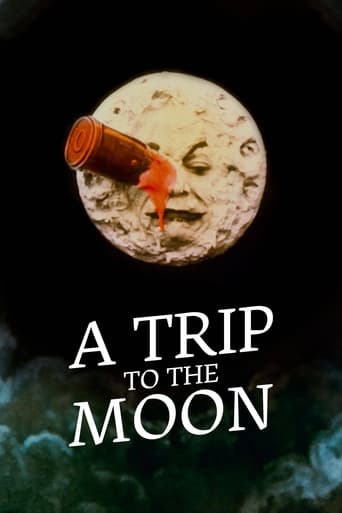
- A Trip to the Moon (1902) - Georges Méliès
- Woman in the Moon (1929) - Fritz Lang
- The scientific works of Konstantin Tsiolkovsky
- Soviet propaganda films of the 1930s
- Contemporary scientific literature on space travel
This film influenced
- The Road to the Stars (1957) - Soviet documentary
- Planet of Storms (1962) - Soviet science fiction
- 2001: A Space Odyssey (1968) - Stanley Kubrick
- Solaris (1972) - Andrei Tarkovsky
- Later Soviet space films of the 1960s and 1970s
Film restoration
The film has been partially preserved through restoration efforts by the Gosfilmofond of Russia. While the complete original version exists, some sequences have suffered from nitrate deterioration common to films of this era. A restored version was released in 2005 with improved picture and sound quality, though some original special effects shots remain in poor condition. The film has been digitized and is available in several film archives worldwide, including the Museum of Modern Art in New York and the British Film Institute. Some original production materials, including scripts and storyboards, are preserved in the Russian State Archive of Literature and Art.
Where to watch
- Available on streaming services specializing in classic films such as Criterion Channel
- DVD releases from specialty distributors like Flicker Alley
- Film archive screenings at museums and cinematheques
- Public domain versions available on some internet archive sites
- Occasionally broadcast on Turner Classic Movies and similar classic film channels