Dunces and Dangers
"Creditors on the kitchen ceiling"
Keys: Space play/pause · ←/→ 10s · F fullscreen · M mute · </> speed
About this film
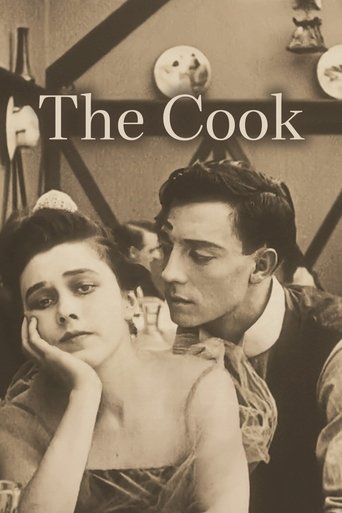
Larry and his wife are desperately poor—with no food. However, the butcher and grocer show up to collect money they are owed and they won't take no for an answer. They are ready to take anything and everything and eventually chase the pair up onto the room—where various stunts oc.
Cast & crew
More films like this

More Comedy films
View all →







More from Larry Semon
View all →

More about this film
About the production
Release dateAugust 5, 1918
ProductionVitagraph Company of America
Filmed inVitagraph Studios, Brooklyn, New York
This film was produced during the height of Larry Semon's popularity at Vitagraph Studios, where he had significant creative control over his productions. The rooftop sequences required careful stunt coordination and were typical of Semon's elaborate physical comedy style. The film was shot on location at Vitagraph's Brooklyn studios, which allowed for the construction of detailed sets including the multi-story building used for the climactic chase scenes.
Themes
Poverty and economic hardshipDebt and financial obligationDomestic relationshipsConflict with authority figuresPhysical comedy as social commentary
Themes & topics
povertydebt collectorschaserooftopphysical comedymarried coupledomestic comedyslapstickstuntsfood shortagefinancial desperationpursuiturban setting
Historical background
By 1918, Dunces and Dangers had entered distribution via Vitagraph Company of America, reflecting standard practice for its budget tier.
Why this film matters
Specialists compare Dunces and Dangers with contemporaries to trace how 1918 cinema handled larry and his wife are desperately poor—with no food.
Making of
The production of 'Dunces and Dangers' exemplified Larry Semon's hands-on approach to filmmaking. As both star and director, Semon had considerable creative freedom at Vitagraph, allowing him to craft elaborate physical comedy sequences that became his trademark. The rooftop chase scenes required extensive safety precautions and careful choreography, with Semon often insisting on performing his own stunts despite the risks. The film's sets were constructed at Vitagraph's Brooklyn studios, where the company had built detailed urban environments that could be easily modified for different productions. The relationship between Semon and his co-stars, particularly the frequent collaboration with Madge Kirby, created an on-screen chemistry that audiences responded to positively. The film was produced quickly, as was typical for comedy shorts of the era, with shooting often completed in just a few days to maintain the rapid release schedule that audiences expected.
What critics said
Modern notes on Dunces and Dangers focus on its larry and his wife are desperately poor—with no food rather than any original 1918 sensation.
Did you know?
- Larry Semon was one of the highest-paid comedians of the silent era, earning over $3,000 per week at the peak of his career
- The Vitagraph Company of America was one of the oldest film production companies in the United States, founded in 1897
- Madge Kirby appeared in over 50 films with Larry Semon, often playing his wife or romantic interest
- William Hauber, who plays one of the debt collectors, was a frequent collaborator with Semon and appeared in many of his comedy shorts
- The film was released just three months before the end of World War I, during a time when audiences sought escapist entertainment
- Semon was known for performing many of his own dangerous stunts, which contributed to his reputation for thrilling physical comedy
- The film's title follows the alliterative naming convention common in comedy shorts of the era
- Vitagraph Studios would later become part of Warner Bros. in 1925
- Silent comedy shorts of this length were typically shown as part of a larger program with newsreels, other shorts, and a feature film
- The film's theme of financial desperation resonated with audiences during the post-war economic uncertainty
Visual style
The cinematography of 'Dunces and Dangers' reflects the technical standards of late 1910s American cinema, utilizing static camera positions typical of the era but incorporating dynamic movement during action sequences. The film makes effective use of the rooftop setting to create visual interest and heighten the tension during the chase scenes. The lighting techniques employed were standard for studio productions of the period, using natural light from the glass studio roofs supplemented by artificial lighting when necessary. The camera work during the stunt sequences was particularly notable for its ability to capture the full scope of the physical comedy while maintaining clear visibility of the performers' actions. The film's visual composition shows the influence of stage comedy traditions while adapting them to the cinematic medium.
Innovations
While 'Dunces and Dangers' was not particularly innovative in its technical aspects, it demonstrated solid craftsmanship typical of Vitagraph productions. The film's stunt sequences required careful planning and execution, showcasing the growing sophistication of action choreography in comedy films. The rooftop chase scenes demonstrated effective use of multi-level space, creating visual interest and opportunities for comedic situations. The film's editing maintained good pacing throughout its runtime, ensuring that the comedy rhythm was preserved. The production design effectively created believable urban environments that supported the narrative while remaining practical for filming comedy sequences.
Music
As a silent film, 'Dunces and Dangers' would have been accompanied by live musical performance during its original theatrical run. The typical accompaniment would have included a piano player or small orchestra performing popular songs of the era along with specially composed mood music that enhanced the comedic action. The musical selections would have been chosen to match the tone of each scene, with faster, more frantic music during the chase sequences and more melancholic tunes during the moments depicting the couple's poverty. Large urban theaters might have had full orchestras, while smaller venues would rely on a single pianist. The music was crucial for conveying emotion and timing the comedy, as no dialogue or synchronized sound was available.
Famous quotes
(Intertitle) 'No money, no food!'
(Intertitle) 'We'll take everything you have!'
(Intertitle) 'To the roof!'
(Intertitle) 'This means war!'
Memorable scenes
- The opening scene establishing the couple's extreme poverty with empty cupboards and bare pantry
- The simultaneous arrival of the butcher and grocer creating immediate tension
- The elaborate chase sequence up the stairs and onto the rooftop
- The rooftop stunt sequence with characters navigating precarious positions
- The final confrontation on the roof with various physical comedy gags
What audiences thought
Audiences in 1918 responded enthusiastically to 'Dunces and Dangers,' as evidenced by its successful theatrical run and the continued demand for Larry Semon's comedies. The film's themes of poverty and debt collection struck a chord with viewers who were experiencing similar economic hardships in the post-war period. The physical comedy and stunt sequences provided the visual spectacle that silent film audiences expected from their comedy shorts. Semon's expressive performance style and the film's fast-paced action kept audiences engaged throughout its relatively brief runtime. The positive reception helped cement Semon's status as one of the leading comedy stars of the late 1910s.
Film connections
Influenced by
- Charlie Chaplin's tramp character
- Mack Sennett's Keystone comedy style
- Stage comedy traditions
- Vaudeville performance techniques
- Earlier Vitagraph comedy productions
This film influenced
- Later Larry Semon comedies
- The Three Stooges short subjects
- Abbott and Costello routines
- Jackie Chan's action-comedy films
Film restoration
The film is preserved in the Library of Congress collection and has been made available through various archival sources. While some nitrate decomposition may have occurred over the decades, the film remains largely intact and viewable. Several archives hold copies of the film, ensuring its preservation for future generations. The film has been digitized as part of various silent film preservation projects.
Where to watch
- Library of Congress National Screening Room
- Internet Archive
- Silent Hall of Fame website
- Various classic film streaming platforms
- Film archive screenings and retrospectives