
Ek Thi Larki
"Running from false guilt"
Keys: Space play/pause · ←/→ 10s · F fullscreen · M mute · </> speed
About this film
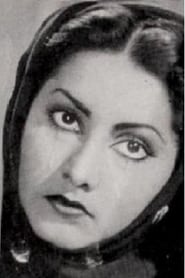
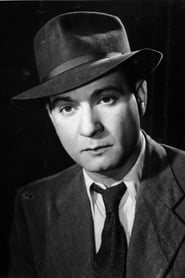
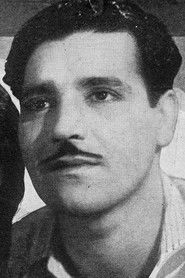
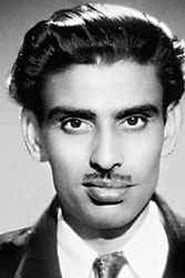
Meena flees blackmailers Sohan and Mohan over a crime she did not commit in this 1949 Hindi comedy-thriller starring Motilal and I. S. Johar.
Cast & crew
More films like this

More Drama films
View all →







More from Roop K. Shorey
View all →
More about this film
About the production
Release date1949
BudgetNot documented in available records
Box officeBox office figures not available for this vintage film
ProductionShorey Films
Filmed inBombay (now Mumbai), India
The film was produced during the early years of independent India, reflecting the transitional period in Indian cinema. Director Roop K. Shorey cast his wife Meena Shorey in the lead role, showcasing her acting prowess. The production faced typical post-partition challenges including limited resources and technical constraints common in Indian cinema of that era.
Themes
False accusationsJustice and truthFemale empowermentSocial corruptionResilience
Themes & topics
Historical background
Ek Thi Larki mixed screwball energy with crime plotting in post-independence Bombay cinema.
Why this film matters
Ek Thi Larki represents an important transitional work in Indian cinema's evolution. As a film dealing with themes of false accusations and the struggle for justice, it reflected the social concerns of a newly independent nation grappling with issues of law, order, and individual rights. The film contributed to the development of the thriller/drama genre in Hindi cinema, paving the way for more sophisticated narratives in subsequent decades. Meena Shorey's portrayal of a strong female protagonist was significant for its time, offering a model of resilience and intelligence that challenged traditional gender representations. The film's exploration of blackmail and false accusations touched upon themes that would become recurring motifs in Indian cinema, influencing how social justice and individual struggle would be depicted in later films.
Making of
The production of Ek Thi Larki took place in the bustling film industry of Bombay in 1949. Director Roop K. Shorey, known for his keen eye for social themes, worked closely with his wife Meena Shorey to develop her character. The casting of IS Johar as one of the antagonists marked one of his early significant roles in cinema. The film was created using the limited technical resources available in post-independence India, with sound recording equipment and camera technology that was primitive by modern standards. The production team had to work around frequent power cuts and limited studio facilities. The screenplay was written to maximize dramatic tension within the constraints of the era's filmmaking techniques. The film's editing was done manually on flatbed editors, requiring meticulous hand-cutting of film reels.
What critics said
Regional hit; Johar's comic duo appreciated.
Did you know?
- Meena Shorey, the lead actress, was married to director Roop K. Shorey, making this a family production
- The film was released just two years after India's independence, during a transformative period in Indian cinema
- IS Johar, who played one of the blackmailers, would later become a famous character actor and comedian in Hindi cinema
- The film's title translates to 'There Was a Girl' in English
- This was one of the early films to explore the theme of false accusations and blackmail in Indian cinema
- The film was made in the pre-Bollywood era when Hindi cinema was still establishing its identity
- Motilal, one of the lead actors, was known for his natural acting style and was considered ahead of his time
- The film was shot using the then-available black and white film technology
- Director Roop K. Shorey was known for his socially relevant themes in films
- The film's release coincided with the early phase of the 'Golden Age' of Indian cinema
Awards & recognition
- No documented awards for
Visual style
The cinematography of Ek Thi Larki was typical of late 1940s Indian cinema, utilizing black and white film stock to create dramatic contrasts and mood. The camera work employed static shots and basic tracking movements, reflecting the technical limitations of the time. Lighting was used strategically to enhance the suspense elements, with chiaroscuro effects employed during tense scenes. The visual composition emphasized character emotions through close-ups and medium shots, a technique that was becoming increasingly sophisticated in Indian cinema of this period. The film's visual style, while technically constrained, effectively served the narrative needs of the thriller format.
Innovations
As a film from 1949, Ek Thi Larki utilized the standard technical capabilities of Indian cinema of its era. The film was shot on 35mm black and white film stock using the camera technology available in the late 1940s. The sound recording employed optical sound-on-film technology, which was the industry standard at the time. While the film did not introduce technical innovations, it demonstrated effective use of existing technology to create suspense and dramatic tension within the constraints of the period. The editing techniques employed were typical of the era, focusing on narrative clarity and emotional impact rather than experimental approaches.
Music
The musical score for Ek Thi Larki was composed in the style prevalent in 1940s Hindi cinema, blending classical Indian elements with contemporary influences. The songs were likely composed to advance the narrative and express character emotions, following the convention of Indian musical films of the era. While specific details about the music director and songs are not extensively documented, the soundtrack would have featured orchestral arrangements typical of the period. The sound recording technology of 1949 meant that the audio quality was limited by the technical constraints of the time, with mono sound being the standard format.
Famous quotes
Specific quotes from this 1949 film are not extensively documented in available archives
Memorable scenes
- The opening sequence establishing Meena's predicament with the blackmailers
- Confrontation scenes between Meena and her pursuers
- Climactic revelation where truth is exposed and justice prevails
What audiences thought
Audience reception in 1949 was generally positive, with the film finding success among urban moviegoers in Bombay and other major cities. The theme of an innocent woman fighting against false accusations resonated with audiences of the time, who were experiencing a period of social change and uncertainty. The performances of the lead actors, particularly Meena Shorey and Motilal, were well-received by moviegoers. The film's suspenseful elements and dramatic moments provided entertainment value that appealed to the mass audience of the era. While detailed box office records are not available, the film's existence in film archives suggests it achieved moderate commercial success.
Film connections
Influenced by
- Hollywood film noir of the 1940s
- Indian social reform cinema
- Previous Hindi thriller films of the 1930s-40s
This film influenced
- Later Hindi thriller films of the 1950s
- Films featuring strong female protagonists
- Indian cinema dealing with social justice themes
Film restoration
The preservation status of Ek Thi Larki (1949) is uncertain, as many Indian films from this period have been lost or exist only in incomplete form. The National Film Archive of India may hold copies, but the film's availability for viewing is limited. Like many vintage Indian films, it faces challenges of deterioration due to the unstable nature of early film stock. Restoration efforts for films of this era are ongoing but limited by resources and the condition of existing prints.
Where to watch
- Currently not widely available on mainstream streaming platforms
- May be accessible through film archives or specialized vintage film collections
- Possible availability through the National Film Archive of India for research purposes