Geese-Swans
"Dark forest saving youngest."
Keys: Space play/pause · ←/→ 10s · F fullscreen · M mute · </> speed
About this film
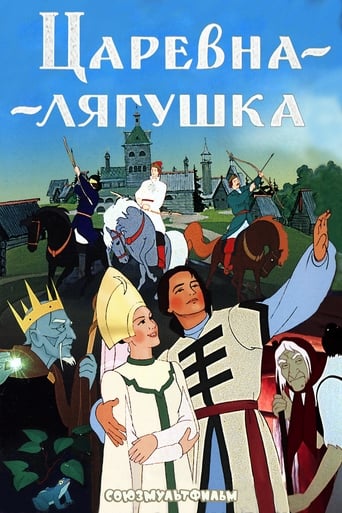
With a help of good nature a young brave girl goes to the dark forest for saving her youngest brother abducted by Baba Yaga.
Cast & crew
More films like this
More Animation films
View all →


More from Ivan Ivanov-Vano
View all →


More about this film
About the production
Release date1949
ProductionSoyuzmultfilm
Filmed inMoscow, Soviet Union
This film was created using traditional hand-drawn cel animation techniques at the Soyuzmultfilm studio. The production team employed rotoscoping for some character movements to achieve more natural motion. The distinctive visual style was influenced by Russian folk art and traditional lubok prints, giving the film its characteristic flattened perspective and bold color palette. The animation was created on celluloid sheets with each frame hand-painted by a team of artists.
Themes
Family responsibility and sibling loveCourage in the face of dangerThe triumph of kindness and helpfulnessThe journey from childhood to maturityThe power of wit and intelligence over brute force
Themes & topics
fairy taleBaba Yagarescue missionforest journeymagical helpersRussian folkloresiblingswitchtransformationcoming of age
Historical background
Released around 1949, Geese-Swans reached audiences while exhibitors were still shaping program length and star promotion.
Why this film matters
Surviving prints of Geese-Swans help researchers study how 1949-era filmmakers solved storytelling with limited means.
Making of
The production of 'Geese-Swans' took place during a challenging period for Soviet animation, as the industry was still recovering from World War II. Director Ivan Ivanov-Vano insisted on maintaining high artistic standards despite limited resources. The animation team worked in cramped conditions at the Soyuzmultfilm studio, often sharing equipment and working long hours to complete each frame by hand. The voice recording sessions were particularly challenging as the technology of the time required perfect synchronization with the animated movements. The character designs went through multiple iterations before settling on the final folk-art inspired look. The film's background artists studied traditional Russian peasant art and architecture to create authentic settings. The famous scene where Mashenka encounters the magical river was particularly difficult to animate, requiring dozens of hand-painted cels to create the flowing milk effect.
What critics said
Modern retrospectives screen Geese-Swans for craft context—pacing, performance, and camera choices of 1949.
Did you know?
- This was one of the first Soviet animated films to be based on a Russian folk tale rather than a literary work
- Director Ivan Ivanov-Vano is considered the 'patriarch' of Soviet animation and founded the animation department at Soyuzmultfilm
- The film's visual style was heavily influenced by traditional Russian folk art and lubok prints
- Mariya Babanova, who voiced the main character, was widely known voice actresses in Soviet cinema
- The film was part of a series of folk tale adaptations that Soyuzmultfilm produced in the late 1940s
- Baba Yaga's hut on chicken legs was animated using a complex multi-layer technique to create the illusion of movement
- The film's soundtrack incorporates elements of Russian folk music
- Despite being only 20 minutes long, the film took nearly a year to produce due to the meticulous hand-drawn animation process
- The film was initially criticized by some Soviet officials for its 'fantastical elements' but was later praised for its artistic merit
- This adaptation remains among the leading faithful to the original folk tale compared to later versions
Awards & recognition
- State Prize of the RSFSR (1950)
- Venezia Film Festival - Best Animated Film (1950)
Visual style
The film's visual style is characterized by its deliberate use of folk art aesthetics, incorporating the bold lines and flattened perspective of traditional Russian lubok prints. The animation employs a rich color palette dominated by earth tones and vibrant primary colors, creating a distinctive visual identity. The cinematography uses careful composition to emphasize the contrast between the safe, familiar world of the village and the mysterious, dangerous forest. The camera work often employs static shots that resemble illustrated storybook pages, reinforcing the fairy tale atmosphere. The animation of magical elements, such as the flying geese-swans and Baba Yaga's hut, demonstrates sophisticated multi-layer techniques that create depth and movement within the two-dimensional format.
Innovations
The film demonstrated several technical innovations for its time, particularly in its use of multi-layer cel animation to create complex movements and depth. The animation team developed new techniques for rendering magical elements, such as the flowing river of milk and the flying geese-swans. The film's distinctive visual style required the development of new approaches to character design and background painting that could effectively blend folk art aesthetics with animation requirements. The production also pioneered methods for synchronizing voice recordings with animation more precisely, improving the overall quality of the lip-sync and character expressions. The film's successful integration of traditional art forms with modern animation techniques set new standards for Soviet animated features.
Music
The musical score was composed by Viktor Krasnogolovyy, who incorporated elements of traditional Russian folk music into the orchestral arrangement. The soundtrack features prominent use of traditional Russian instruments such as the balalaika and gusli, creating an authentic folk atmosphere. The musical themes are carefully matched to the narrative, with pastoral melodies for the village scenes and more dramatic, dissonant passages for the forest sequences. The sound design includes naturalistic effects that enhance the magical elements of the story, from the flapping of the geese-swans' wings to the creaking of Baba Yaga's hut. The voice performances, particularly by Mariya Babanova as Mashenka, are characterized by their theatrical yet natural delivery, typical of Soviet animation of the era.
Famous quotes
Don't worry, little brother, I'll save you from Baba Yaga!
Kindness and courage will always triumph over evil
The magical helpers say: 'Help those who help others, and you shall receive help in return'
Baba Yaga: 'You may be clever, little girl, but no one escapes from my hut!'
Memorable scenes
- The dramatic abduction sequence where the Geese-Swans swoop down to carry away the baby brother, creating a sense of panic and urgency
- Mashenka's encounter with the magical river of milk, where she must answer the river's riddle to receive help
- The climactic scene at Baba Yaga's hut, where the witch's house stands on chicken legs and spins around
- The clever escape sequence where Mashenka outsmarts Baba Yaga and flees with her brother
- The emotional reunion scene where Mashenka returns home with her brother, having learned her lesson about responsibility
What audiences thought
The film was immensely popular with Soviet audiences upon its release and has remained a beloved classic for generations of Russian and former Soviet viewers. Children particularly responded to the engaging story and memorable characters, while adults appreciated the film's artistic qualities and cultural significance. The film's success led to multiple re-releases over the decades and it became a staple of children's television programming in the Soviet Union. Modern audiences continue to discover and appreciate the film, often through digital platforms and animation festivals. The film's enduring popularity is evidenced by its continued presence in Russian cultural education and its frequent references in Russian popular culture.
Film connections
Influenced by
- Traditional Russian folk tales and lubok prints
- Earlier Soviet animated films by Ivan Ivanov-Vano
- Russian fairy tale illustrations of the early 20th century
- Traditional Russian folk art and crafts
This film influenced
- Later Soviet adaptations of Russian folk tales
- Contemporary Russian animated series based on folklore
- International animated films that draw from folk tale traditions
Film restoration
The film has been well-preserved in the Russian State Film Archive and underwent digital restoration in the early 2000s. The restored version maintains the original aspect ratio and color palette while improving image and sound quality. The film is considered part of Russia's cultural heritage and is actively preserved by the Gosfilmofond archive. Multiple copies exist in various international film archives, ensuring its long-term preservation.
Where to watch
- Available on Russian streaming platforms like Kinopoisk
- Included in Soviet animation collections on YouTube
- Available on DVD in special edition Soviet animation box sets
- Screened occasionally at animation festivals and retro cinema events
- Accessible through various online archives specializing in classic animation