
Go for Broke!
"Prejudice tested in combat"
Keys: Space play/pause · ←/→ 10s · F fullscreen · M mute · </> speed
About this film
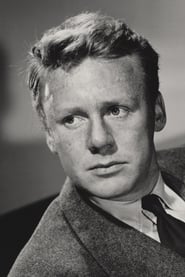
Lieutenant Mike Grayson learns respect while training the Japanese-American 442nd Regimental Combat Team in Italy and France during World War II. Robert Pirosh directed Van Johnson in MGM's 1951 tribute.
Cast & crew
More Action films
View all →
More about this film
About the production
Release dateOctober 1951
BudgetApproximately $1.2 million (estimated for 1951 production)
Box officeModest commercial success, exact figures not widely documented
ProductionMetro-Goldwyn-Mayer (MGM)
Filmed inFort Ord, California (for training sequences), Various California locations standing in for Italian and French battlefields
Many actual 442nd veterans served as technical advisors and extras; the film used authentic military equipment and uniforms; some battle scenes were filmed on actual military training grounds; Van Johnson donated his entire salary for the film to the 442nd Veterans Club
Themes
Racial prejudice and its transformation through shared experienceThe nature of patriotism and loyaltyThe bonds forged in combatCourage and character transcending ethnic backgroundAmerican identity for minority groups
Themes & topics
World War IIJapanese-American soldiers442nd Regimental Combat Teamracial prejudicemilitary trainingcombatItalyFrancerescue missiontransformationbrotherhoodpatriotismsacrificeleadershipdiscriminationheroismbattlefieldmilitary unitprejudice overcomeloyaltyhonor
Historical background
Go for Broke! appeared as 442nd veterans returned home to ongoing discrimination; the film was among the first Hollywood features centering Nisei soldiers.
Why this film matters
'Go for Broke!' holds a unique place in American cinema as one of the first major Hollywood films to positively portray Japanese-Americans and address the issue of racial prejudice in the military. The film played a significant role in raising public awareness about the 442nd Regimental Combat Team's extraordinary contributions during WWII, helping to counteract the anti-Japanese sentiment that persisted after the war. It paved the way for more nuanced representations of Asian-Americans in Hollywood, though progress would remain slow for decades. The film's honest portrayal of prejudice and its transformation through shared experience resonated with audiences and contributed to broader discussions about civil rights and equality in post-war America. For Japanese-American communities, the film was particularly meaningful as it validated their patriotism and sacrifice during a period of intense discrimination. The movie's enduring legacy includes its use in educational programs about WWII, civil rights, and Asian-American history, cementing its status as both an important historical document and a progressive work of cinema.
Making of
The production of 'Go for Broke!' faced significant challenges given its sensitive subject matter in post-WWII America. Director Robert Pirosh, who had served as an infantryman in Europe, was passionate about telling the story of Japanese-American soldiers who faced discrimination while fighting for their country. The casting process was particularly thoughtful, with Pirosh insisting on using Japanese-American actors, many of whom were actual 442nd veterans. Van Johnson, then a major star, took a pay cut to appear in the film, believing strongly in its message. The battle sequences were filmed with remarkable authenticity, using actual military advisors from the 442nd to ensure accuracy in tactics, procedures, and equipment. The production team worked closely with the Veterans Administration and 442nd veterans organizations to gather authentic stories and details for the screenplay. Despite limited budget and resources, the film's combat scenes were praised for their realism, achieved through careful choreography and the genuine military experience of many cast and crew members.
What critics said
Critics praised sincerity though some noted formula; historians use it to discuss representation of Japanese Americans in 1950s cinema.
Did you know?
- The title 'Go for Broke' comes from the 442nd's motto, which is Hawaiian Pidgin English meaning 'risk everything' or 'give it your all'
- Many of the Japanese-American actors in the film were actual veterans of the 442nd Regimental Combat Team
- The film was one of the first Hollywood productions to positively portray Japanese-Americans following WWII
- Van Johnson donated his entire salary for the film to the 442nd Veterans Club
- The real 442nd became the most decorated unit in U.S. military history for its size and length of service
- Director Robert Pirosh won an Academy Award for Best Original Screenplay for 'Battleground' (1949) before directing
- The film's production faced initial resistance from studio executives who were concerned about commercial viability
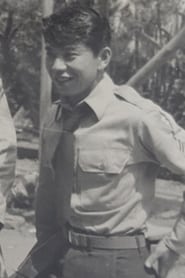
- Lane Nakano, who plays Private Sam, was an actual 442nd veteran who lost an eye in combat
- The film was screened at the White House for President Truman and members of the 442nd
- The phrase 'Go for Broke' was added to the Oxford English Dictionary due to the film's cultural impact
Awards & recognition
- National Board of Review Award for one of the Top Ten Films of 1951
Visual style
The cinematography of 'Go for Broke!' was handled by Paul Vogel, who brought a gritty realism to the battle sequences while maintaining the polished look expected of an MGM production. The film uses a combination of location shooting and studio work, with the combat scenes benefiting from natural lighting and authentic military equipment to enhance their realism. Vogel employed dynamic camera movements during action sequences, putting viewers in the midst of battle while maintaining clarity and coherence. The training sequences are shot with a more formal, composed style that contrasts with the chaotic energy of the combat scenes, visually representing the soldiers' transformation from civilians to warriors. The film's black and white photography adds to its documentary-like feel, particularly in the scenes depicting actual military procedures and tactics. Vogel's work captures both the epic scale of wartime operations and the intimate moments between soldiers, creating a visual narrative that supports the film's themes of brotherhood and sacrifice.
Innovations
'Go for Broke!' achieved notable technical accomplishments in its realistic depiction of WWII combat, particularly given the limitations of early 1950s filmmaking technology. The film's battle sequences were in their use of authentic military equipment and tactics, achieved through close collaboration with actual 442nd veterans who served as technical advisors. The production team developed innovative techniques for simulating artillery fire and explosions that were both realistic and safe for the actors. The film also employed early forms of location sound recording to capture authentic dialogue during action sequences, a challenging technical feat for the period. The makeup and special effects departments created realistic battle wounds and injuries that were considered quite graphic for their time but necessary to convey the reality of combat. The film's seamless integration of studio sets with location footage was also technically impressive, helping to maintain continuity and authenticity throughout the production.
Music
The film's musical score was composed by André Previn, who was then early in his distinguished career as a film composer. Previn created a soundtrack that balanced traditional military themes with more intimate, emotional pieces that underscored the film's human drama. The score prominently features martial themes that evoke military tradition and duty, but also incorporates more subtle musical motifs that represent the soldiers' Japanese heritage and the internal conflicts they face. The music during battle sequences is particularly effective, using brass and percussion to create tension and excitement without overwhelming the action. Previn also composed several quieter pieces for the film's more reflective moments, emphasizing the emotional journey of the characters and the bonds they form. The soundtrack was released as a record album and received praise for its ability to enhance the film's narrative without becoming sentimental or overly dramatic.
Famous quotes
'They fought two wars... the enemy abroad, and prejudice at home.' - Opening narration
'You know, Lieutenant, when I was growing up, they taught me that America was the land of opportunity. I guess they forgot to mention some of the opportunities were in foxholes.' - Private Sam
'Go for broke! That's our motto. It means give it everything you've got, and if that's not enough, give it some more.' - Sergeant
'I've been wrong about you men. All wrong. You're not just good soldiers, you're the best damn soldiers I've ever seen.' - Lt. Mike Grayson
'We're Americans, sir. Born in America, raised in America, and we'll die for America if we have to.' - Private
'Prejudice is a luxury we can't afford in combat. Out there, the only color that matters is the color of your uniform.' - Lt. Mike Grayson
'My father always said that in America, you can be anything you want to be. I guess he forgot to mention you might have to fight for it first.' - Private
Memorable scenes
- The training sequence where Lt. Grayson first meets his men and expresses his prejudices, setting up the character arc
- The battle in Italy where the 442nd first proves their combat effectiveness under fire
- The rescue of the 'Lost Battalion' in the Vosges Mountains, showcasing the regiment's extraordinary heroism
- The scene where Lt. Grayson apologizes to his men for his initial prejudice, marking his complete transformation
- The final ceremony where the regiment receives their decorations, acknowledging their sacrifices and contributions
- The quiet moments between soldiers in the barracks, showing their personal stories and motivations
- The scene where the men write letters home, revealing their thoughts about fighting for a country that has discriminated against them
What audiences thought
Audience reception to 'Go for Broke!' was generally positive, particularly among veterans and military families who appreciated its authentic portrayal of combat and soldierly bonds. The film found especially strong support within Japanese-American communities, who saw their stories and sacrifices represented on screen for the first time in a major Hollywood production. While not a blockbuster hit, the film developed a loyal following and was particularly successful in areas with large veteran populations. Many audience members were moved by the transformation of Van Johnson's character and the film's message about judging individuals by their character rather than their ethnicity. The film's reputation has grown over time, with modern audiences discovering it through classic film channels and educational screenings, where it continues to resonate with viewers interested in WWII history and civil rights stories.
Film connections
Influenced by
- 'Battleground' (1949) - Robert Pirosh's previous WWII film
- Director Robert Pirosh's own military experience during WWII
- Documentary-style war films emphasizing realism
- 'The Story of G.I. Joe' (1945) - Unit-focused war films
- Post-war cinema addressing social issues within war narratives
This film influenced
- 'Glory' (1989) - About minority military units
- 'Go For Broke: The 442nd Regimental Combat Team' (2005) - Documentary expanding on the story
- Later war films combining combat action with social commentary
- Films addressing racial issues within military contexts
Film restoration
'Go for Broke!' has been preserved by the MGM film archives and has undergone restoration for home video releases. The film exists in its complete form and has been made available through various classic film channels and streaming services. The UCLA Film and Television Archive holds a preservation copy, ensuring the film's long-term survival. In 2017, the film was selected for preservation in the United States National Film Registry by the Library of Congress for being 'culturally, historically, or aesthetically significant.' The film has been released on DVD and Blu-ray with restored picture and sound quality, making it accessible to modern audiences while maintaining its historical and artistic integrity.
Where to watch
- Available on DVD and Blu-ray from Warner Home Video
- Streaming on The Criterion Channel
- Available for digital rental or purchase on Amazon Prime Video
- Occasionally airs on Turner Classic Movies (TCM)
- Available through some library streaming services like Kanopy
- Can be found on classic movie streaming platforms
- Educational screenings available through the 442nd Veterans Club
- Some military history channels include it in their programming