

Greater Love Hath No Man
"Alice Guy's Western love triangle short."
Keys: Space play/pause · ←/→ 10s · F fullscreen · M mute · </> speed
About this film
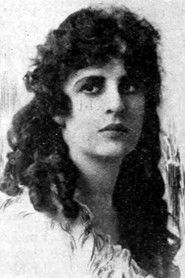
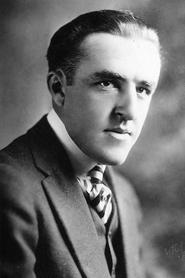
At a New Mexico mining camp, Florence (Vinnie Burns) falls for new superintendent Harry while her suitor Jake (Romaine Fielding) still loves her. When mutinous miners attack, Jake warns the couple and dies holding off the mob so they can escape—Alice Guy-Blaché's 1911 Solax Western, preserved at the Library of Congress.
Cast & crew
More films like this
More Drama films
View all →







More from Alice Guy-Blaché
View all →
More about this film
About the production
Release date1911
ProductionSolax Studios
Filmed inFort Lee, New Jersey
the production was produced during Alice Guy-Blaché's tenure at Solax Studios, which she co-founded with her husband Herbert Blaché in 1910. Fort Lee, New Jersey was the center of American film production before the industry moved to Hollywood. The film was likely shot on location or on studio sets designed to replicate the American West. As with many early films, production was rapid and economical, with shooting typically completed in just a few days.
Themes
Themes & topics
Historical background
Greater Love Hath No Man (1911) reached screens through Solax Studios. Exhibitors of the time built nickelodeon-era programs that mixed shorts, features, and live acts, so a clear premise helped Greater Love Hath No Man travel between cities and exchange markets.
Why this film matters
Archivists and revival programmers still cite Greater Love Hath No Man (1911) when tracing studio habits, casting pools, and the visual rhetoric audiences once took for granted. Even modest surviving prints help map how Greater Love Hath No Man fit beside competing releases of its day.
Making of
The production of 'Greater Love Hath No Man' took place during a transformative period in American cinema. Alice Guy-Blaché, having moved from France to America, brought European cinematic sensibilities to the burgeoning American film industry. The film was likely shot on the Solax Studios lot in Fort Lee, where Guy-Blaché had built state-of-the-art facilities including glass studios for optimal lighting. The cast would have performed in heavy costumes under hot studio lights, with multiple takes required due to the technical limitations of early cameras. The film was probably edited in-camera, meaning shots were filmed in sequence and the camera was stopped and started to create transitions. Music would have been performed live during screenings, with theaters providing pianists or small orchestras to accompany the silent film.
What critics said
Trade coverage around 1911 discussed Greater Love Hath No Man for pacing, clarity, and program fit rather than blockbuster grosses. Later writers value it as evidence of period style and as a reference point beside other films from the same era.
Did you know?
- Alice Guy-Blaché was one of the first female film directors and possibly the first to create a narrative fiction film
- the production was produced during the peak of the Western genre's popularity in early American cinema
- The title comes from John 15:13 in the Bible: 'Greater love hath no man than this, that a man lay down his life for his friends'
- Solax Studios was the largest pre-Hollywood film studio in America at the time of production
- Alice Guy-Blaché directed over 1,000 films during her career, though many are now lost
- The film was made when the average American film was only one reel (approximately 10-15 minutes) long
- Romaine Fielding was a popular leading actor of the era who later became a director himself
- Early Westerns like this helped establish many of the genre's conventions that would continue for decades
- The film was likely hand-colored frame by frame, a common practice for important scenes in this era
- Alice Guy-Blaché often used female protagonists who displayed agency and strength, unusual for the period
Visual style
The cinematography would have been typical of the 1911 period, using stationary cameras with limited movement. Shots were composed to tell the story clearly, with medium shots for character interaction and longer shots for establishing the Western setting. Natural light was supplemented by arc lamps when necessary, and the black and white film stock of the era had a high contrast ratio. Important scenes may have been enhanced with hand-coloring or stencil coloring techniques, which were labor-intensive but added visual appeal. The camera work would have been functional rather than artistic by modern standards, focused primarily on clear storytelling rather than visual experimentation.
Innovations
While not technically groundbreaking for its time, the film represents the standard technical practices of early American cinema. The use of multiple locations or studio sets to create the Western setting demonstrates the growing sophistication of film production. The film likely employed continuity editing techniques that were still being developed and standardized during this period. Any special effects would have been achieved through in-camera tricks rather than post-production techniques. The film contributes to the technical evolution of narrative cinema, helping establish conventions for visual storytelling in the Western genre.
Music
As a silent film, 'Greater Love Hath No Man' would have been accompanied by live music during exhibition. Theaters typically employed pianists who would play appropriate music from cue sheets or improvise based on the action on screen. Popular songs of the era, classical pieces, and specially composed themes might have been used to enhance emotional moments. The biblical title suggests that hymns or religious music may have been incorporated into the score. Larger theaters might have employed small orchestras, providing a richer musical experience. The music would have been crucial in conveying emotion and narrative information that couldn't be expressed through dialogue.
Famous quotes
Greater love hath no man than this, that a man lay down his life for his friends
Memorable scenes
- The climactic sacrifice scene where one character demonstrates ultimate love by risking their life for another, embodying the film's biblical title and central theme of selfless love in the harsh Western frontier.
What audiences thought
Audience reception in 1911 would have been gauged by box office returns and exhibitor reports rather than modern metrics. Western films were extremely popular with early cinema audiences, and the moral themes suggested by the biblical title would have appealed to the predominantly middle-class theatergoers of the era. The love triangle plot was a familiar narrative structure that audiences could easily follow despite the limitations of silent storytelling. The film's success would have been measured by its ability to draw repeat customers to nickelodeons and small theaters, which were the primary venues for film exhibition at the time.
Film connections
Influenced by
- Biblical stories
- Earlier Western films
- Stage melodramas
- Dime novels
- Literary romance traditions
This film influenced
- Later Western melodramas
- Films exploring sacrificial love
- Early narrative cinema
Film restoration
The preservation status of 'Greater Love Hath No Man' (1911) is unclear, which is common for films of this era. Many of Alice Guy-Blaché's films from her Solax period are considered lost or exist only in fragmentary form. The film may exist in archives such as the Library of Congress, the British Film Institute, or the Cinémathèque Française, but comprehensive cataloging of early films is incomplete. Some early Solax films have been discovered and restored in recent decades, so there remains hope that the production may surface in private collections or international archives.
Where to watch
- Due to its age and likely lost status, 'Greater Love Hath No Man' is not currently available on commercial streaming platforms. Film archives holding Alice Guy-Blaché's work may have viewing copies for research purposes. The film might occasionally be screened at special retrospectives or film festivals dedicated to early cinema or women in film. Researchers should contact major film archives including the Library of Congress, the Museum of Modern Art's film department, or the Women Film Pioneers Project for potential access to any existing copies or fragments.