
His Bread and Butter
"1916 film by Edward F. Cline"
Keys: Space play/pause · ←/→ 10s · F fullscreen · M mute · </> speed
About this film
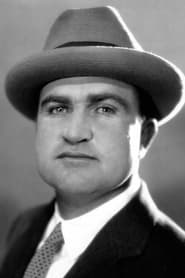
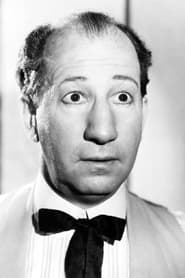
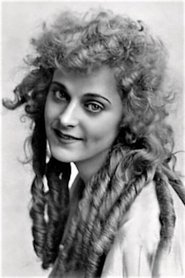
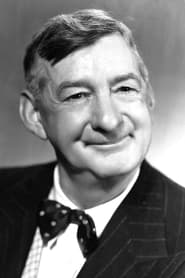
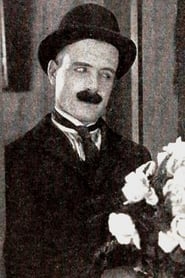
After arranging for wifey to land a job as the café's cashier, Mann warns her not to reveal that they're married, lest proprietor Slim Summerville fire them both. The trouble begins when both Summerville and headwaiter Bobby Dunn fall for Pierce, driving Mann into paroxysms of insane jealousy.
Cast & crew
More films like this
More Comedy films
View all →







More from Edward F. Cline
View all →

More about this film
About the production
Release dateApril 16, 1916
BudgetApproximately $15,000 - $25,000 (Estimated based on standard Keystone two-reelers of the era)
ProductionKeystone Film Company
Filmed inKeystone Studios, Edendale, Los Angeles, California
The film was produced under the supervision of Mack Sennett, the 'King of Comedy.' It marked a significant milestone as the directorial debut of Edward F. Cline, who would go on to become especially prolific comedy directors of the silent era. The production utilized the standard Keystone 'slapstick' formula but began to incorporate more character-driven humor and complex situational irony, moving away from pure non-sequitur violence. The film was distributed by the Triangle Film Corporation as part of their weekly program of high-quality shorts.
Themes
Deception and Secret IdentityWorkplace DynamicsMarital JealousyEconomic NecessityPhysical Comedy and Slapstick
Themes & topics
waitercashiersecret marriagerestaurantjealousychasestolen carmotorcyclesilent comedyslapstick
Historical background
His Bread and Butter (1916) circulated in the silent era. This was Cline's first film as a director. Contemporary trade papers and later preservation notes document its place among nickelodeon and cinema-club programs.
Why this film matters
His Bread and Butter remains accessible to researchers and viewers as a comedy short in museum, archive, and streaming collections. This was Cline's first film as a director.
Making of
The production of 'His Bread and Butter' was typical of the Mack Sennett 'fun factory' style, where gags were often improvised on the spot based on the available props and locations. Edward F. Cline, having worked as an actor and gag man at Keystone, was given the opportunity to direct by Sennett to see if he could handle the pacing of a two-reel comedy. The restaurant set was a recurring location in Keystone films, often redressed to save on production costs. Casting Slim Summerville as the antagonist provided a perfect visual foil for Hank Mann's frantic energy. The final chase sequence, a staple of Keystone comedies, involved real vehicles and was filmed on the streets of Edendale, often causing genuine confusion among local residents who weren't always aware a movie was being filmed.
What critics said
Day-one reviews for His Bread and Butter are sparse in digitized press archives; later criticism treats it as a reference point for 1916 cinema programming and preservation.
Did you know?
- This film is the directorial debut of Edward F. Cline, who later became a key collaborator for Buster Keaton and W.C. Fields.
- Hank Mann, the lead actor, was one of the original 'Keystone Cops' and was known for his distinctive sad-eyed expressions.
- Peggy Pearce, who plays the wife, was a frequent leading lady for Charlie Chaplin in his early Keystone and Essanay shorts.
- The film features a cameo or early role by Erle C. Kenton, who would later become a famous director of horror films like 'Island of Lost Souls' (1932).
- Slim Summerville's characteristically tall and lanky frame was used for physical contrast against the shorter, more acrobatic Hank Mann.
- The film includes a sequence where a character walks backward through a moving trolley, a dangerous stunt performed without modern safety equipment.
- The title 'His Bread and Butter' is a play on the idiom for one's livelihood, referring to the couple's desperate need for the restaurant job.
- The film was screened at the Museum of Modern Art (MoMA) in 2008 as part of the 'Cruel and Unusual Comedy' retrospective.
- Director Edward F. Cline was only 24 years old when he directed this film.
- The film's cinematography was handled by K.C. MacLean, a regular technician for the Keystone Film Company.
Visual style
Shot in the standard 1.33:1 aspect ratio of the era, the cinematography by K.C. MacLean focuses on wide shots to capture the full range of physical movement and 'business' performed by the actors. The use of deep focus allows for simultaneous action in the foreground and background, a technique Sennett favored to maximize the comedic potential of every frame. The film also utilizes early 'trick' photography for some of the more elaborate stunts and chase sequences.
Innovations
The film is notable for its well-choreographed chase sequence, which was a technical hallmark of the Keystone Studio. The coordination of multiple moving vehicles (cars, motorcycles, and trolleys) required precise timing and early stunt coordination. Additionally, the film's editing shows an increasing sophistication in 'cross-cutting' between the husband's jealousy and the wife's interactions with the boss to build comedic tension.
Music
As a silent film, 'His Bread and Butter' did not have a synchronized soundtrack. Original screenings would have been accompanied by a live pianist or organist playing popular ragtime tunes or standard 'hurry' music for the chase scenes. Modern restorations often feature newly composed scores that mimic the style of 1910s theater music.
Famous quotes
Intertitle: 'Wanted: Lady Cashier. Must Not Be Married.'
Intertitle: 'He learns the truth!'
Memorable scenes
- The opening sequence where Hank Mann walks backward through a moving trolley while staring at his wife's photograph.
- The 'blindfolded billing game' in the restaurant that devolves into a food-throwing melee.
- The climactic bedroom scene where Slim Summerville hides under the bedsheets, only to have the husband and wife sit on him.
- The final high-speed chase involving a commandeered motorcycle and a stolen car through the dirt roads of early Los Angeles.
What audiences thought
Contemporary audiences in 1916 received the film with great enthusiasm, as Keystone comedies were a guaranteed draw for nickelodeons and early movie palaces. The 'jealous husband' trope was a crowd favorite, and Hank Mann's performance was particularly well-regarded. Today, the film is enjoyed by silent cinema enthusiasts for its historical value and the timeless quality of its physical comedy.
Film connections
Influenced by
- The early 'L'Arroseur Arrosé' style of Lumière gags
- French slapstick films of Max Linder
- The Commedia dell'arte tradition of the bumbling servant
This film influenced
- One Week (1920)
- The Bellboy (1918)
- Modern Times (1936) - specifically the restaurant service scenes
Film restoration
The film is preserved and exists in the archives of the Museum of Modern Art (MoMA) and the UCLA Film & Television Archive. It has been digitally restored and is occasionally screened at silent film festivals.
Where to watch
- YouTube (Public Domain uploads)
- Silent Hall of Fame website
- Included in various 'Silent Gems' or 'Keystone Comedy' DVD collections
- MoMA Film Archive (Special screenings)