His Picture in the Papers
"Anita Loos also wrote the film's scenario"
Keys: Space play/pause · ←/→ 10s · F fullscreen · M mute · </> speed
About this film
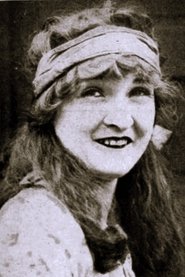
Anita Loos also wrote the film's scenario. The film stars Douglas Fairbanks and Loretta Blake and features Erich von Stroheim in a minor role.
Cast & crew
More films like this
More Comedy films
View all →







More from John Emerson
View all →
More about this film
About the production
Release dateMarch 12, 1916
Box officeUnknown
ProductionFine Arts Film Company, Triangle Film Corporation
Filmed inReliance Studio, Yonkers, New York
This was one of the first films produced under the Triangle Film Corporation banner, which was formed by D.W. Griffith, Harry Aitken, and Mack Sennett. The film was shot at the former Reliance studio in Yonkers, which Triangle had acquired. Douglas Fairbanks performed many of his own stunts, including several dangerous sequences that highlighted his athletic abilities. The collaboration between Fairbanks, writer Anita Loos, and director John Emerson began with this film and would continue for several subsequent productions.
Themes
Publicity and celebrity cultureAmerican consumerismThe power of mediaSelf-improvement and physical fitnessRomantic pursuit
Themes & topics
Historical background
His Picture in the Papers (1916) circulated in the silent era. Anita Loos also wrote the film's scenario. Contemporary trade papers and later preservation notes document its place among nickelodeon and cinema-club programs.
Why this film matters
His Picture in the Papers remains accessible to researchers and viewers as a comedy short in museum, archive, and streaming collections. Programmers cite it when tracing regional production history and surviving early prints.
Making of
The production of 'His Picture in the Papers' represented a significant moment in early Hollywood history, as it brought together three talents who would shape American cinema. Douglas Fairbanks, already a successful Broadway star, was transitioning to films and needed the right vehicle to establish his screen persona. Anita Loos, who had already gained fame for her novel 'Gentlemen Prefer Blondes,' brought her sharp wit and understanding of American culture to the screenplay. Director John Emerson, with his theatrical background, helped translate Fairbanks' stage charisma to the silent screen. The film was shot quickly and efficiently at the Reliance studio, with Fairbanks insisting on performing his own stunts to maintain authenticity. The collaboration was so successful that it led to several more films together, including 'The Mystery of the Leaping Fish' later the same year. The production team capitalized on Fairbanks' athletic abilities, incorporating physical comedy and action sequences that would become hallmarks of his later swashbuckling roles.
What critics said
Day-one reviews for His Picture in the Papers are sparse in digitized press archives; later criticism treats it as a reference point for 1916 cinema programming and preservation.
Did you know?
- This film marked the beginning of the creative partnership between Douglas Fairbanks and writer Anita Loos, who would go on to write several more films for him.
- Anita Loos married director John Emerson the same year this film was released, making their collaboration both professional and personal.
- The film's theme of 'the great American love of publicity' was particularly relevant in 1916, as celebrity culture was beginning to emerge in the United States.
- Fairbanks' character works for a health food company, which was ironic given that Fairbanks was known for his physical fitness and athletic lifestyle.
- The film was one of Fairbanks' early successes that helped establish his screen persona as the energetic, all-American hero.
- Triangle Film Corporation, which produced this film, was one of the first major Hollywood studios and was known for its high-quality productions.
- The Reliance studio in Yonkers where this was filmed was one of the first motion picture studios on the East Coast before the industry fully migrated to Hollywood.
- This film was part of a series of Fairbanks comedies that parodied American social customs and values of the era.
- The movie's title became a popular phrase in American culture during the 1910s and 1920s.
- Fairbanks performed a dangerous stunt involving a runaway automobile that required no special effects or camera tricks.
Visual style
The cinematography of 'His Picture in the Papers' was handled by Victor Fleming, who would later become a renowned director of classics like 'Gone with the Wind' and 'The Wizard of Oz.' The film employed relatively static camera positions typical of the period, but Fleming showed early signs of his visual talent in composition and lighting. The photography emphasized Fairbanks' physicality, using medium shots that captured his full range of motion during stunt sequences. The newspaper office scenes used clever composition to suggest the chaotic energy of a newsroom. The film's visual style was clean and straightforward, allowing the physical comedy to take center stage. The outdoor sequences benefited from natural lighting, giving the film a bright, optimistic tone that matched its star's personality. The cinematography successfully supported the film's themes by making the publicity-seeking activities visually clear and engaging.
Innovations
While 'His Picture in the Papers' did not introduce groundbreaking technical innovations, it demonstrated sophisticated use of existing film techniques for its time. The film employed effective use of intertitles to advance the narrative and provide comic relief, a technique that Anita Loos excelled at writing. The stunt sequences were particularly notable for their realism, as Fairbanks performed his own dangerous actions without the benefit of modern safety equipment. The film's editing created smooth transitions between comedic set pieces, maintaining a brisk pace that kept audiences engaged. The production made effective use of location shooting in Yonkers, adding visual variety to the studio-bound scenes. The film's success in combining comedy, action, and romance within a compact runtime influenced the structure of future feature comedies. The technical team's ability to capture Fairbanks' athletic movements clearly on camera was crucial to the film's effectiveness.
Music
As a silent film, 'His Picture in the Papers' would have been accompanied by live musical performance during its original theatrical run. The typical score would have consisted of popular songs of the era, classical pieces, and original compositions arranged by the theater's music director. Music cues would have been provided by the studio to guide accompanists in matching the mood of each scene. The energetic sequences featuring Fairbanks' stunts would have been accompanied by lively, upbeat music, while the romantic moments would have used more sentimental melodies. The newspaper office scenes likely featured frantic, fast-paced music to convey the sense of urgency and chaos. No specific composer is credited for the original score, as was common practice for silent films of this period. Modern screenings of restored versions typically feature newly composed scores or compilations of period-appropriate music.
Famous quotes
I'll get my picture in the papers if it's the last thing I do!
Publicity is the lifeblood of business!
A man who can't get his name in the papers might as well be invisible!
There's no such thing as bad publicity!
The American people love a man who makes headlines!
Memorable scenes
- The sequence where Fairbanks' character attempts increasingly ridiculous schemes to get newspaper coverage, including pretending to be a hero and staging various accidents
- The climactic automobile rescue scene where Fairbanks saves his girlfriend from a runaway car, finally earning legitimate publicity
- The chaotic newspaper office scenes that satirize the frenetic pace of journalism
- Fairbanks' athletic stunts and physical comedy sequences throughout the film
What audiences thought
Audiences in 1916 responded enthusiastically to 'His Picture in the Papers,' making it a commercial success and further establishing Douglas Fairbanks as a major star. Contemporary reports indicate that theaters showing the film experienced increased attendance, with many patrons returning for multiple viewings. Fairbanks' athletic stunts and charming personality resonated with American audiences who were looking for optimistic, energetic entertainment during the turbulent years of World War I. The film's satire of publicity-seeking behavior struck a chord with viewers who were witnessing the rise of celebrity culture firsthand. Moviegoers particularly enjoyed the sequence where Fairbanks' character attempts various ridiculous schemes to get his picture in the newspaper. The film's success helped cement Fairbanks' status as especially popular actors of the 1910s and laid the groundwork for his later transition to swashbuckling adventure films.
Film connections
Influenced by
- Contemporary American newspaper culture
- Progressive Era ideals of self-improvement
- Early Hollywood comedy traditions
- Broadway comedic styles
- Silent era physical comedy
This film influenced
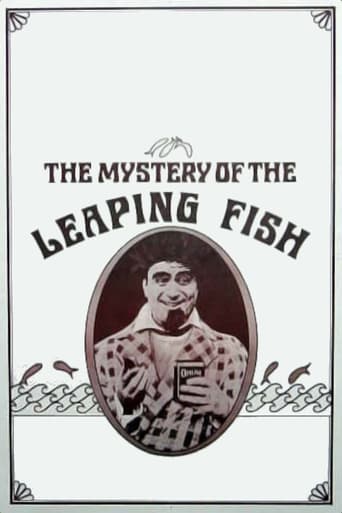
- The Mystery of the Leaping Fish (1916)
- Douglas Fairbanks' subsequent comedies
- Early Hollywood romantic comedies
- Films about celebrity culture
- Media satire films
Film restoration
The film is preserved in the Library of Congress collection and has been restored by various film archives. While not considered lost, some elements may show signs of deterioration typical of films from this period. The Museum of Modern Art holds a copy in their film collection. The film has been included in various Douglas Fairbanks retrospectives and early cinema exhibitions. Digital restoration efforts have helped preserve the film for modern audiences, though some quality issues remain due to the age of the original nitrate materials.
Where to watch
- The film is available on DVD as part of Douglas Fairbanks collections
- Some streaming platforms specializing in classic cinema may offer the film
- Film archives and museums occasionally screen restored versions
- The film may be available through educational film distribution services
- Public domain versions may be found on internet archive sites