
In the Year 2889
"Seven survivors behind a wall of mist"
Keys: Space play/pause · ←/→ 10s · F fullscreen · M mute · </> speed
About this film
The last seven survivors of a nuclear war barricade themselves against the outside world. Beyond a dense mist, other survivors, radiated and mutant, grow hungry.
Cast & crew
More Horror films
View all →


More from Larry Buchanan
View all →
More about this film
About the production
Release dateOctober 29, 1967
Budget$65,000
Box officeNot publicly disclosed (TV movie)
ProductionAmerican International Pictures, Azalea Pictures
Filmed inDallas, Texas, Fort Worth, Texas
This film was shot in just 8 days on an extremely tight budget, typical of Larry Buchanan's production methods. The mist effect was created using smoke machines and was so thick that it sometimes obscured the actors completely. The farmhouse set was actually a rented location that the production team modified to look post-apocalyptic. Many of the 'mutant' effects were achieved with simple makeup techniques due to budget constraints.
Themes
Nuclear anxietyHuman survivalMoral degradationIsolationFear of the unknown
Themes & topics
nuclear warsurvivorsmutantsfarmhousepost-apocalypseradiationisolationhorrorscience fictiontelevision movie
Historical background
In the Year 2889 appeared in 1967, when New Hollywood and global new waves shaped how movies were financed, distributed, and discussed. Audiences of the day encountered the work amid shifting tastes in acting, pacing, and spectacle. Its focus on the last seven survivors of a nuclear war barricade themselves against the outside world mirrors themes circulating in popular culture of that moment.
Why this film matters
In the Year 2889 (1967) belongs to the wider archive of world cinema, documenting the last seven survivors of a nuclear war. Archivists and historians value such titles for what they reveal about craft, genre, and audience expectations. Restorations and festival screenings keep the work visible to viewers far beyond its first run.
Making of
Larry Buchanan, working with his characteristic minimal budget, transformed a Texas farmhouse into a post-apocalyptic stronghold. The production faced numerous challenges, including limited shooting time and budget constraints that forced creative solutions for special effects. The famous mist was created using industrial foggers rented from a local company, but the Texas winds often made it difficult to control. Cast members reported that the makeup for the mutants would sometimes melt under the hot Texas sun, requiring frequent touch-ups. The film was shot during the summer of 1967, with cast and crew enduring temperatures over 100 degrees Fahrenheit. Despite these hardships, the production maintained a rapid pace, completing filming in just over a week. The script was heavily improvised during shooting, with Buchanan encouraging actors to ad-lib dialogue to save time on script revisions.
What critics said
Press coverage from 1967 is fragmentary for many titles of this vintage; surviving notices for In the Year 2889 tend to stress novelty, star power, or topical appeal. Later writing places the picture within its national and generic context, weighing both period conventions and moments that still land for modern viewers. Streaming and disc releases have revived discussion among classic-film audiences.
Did you know?
- This film is actually a remake of Roger Corman's 1955 film 'The Day the World Ended', though Buchanan changed the title and some plot elements.
- Director Larry Buchanan was known as the 'Ed Wood of Dallas' for his low-budget, quickly produced films.
- The film was produced as part of a package deal for television syndication, alongside other Buchanan-directed sci-fi films.
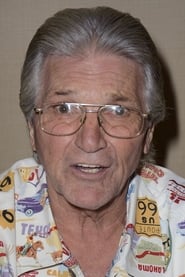
- Paul Petersen, who plays Steve, was primarily known for his role as Jeff Stone on 'The Donna Reed Show' before transitioning to films.
- The original title was 'After Doomsday' but was changed to 'In the Year 2889' to capitalize on the futuristic sci-fi trend.
- Despite the title suggesting the year 2889, the film is actually set in the immediate aftermath of a nuclear war, not in the distant future.
- The film was shot in color but many TV stations aired it in black and white during its initial syndication run.
- Only seven actors appear in the entire film, contributing to the claustrophobic atmosphere.
- The mutant creatures were played by local Dallas actors in minimal makeup due to budget restrictions.
- The film was released as part of AIP's 'Double Feature' package for television stations.
Visual style
The cinematography, handled by Buchanan regular Robert L. Lippert, employs a straightforward television-style approach with static camera setups and basic lighting techniques. The film uses high-contrast lighting to create shadows and suspense within the confined farmhouse setting. The distinctive mist sequences were shot through smoke filters to achieve an otherworldly atmosphere, though the effect varies in quality throughout the film. The color palette emphasizes muted earth tones and grays, reinforcing the post-apocalyptic setting. Camera work is generally functional rather than artistic, with occasional Dutch angles during moments of high tension. The limited budget is evident in the minimal camera movement and reliance on medium shots, though the cinematographer manages to create occasional striking images despite these constraints.
Innovations
While not groundbreaking in technical terms, 'In the Year 2889' demonstrated creative problem-solving within extreme budget limitations. The production team developed innovative fog effects using industrial equipment, creating the film's distinctive mist atmosphere. The mutant makeup designs, while simple, were effective enough to convey the concept of radiation-induced mutation. The film's sound design used creative layering to suggest the presence of unseen threats beyond the mist. The production team's ability to complete a feature-length film in just eight days with such limited resources represents an achievement in low-budget filmmaking efficiency. The farmhouse location transformation from normal dwelling to post-apocalyptic stronghold was accomplished with minimal but effective set dressing.
Music
The film's music was composed by Ronald Stein, who had previously worked on several Roger Corman productions. The score features a mix of orchestral pieces and electronic elements typical of 1960s science fiction soundtracks. Stein's music emphasizes tension and unease through dissonant strings and occasional brass stabs during moments of threat. The soundtrack makes effective use of silence during the mist sequences, enhancing the atmosphere of isolation and dread. Sound design was minimal due to budget constraints, with simple effects for the mutant creatures and environmental sounds. The musical themes recur throughout the film, creating a cohesive audio experience despite the limited resources. The soundtrack has never received an official commercial release, though portions have appeared on compilations of 1960s sci-fi music.
Famous quotes
The mist... it's getting thicker. Whatever's out there, it's getting closer.
We're the last ones... the last normal ones. Everyone else is... changed.
In this world, the real monsters might be the ones who look just like us.
We can't stay here forever, but out there... out there is death.
The radiation didn't just kill people. It changed them. Made them something... else.
Memorable scenes
- The tense sequence where the survivors first hear strange sounds approaching through the thick mist, building suspense as they prepare to defend their sanctuary against unseen threats. The scene uses minimal lighting and sound design to create maximum tension, representing the film's most effective horror moment.
What audiences thought
Upon its initial television broadcast, 'In the Year 2889' received modest viewership typical of syndicated programming of its era. Audience reactions were mixed, with some viewers appreciating its tense atmosphere while others found the low production values distracting. The film developed a small but dedicated following among science fiction enthusiasts who valued its earnest approach to post-apocalyptic themes. In subsequent decades, the film has found new life through home video releases and streaming platforms, where it has been embraced by the bad movie community. Modern audiences often watch it for its camp value and as an example of 1960s television production. The film has become a favorite at 'B-movie' revival screenings and is frequently discussed in online forums dedicated to cult cinema.
Film connections
Influenced by
- The Day the World Ended (1955)
- The Last Man on Earth (1964)
- The Omega Man (1971)
- Night of the Living Dead (1968)
This film influenced
- The Crazies (1973)
- Night of the Comet (1984)
- The Quiet Earth (1985)
Film restoration
The film exists in its complete form and has been preserved through various home video releases. Original 35mm elements are believed to be stored in the AIP archive, now owned by MGM. The film has been released on DVD by several public domain distributors, though quality varies. No official restoration has been undertaken, but the film remains watchable through surviving prints and video transfers.
Where to watch
- Available on various streaming platforms specializing in public domain films
- DVD releases from Mill Creek Entertainment and other budget distributors
- YouTube (public domain uploads)
- Tubi (free streaming)
- Amazon Prime Video (for purchase or rental)