
Jean Rescues
"Alice is in an unhappy relationship with her fiance"
Keys: Space play/pause · ←/→ 10s · F fullscreen · M mute · </> speed
About this film
Alice is in an unhappy relationship with her fiance. She falls for a new man, but he goes swimming and starts to drown. Can Jean save the day?
Cast & crew
More films like this
More from Laurence Trimble
View all →
More about this film
About the production
Release dateJanuary 31, 1911
ProductionVitagraph Company of America
Filmed inFlatbush, Brooklyn, New York, Maine coastline (likely Eastport or surrounding areas)
The picture was part of a highly successful series of 'Jean' films produced by Vitagraph to capitalize on the immense popularity of the first true canine movie star. Director Laurence Trimble, who was originally a writer, joined Vitagraph after visiting the studio to write an article and demonstrating his unique ability to train his dog Jean for the screen. The production utilized the naturalistic coastal settings that Trimble favored, often returning to his native Maine to film outdoor sequences that provided a stark contrast to the studio-bound dramas of the era.
Themes
Canine LoyaltyMoral Cowardice vs. HeroismThe Deceptive Nature of AppearancesNature as a Testing Ground for CharacterTrue Love vs. Social Obligation
Themes & topics
Historical background
Jean Rescues (1911) reached audiences through Vitagraph Company of America in United States, when exhibitors still built programs from varied shorts and features rather than single-block bookings.
Why this film matters
Programmers and historians revisit Jean Rescues (1911) because its story—alice is in an unhappy relationship with her fiance—illustrates popular narrative habits and production norms of the period.
Making of
The making of 'Jean Rescues' was characterized by the close-knit working relationship between Laurence Trimble, Florence Turner, and Jean the dog. Trimble was a pioneer in animal acting, believing that dogs should be treated as cast members rather than props; he would often talk to Jean off-camera to elicit specific emotional responses. During the filming of the rescue scene, the production had to manage the safety of the actors in open water, a challenging feat for 1911 technology. The chemistry between Turner and Jean was genuine, as they worked together on dozens of films, making them the most recognizable duo in early American cinema.
What critics said
English-language trade reviews of Jean Rescues are limited for 1911. Where notices survive, they stress pacing and photographic clarity; later criticism values the title as archival evidence of studio style.
Did you know?
- Jean, the star of the picture, was a tri-color Scotch Collie and was the first dog to have her name featured in a film's title.
- the picture's lead actress, Florence Turner, was known as 'The Vitagraph Girl' and was widely known women in the world at the time.
- Director Laurence Trimble later went on to discover and train Strongheart, another canine star of the silent era.
- Jean was so popular that she received fan mail and poems from admirers all over the world, rivaling the popularity of human stars.
- is one of the few surviving examples of the 'Jean' series, which consisted of over 20 short films.
- the picture features early use of Point of View (POV) shots, which was a significant technical innovation for 1911.
- Jean was not just a performer but the personal pet of director Laurence Trimble, who used positive reinforcement rather than the harsh training methods common at the time.
- the picture was released during a period when Vitagraph was transitioning from anonymous actors to credited stars, helping to birth the 'Star System'.
Visual style
the picture is notable for its early experimentation with Point of View (POV) shots, where the camera adopts the perspective of a character (or the dog) to increase immersion. The outdoor sequences utilize natural lighting and deep focus, capturing the scale of the ocean to emphasize the danger Horace faces. Unlike many films of the time that remained static, Trimble and his cameraman used basic editing techniques to cut between the drowning man, the indifferent villain, and the approaching dog, creating a primitive but effective form of parallel editing.
Innovations
The primary technical achievement of 'Jean Rescues' is its contribution to the development of POV shots and continuity editing. By cutting to what Jean sees as she looks toward the water, the picture helped establish the visual language of subjective perspective. It also demonstrated an early mastery of 'cross-cutting' to build tension, a technique that D.W. Griffith would later refine but which was already being utilized effectively at Vitagraph.
Music
As a silent film, there was no recorded soundtrack. Original screenings would have been accompanied by a live pianist or organist, likely playing standard 'hurry' music for the rescue scene and romantic melodies for the scenes between Alice and Horace.
Famous quotes
Intertitle: 'Oscar's jealousy knows no bounds.'
Intertitle: 'Jean to the rescue!'
Memorable scenes
- The Drowning Sequence: A tense series of cuts between Horace struggling in the waves and Oscar watching coldly from the shore, refusing to move.
- The Rescue: Jean plunging into the surf and gripping Horace's clothing to drag him back to the beach.
- The Final Confrontation: Alice realizing Oscar's treachery and turning her back on him to embrace Horace and Jean.
What audiences thought
Audiences in 1911 were captivated by Jean, often referring to her as a 'human dog' because of her expressive face and seemingly intuitive acting. the picture was a major hit in nickelodeons across the United States and Europe, particularly in the United Kingdom where Florence Turner would later move to start her own production company. Fans were so enamored with the dog that the picture's title itself became a marketing tool, ensuring packed houses for any theater displaying the 'Jean' name.
Film connections
Influenced by
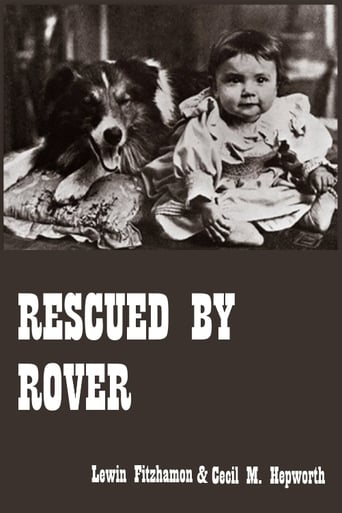
- Rescued by Rover (1905)
- Victorian melodrama
- The works of Albert Payson Terhune
This film influenced
- Where the North Begins (1923)
- Lassie Come Home (1943)
- The Call of the Wild (various versions)
Film restoration
the picture is preserved and survives today. A 35mm paper print is held in the Library of Congress as part of the Paper Print Collection. It has also been preserved in the BFI National Archive.
Where to watch
- Library of Congress (National Audio-Visual Conservation Center)
- British Film Institute (BFI) National Archive
- Occasionally featured in silent film retrospectives and specialized DVD collections of early Vitagraph shorts.