
Kunku
"Refuse the unjust marriage bed"
Keys: Space play/pause · ←/→ 10s · F fullscreen · M mute · </> speed
About this film
Neera marries elderly widower Kakasaheb and refuses consummation, asserting dignity against unjust union. Shanta Apte stars in V. Shantaram's Marathi social reform drama Kunku.
Cast & crew
More Drama films
View all →






More from Shantaram Rajaram Vankudre
View all →

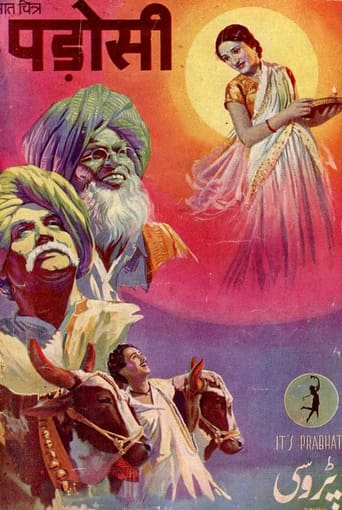
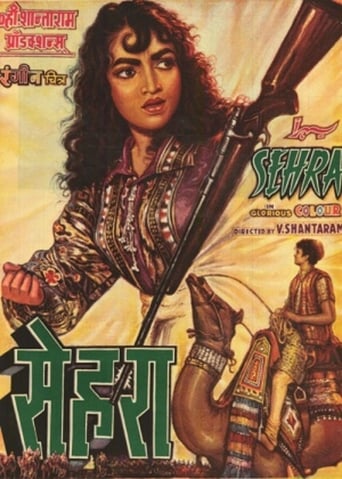
More about this film
About the production
Release dateJanuary 29, 1937
Box officeUnknown - but reported to be successful commercially
ProductionPrabhat Film Company
Filmed inKolhapur, Maharashtra, India, Prabhat Studios
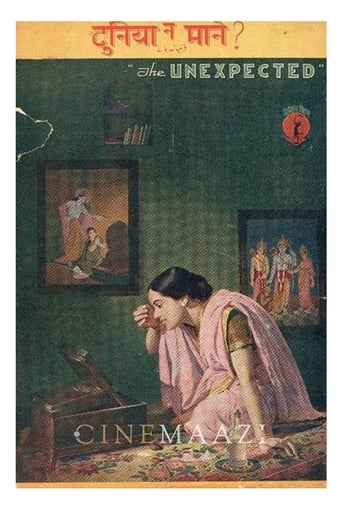
Directed by V. Shantaram during his most creative period at Prabhat Studios. The film was shot simultaneously in Marathi as 'Kunku' and Hindi as 'Duniya Na Mane'. Shantaram was known for his progressive social themes and this film was considered one of his most daring works, tackling the sensitive subject of child marriage and women's rights in conservative 1930s India.
Themes
Women's rights and autonomySocial reform and modernityPatriarchy and oppressionAge disparity in marriageIndividual conscience vs. social convention
Themes & topics
forced marriagesocial reformwomen's liberationfamily dramaprogressive lawyerstepfamily conflictmarriage refusalsocial injusticefeminist filmtraditional customs
Historical background
Kunku (1937) addressed child marriage and women's rights amid Indian social reform movements.
Why this film matters
Apte's defiant performance and Shantaram's progressivism made it a landmark of pre-Independence cinema.
Making of
V. Shantaram was deeply committed to social reform themes throughout his career, and 'Kunku' represented his boldest statement yet on women's rights. The production faced significant challenges from conservative elements who objected to the film's critique of traditional marriage customs. Shanta Apte, who played Neera, was not just an actress but also a trained classical singer, and she brought a unique intensity to the role. The film's realistic approach was revolutionary for its time, with Shantaram insisting on natural performances rather than the theatrical style common in Indian cinema of the 1930s. The production team conducted extensive research into actual cases of forced marriages to ensure authenticity. The film's controversial nature meant that the cast and crew faced social backlash, but they remained committed to the project's message.
What critics said
Indian critics debated reform message; international festivals noted its emotional power.
Did you know?
- The film was made in two versions simultaneously - Marathi as 'Kunku' and Hindi as 'Duniya Na Mane' - a common practice in early Indian cinema
- Shanta Apte's performance was so powerful that she became known as one of Indian cinema's first feminist icons
- The film was banned in several princely states due to its controversial subject matter challenging traditional marriage customs
- Director V. Shantaram was inspired to make the production after witnessing real-life cases of young women forced into marriages with older men
- The film's title 'Kunku' refers to the turmeric powder applied in Hindu marriage ceremonies, symbolizing the very institution the film critiques
- It was one of the first Indian films to explicitly address the issue of a woman's right to refuse physical relations in a marriage
- The film was screened at several international film festivals, including Venice, bringing attention to Indian social cinema
- Shanta Apte reportedly fasted for several days to achieve the gaunt, determined look of Neera in the film's later portions
- The stepson character was controversial for its time, as it hinted at incestuous desires, a taboo subject in 1930s Indian cinema
- The film's success led to V. Shantaram being considered one of India's most socially conscious directors
Awards & recognition
- Best Film at the Bombay Film Society Awards (1937)
- Best Actress Award for Shanta Apte at the Indian Motion Picture Congress (1939)
Visual style
The cinematography by K. D. Kaushik was innovative for its time, using lighting and camera angles to emphasize Neera's isolation and oppression. The film employed close-ups effectively to convey the characters' emotions, particularly Neera's defiance and suffering. The prison-like quality of the traditional household was emphasized through low-angle shots and shadows. The camera work was more naturalistic than the theatrical style common in 1930s Indian cinema, reflecting V. Shantaram's influence from international cinema. The film's visual language was sophisticated for its era, with symbolic use of objects like locked doors and barred windows to represent Neera's confinement.
Innovations
'Kunku' was technically advanced for its time, featuring innovative use of sound recording to capture natural dialogue rather than the exaggerated delivery common in early Indian talkies. The film employed sophisticated editing techniques to build tension and emotional impact. V. Shantaram experimented with narrative structure, using flashbacks and symbolic sequences that were uncommon in Indian cinema of the 1930s. The film's production design authentically recreated a middle-class Maharashtrian household of the era. The dual-language production was technically challenging, requiring careful coordination to maintain consistency across both versions.
Music
The music was composed by Keshavrao Bhole, with lyrics by Shantaram Athavale. The soundtrack included several songs that became popular, particularly those sung by Shanta Apte herself, who was a trained classical singer. The songs were not mere entertainment but served to advance the narrative and express Neera's inner turmoil. The film's use of music was restrained compared to typical Indian films of the era, reflecting its serious social theme. One particular song expressing Neera's resolve became an anthem for women's rights activists of the time. The background score was minimal but effective, using traditional Indian instruments to enhance emotional moments.
Famous quotes
Dukh sahya jaate, par anyay nahi" (Suffering can be endured, but injustice cannot be accepted)
Main ek insaan hoon, ek vastu nahi jo kisi ki marzi se chal sakti ho" (I am a human being, not an object that can be moved by someone's will)
Shadi ek bandhan nahi, samjhdari ka sawal hai" (Marriage is not a bondage, but a question of understanding)
Jab tak aurat apni awaz nahi dhadegi, tab tak samaj nahi badhega" (Until a woman raises her voice, society will not progress)
Memorable scenes
- Neera's powerful monologue refusing to consummate the marriage, declaring her stance against injustice
- The confrontation scene between Neera and her lecherous stepson Pandit, where she firmly rejects his advances
- The emotional climax where Kakasaheb acknowledges Neera's suffering and grants her freedom
- The symbolic scene where Neera stands before locked doors representing her confinement
- The tense family dinner scene where tensions between Neera and her in-laws come to a head
What audiences thought
The film was received with enthusiasm by progressive audiences and young people, particularly in urban areas where social reform movements had gained traction. Many women viewers reportedly found the film empowering and relatable. However, it faced opposition from conservative sections of society, with some theaters facing protests from traditionalist groups. Despite the controversy, the film was a commercial success, running for several weeks in major cities. The dual-language strategy (Marathi and Hindi versions) helped it reach a wider audience across different regions. Word-of-mouth publicity was strong, with many viewers recommending it for its important social message. The film's success proved that Indian audiences were ready for serious, socially relevant content alongside entertainment.
Film connections
Influenced by
- European realist cinema of the 1930s
- Indian social reform movements
- Victorian literature dealing with women's issues
- Russian cinema's social themes
- Gandhian philosophy of social change
This film influenced
- Ardhangini (1940)
- Dahej (1950)
- Bandini (1963)
- Mirch Masala (1987)
- Lekin... (1990)
- Matrubhoomi: A Nation Without Women (2003)
- Parched (2015)
Film restoration
The film has been preserved by the National Film Archive of India (NFAI) and is considered part of India's cinematic heritage. Both the Marathi and Hindi versions have been restored, though some prints show signs of deterioration common with films of this era. The restored versions have been screened at various film festivals and retrospectives. The film is also preserved in international archives including the British Film Institute. Digital restoration work has been undertaken to ensure the film's survival for future generations.
Where to watch
- National Film Archive of India screenings
- Film Heritage Foundation retrospectives
- Various Indian film festivals
- Some restored versions available on specialized streaming platforms for classic Indian cinema
- Academic film studies collections
- Museum of Moving Image archives