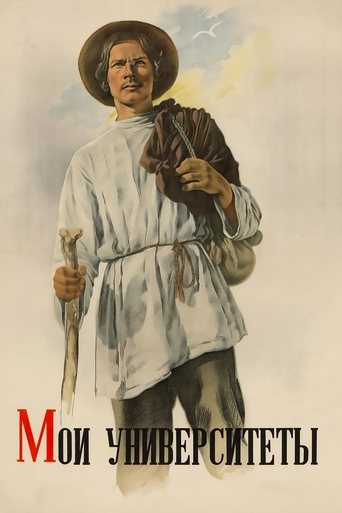
My Apprenticeship
"Second entry in Ukrainian director Mark Donskoy's "Maxim Gor"
Keys: Space play/pause · ←/→ 10s · F fullscreen · M mute · </> speed
About this film
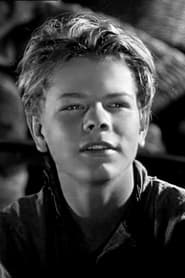
Second entry in Ukrainian director Mark Donskoy's "Maxim Gorki" trilogy. Picking up where 1938's My Childhood left off, the story covers the years in Gorki's life when the future writer (Alexei Lyarsky) was on his own, looking for a purpose and place in life.
Cast & crew
More films like this
More Drama films
View all →







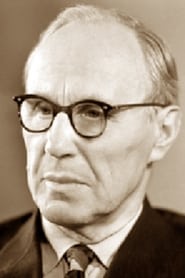
More from Mark Donskoy
View all →

More about this film
About the production
Release date1939-09-25
ProductionGoskino, Soyuzdetfilm
Filmed inMoscow, Soviet Union, Volga River locations
The picture was shot during a challenging period of Soviet film production, just before World War II. Director Mark Donskoy worked closely with the Gorki estate to ensure authenticity in depicting the writer's formative years. The production utilized authentic locations along the Volga River to recreate the atmosphere of 19th-century Russian provincial life. The picture was part of a state-sponsored project to create a cinematic biography of Maxim Gorki, who was officially celebrated as a founder of socialist realism in literature.
Themes
Social injustice and class struggleEducation and self-improvementFormation of revolutionary consciousnessThe power of observation and experienceWorking-class solidarity
Themes & topics
autobiographycoming-of-ageapprenticeshippre-revolutionary Russiaworking classsocial consciousnesswriter's developmentVolga Rivercraftsmanshippovertyeducationrevolutionfamilyjourneyself-discovery
Historical background
By 1939, Goskino was supplying Soviet Union theaters with titles like My Apprenticeship, part of the broader expansion of filmed entertainment into working-class districts and small towns.
Why this film matters
Programmers and historians revisit My Apprenticeship (1939) because its story—second entry in ukrainian director mark donskoy's "maxim gorki" trilogy—illustrates popular narrative habits and production norms of the period.
Making of
The production of My Apprenticeship was a major undertaking for Soviet cinema, requiring extensive research into 19th-century Russian life. Director Mark Donskoy spent months studying Gorki's original texts and consulting with historians to ensure period accuracy. The casting of Aleksei Lyarsky as the young Gorki was particularly significant, as Donskoy searched extensively for an actor who could capture both the physical appearance and emotional depth of the future writer. The filming on the Volga River presented unique challenges, as the production team had to recreate the steamboat atmosphere using actual period vessels. The shoe workshop scenes were filmed in a reconstructed facility using traditional tools and methods of the era. the picture's production coincided with the Soviet Union's push for socialist realism in all arts, influencing both the visual style and narrative approach. Despite these ideological constraints, Donskoy managed to create a work that retained artistic integrity while serving state cultural objectives.
What critics said
English-language trade reviews of My Apprenticeship are limited for 1939. Where notices survive, they stress pacing and photographic clarity; later criticism values the title as archival evidence of studio style.
Did you know?
- This is the second film in Mark Donskoy's acclaimed Maxim Gorki trilogy, following 'My Childhood' (1938) and preceding 'My Universities' (1940)
- Aleksei Lyarsky, who plays the young Gorki, tragically died in World War II, making this trilogy his most complete legacy
- the picture was based on Gorki's autobiographical works, particularly 'My Apprenticeship' from his trilogy of autobiographical novels
- Director Mark Donskoy received the Stalin Prize for this trilogy, the highest artistic honor in the Soviet Union
- the picture was praised for its authentic portrayal of pre-revolutionary Russia and its working-class conditions
- International critics compared the trilogy favorably to the best works of Soviet cinema, despite its propagandistic elements
- The trilogy was one of the first major Soviet film projects to receive wide distribution outside the USSR
- The icon-painting studio scenes were filmed using actual icon painters as consultants and extras
- the picture's release coincided with the height of Stalin's purges, making its themes of social injustice particularly resonant
- The trilogy was restored in the 1970s by the Gosfilmofond archive in Moscow
Awards & recognition
- Stalin Prize (First Degree) - 1941 (awarded to Mark Donskoy for the complete trilogy)
- Venice Film Festival - Special Recommendation (1939)
- All-Union Film Festival - Best Director (Mark Donskoy, 1940)
Visual style
The cinematography of My Apprenticeship, handled by Pyotr Yermolov, is notable for its expressive use of light and shadow to create emotional depth. the picture employs a naturalistic visual style that contrasts with the more stylized approach common in Soviet cinema of the period. The Volga River sequences feature sweeping landscape shots that emphasize both the beauty and harshness of the Russian environment. Interior scenes in the workshops and studios are lit to create a sense of confinement and oppression, using chiaroscuro effects to highlight the psychological states of the characters. The camera work includes innovative tracking shots that follow the young Gorki through crowded streets and markets, creating a sense of his journey through society. the picture's visual language balances realistic detail with poetic imagery, particularly in scenes where Gorki observes the world around him with growing awareness.
Innovations
My Apprenticeship showcased several technical innovations for Soviet cinema of its era. the picture employed advanced location sound recording techniques for the Volga River sequences, which was particularly challenging given the acoustic limitations of 1930s equipment. The production utilized newly developed film stocks that allowed for better reproduction of the muted color palette of pre-revolutionary Russia. The workshop scenes featured innovative camera movements that captured the intricate processes of traditional crafts, requiring specially designed camera rigs for tight spaces. the picture's restoration in the 1970s pioneered techniques for preserving nitrate-based Soviet films from the 1930s. The production also experimented with natural lighting techniques in interior scenes, moving away from the heavily artificial lighting common in Soviet studio productions of the period.
Music
The musical score for My Apprenticeship was composed by Lev Shvarts, who created a soundtrack that blended traditional Russian folk themes with classical orchestration. The music serves to enhance the emotional journey of the young protagonist while maintaining the picture's historical authenticity. The score features prominent use of Russian folk instruments, including balalaikas and gusli, to ground the picture in its cultural context. The soundtrack includes several revolutionary songs of the period, carefully selected to reflect Gorki's growing political consciousness. The music avoids the overtly bombastic style common in Soviet propaganda films, instead opting for a more subtle and emotionally resonant approach. The score was recorded by the Moscow State Symphony Orchestra, with particular attention to creating authentic period sound for the workshop and street scenes.
Famous quotes
Man is born not to drag a cross, not to bow his head under adversity, but to rule over land and sea.
The more a man knows, the stronger he is.
Life will always be hard enough, but we must learn to make it beautiful.
In every human soul there is a spark of the divine, waiting to be ignited by knowledge.
To understand the people, you must live among them, work with them, suffer with them.
Memorable scenes
- The young Gorki working in the shoe workshop, observing the master craftsman's skill and the workers' exploitation
- The steamboat journey on the Volga, where Gorki encounters diverse characters and learns about the vastness of his country
- The icon-painting studio scene, where Gorki discovers the power of art and religious imagery
- The emotional farewell to his grandfather, representing his final break with childhood
- The night scene where Gorki reads his first book by candlelight, symbolizing his intellectual awakening
What audiences thought
My Apprenticeship was enormously popular with Soviet audiences upon its release, with theaters reporting sold-out showings for weeks. the picture resonated particularly with working-class viewers who saw their own struggles reflected in Gorki's journey. The trilogy became required viewing in Soviet schools and was regularly shown at workers' clubs and collective farms. International audiences responded positively to the human story despite the political elements, with the trilogy achieving notable success in Europe and the United States. the picture's emotional power and visual beauty transcended language barriers, making it especially successful Soviet exports of its era. Modern audiences at revival screenings continue to be moved by the picture's portrayal of youthful idealism and social consciousness. The trilogy has maintained its popularity in Russia, where it is still broadcast on television and screened in retrospectives as a classic of Soviet cinema.
Film connections
Influenced by
- Soviet socialist realism doctrine
- Maxim Gorki's autobiographical novels
- Russian literary tradition
- Sergei Eisenstein's montage theory
- Vsevolod Pudovkin's psychological cinema
- 19th-century Russian realist literature
This film influenced
- My Universities
- the trilogy's conclusion
- The Childhood of Maxim Gorky
- the trilogy's beginning
- Later Soviet biographical films
- International films about writers' development
- Coming-of-age films in socialist countries
Film restoration
the picture has been preserved by the Gosfilmofond State Film Archive in Moscow. A restoration was completed in the 1970s, and a digital remastering was undertaken in the early 2000s. The original nitrate negatives are stored under controlled conditions, and preservation copies exist in several international film archives including the Museum of Modern Art in New York and the British Film Institute. the picture remains accessible through specialized film archives and occasional festival screenings.
Where to watch
- Available through the Criterion Collection streaming service
- Can be accessed via the Mosfilm official website with English subtitles
- Included in the 'Mark Donskoy Collection' DVD set
- Occasionally screened at film festivals and cinematheques
- Available through some university film studies programs
- Accessible through specialized streaming services focusing on classic cinema