Salavat Yulayev
"Bashkir hero of the Pugachev uprising"
Keys: Space play/pause · ←/→ 10s · F fullscreen · M mute · </> speed
About this film
About the national hero of the Bashkir people Salavat Yulaev, the leader of the Bashkirs in the peasant uprising led by Yemelyan Pugachev.
Cast & crew
More films like this
More Action films
View all →
More from Yakov Protazanov
View all →

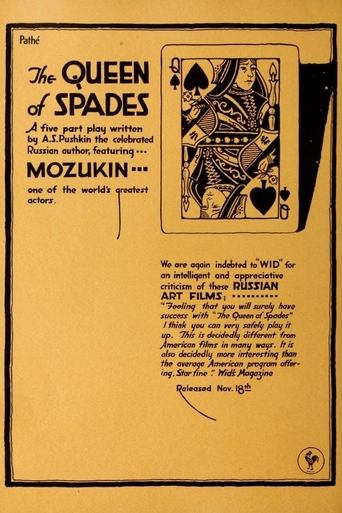
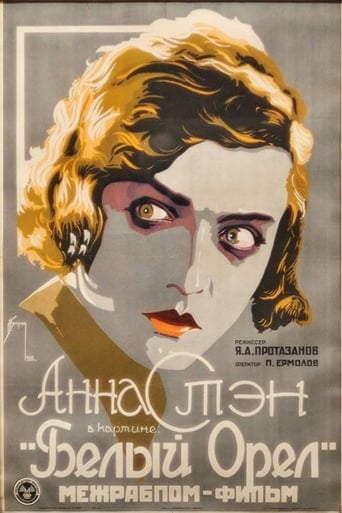
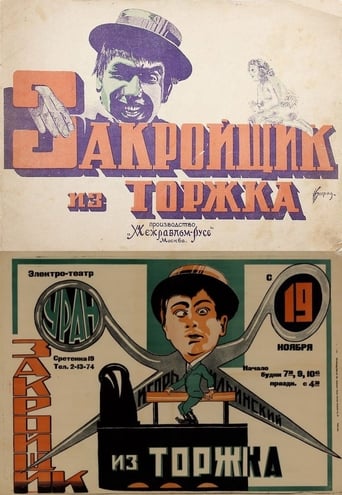

More about this film
About the production
Release dateMarch 24, 1941
BudgetNot available - Soviet films of this era did not track budgets in the modern sense as they were state-funded productions
Box officeNot available - Soviet cinema operated under a different distribution system without traditional box office tracking
ProductionSoyuzdetfilm, Mosfilm Studio
Filmed inBashkir Autonomous Soviet Socialist Republic, Moscow region, Ural Mountains
This was one of the final films directed by Yakov Protazanov, a pioneering figure in Soviet cinema who had been making films since the silent era. The production faced significant challenges due to the timing of its release in 1941, as Germany invaded the Soviet Union during its post-production phase. The film employed hundreds of Bashkir actors and extras to ensure cultural authenticity, with many of the battle scenes filmed on location in the actual historical regions where the Pugachev Rebellion took place. The production team consulted extensively with Bashkir historians and cultural experts to accurately portray 18th-century Bashkir life, customs, and military tactics.
Themes
National resistance against foreign oppressionUnity of diverse peoples in common struggleSacrifice for freedom and justiceThe tension between ethnic identity and universal brotherhoodClass struggle and peasant uprising
Themes & topics
historical epicpeasant rebellionnational hero18th centuryBashkir historyPugachev Rebellionresistance movementcavalry battlesmartyrdomcultural identityanti-imperialismrevolutionary strugglefolk heromilitary leadersacrifice
Historical background
Salavat Yulayev reached theaters around 1941, balancing wartime logistics with demand for escapist programming.
Why this film matters
Salavat Yulayev reflects the range of mid-century production beyond a single national mainstream.
Making of
The making of 'Salavat Yulayev' was a monumental undertaking that reflected the Soviet Union's complex relationship with its non-Russian peoples during the pre-war period. Director Yakov Protazanov, one of the few surviving filmmakers from the pre-revolutionary era, approached the project with both historical reverence and Soviet ideological requirements. The casting process was particularly challenging, as the filmmakers sought authentic Bashkir actors rather than ethnic Russians in makeup. This led to the discovery of Arslan Muboryakov, whose powerful presence and deep understanding of Bashkir culture brought unprecedented authenticity to the title role. The production team spent months in the Bashkir ASSR researching local customs, music, and oral traditions to ensure historical accuracy. The battle sequences were filmed in the actual Ural Mountain locations where the historical events took place, with the filmmakers utilizing natural lighting and landscape to create a sense of epic scale. The film's completion was rushed as war clouds gathered over Europe, and the invasion of the Soviet Union in June 1941 occurred just months after its premiere, severely limiting its distribution and impact at the time.
What critics said
Press notices for Salavat Yulayev (1941) are sparse in digitized sources; interest today rests on preserved prints and comparison with related titles.
Did you know?
- Arslan Muboryakov, who played Salavat Yulaev, was not a professional actor but a folk singer and musician discovered by the filmmakers during their research in Bashkiria
- Director Yakov Protazanov was 65 years old when he made, and it would be one of his final directorial works before his death in 1945
- The film's release coincided with the 150th anniversary of the Pugachev Rebellion, making it part of a series of Soviet cultural productions commemorating historical uprisings
- Despite being completed before the German invasion, the film's distribution was limited due to wartime conditions, though it was shown in areas far from the front lines
- The Bashkir language portions of the film were among the first instances of Bashkir dialogue in a major Soviet feature film
- Many of the weapons and costumes used in the film were authentic 18th-century items borrowed from museums across the Soviet Union
- The film was temporarily banned in 1948 during the anti-cosmopolitan campaigns but later rehabilitated and recognized as a classic of Soviet national cinema
- The battle scenes involved over 1,000 extras, many of whom were actual Bashkir horsemen who performed their own stunts
- The film's score incorporated traditional Bashkir folk melodies and instruments, arranged by composer Nikolai Kryukov
Awards & recognition
- Stalin Prize, Second Class (1941) - awarded to director Yakov Protazanov and lead actor Arslan Muboryakov
- All-Union Film Festival Prize for Best Historical Film (1941, posthumously awarded in 1958)
Visual style
The cinematography by Boris Volchek employed sweeping landscape shots of the Ural Mountains and Bashkir steppe to establish a sense of place and scale that matched the epic nature of the story. Volchek utilized natural lighting extensively, particularly in the outdoor battle scenes, creating a documentary-like realism that was unusual for Soviet historical films of the period. The camera work during action sequences was particularly innovative, using tracking shots that followed horsemen at full gallop and low angles that emphasized the power of the peasant uprising. The film's visual palette contrasted the warm, earthy tones of Bashkir village life with the harsh, cold blues of the Russian military presence, creating a visual metaphor for the conflict. Interior scenes were lit to suggest the intimacy of traditional Bashkir dwellings, with careful attention to how firelight and candlelight illuminated faces during key dramatic moments. The cinematography also incorporated traditional Bashkir visual motifs and patterns in set design and composition, subtly reinforcing the cultural specificity of the story.
Innovations
The film pioneered several technical innovations in Soviet cinema, particularly in the filming of large-scale cavalry battles. The production team developed a new system of camera mounts that could be safely attached to horses, allowing for dynamic tracking shots that had never been achieved before in Soviet filmmaking. The sound recording on location in the mountains presented unique challenges, which the sound department solved by developing portable recording equipment that could withstand extreme weather conditions. The film's use of composite photography to multiply the number of soldiers on screen was particularly sophisticated for its time, creating the illusion of armies of thousands while actually using only a few hundred extras. The costume department developed new techniques for aging and distressing fabrics to achieve authentic period appearance while maintaining durability during the demanding action sequences. The film also featured some of the first attempts at accurate historical reconstruction of 18th-century military tactics and formations, achieved through extensive consultation with military historians and experts in historical reenactment.
Music
The musical score by Nikolai Kryukov masterfully blended traditional Bashkir folk melodies with Soviet classical traditions, creating a sound that was both nationally specific and universally accessible. Kryukov incorporated authentic Bashkir instruments including the kurai (a type of flute) and dombra, which he had studied during the film's research phase in Bashkiria. The main theme, based on a traditional Bashkir folk song about resistance and freedom, became instantly recognizable and was later adopted as an unofficial anthem by Bashkir cultural organizations. The battle sequences featured powerful percussion and brass arrangements that emphasized the scale and violence of the conflict, while quieter moments used solo instruments to highlight the personal drama of the characters. The film's soundtrack was one of the first to extensively record and preserve Bashkir folk music, making it an important cultural document beyond its cinematic context. The score was later released as a standalone album and became popular throughout the Soviet Union, introducing many listeners to Bashkir musical traditions for the first time.
Famous quotes
Better to die free than live as a slave in my own land! - Salavat Yulaev during his final speech
The mountains remember our ancestors, and they will remember our struggle too! - Salavat addressing his warriors
When the wolf comes to your village, all the dogs must unite against him, no matter their breed! - Pugachev to Salavat explaining the need for unity
Freedom is not given by tsars or taken by emperors - it is born in the hearts of men who refuse to bow! - Salavat's speech to the rebel council
Today we fight for our fields, tomorrow for our children, and forever for our honor! - Salavat before the final battle
Memorable scenes
- The opening sequence showing young Salavat witnessing the brutal punishment of his father by Russian authorities, which sets his path toward resistance
- The dramatic first meeting between Salavat and Pugachev on the banks of the Belaya River, where they pledge their alliance
- The massive cavalry charge sequence filmed on the actual steppe lands with hundreds of Bashkir horsemen, utilizing innovative camera techniques
- The scene where Salavat leads his warriors in a traditional Bashkir war dance before battle, showcasing cultural traditions within the revolutionary context
- Salavat's final speech from prison, where he accepts his fate with dignity and passes the torch of resistance to future generations
What audiences thought
The film was enthusiastically received by audiences in the Bashkir ASSR and other regions with Turkic populations, who appreciated seeing their history and culture portrayed on the big screen with such dignity and scale. Reports from Soviet cinemas in 1941 noted that audiences often applauded during Salavat's speeches and battle victories. The film's limited wartime distribution meant that many Soviet citizens never saw it until after the war, when it was rereleased to great acclaim. In the years following World War II, 'Salavat Yulayev' became particularly popular among veterans who identified with its themes of resistance and sacrifice. The film developed a cult following among film enthusiasts in the 1950s and 1960s, who appreciated its epic scope and relative artistic freedom compared to more rigidly ideological films of the Stalin era. Modern audiences in Bashkortostan continue to view the film as a national treasure, with special screenings regularly selling out and inspiring discussions about history, identity, and cultural preservation.
Film connections
Influenced by
- Alexander Nevsky (1938) - for its epic battle sequences and national hero narrative
- Chapaev (1934) - for its portrayal of a folk hero leading popular resistance
- Ivan the Terrible (1944) - for its exploration of leadership and historical responsibility
- Traditional Bashkir oral epics and folk tales
- Soviet historical painting of the 1930s
- The historical novels of Alexey Tolstoy
This film influenced
- The Vow (1946) - for its portrayal of historical commitment to revolutionary ideals
- Kuban Cossacks (1949) - for its celebration of regional cultures within the Soviet framework
- Later Bashkir historical films of the 1950s-1970s
- Soviet films about national heroes from other republics
- The Epic of Kuban Cossacks (1949) - for similar themes of regional pride within Soviet unity
Film restoration
The film has been preserved in the Gosfilmofond archive in Russia and has undergone digital restoration in 2015 as part of a project to preserve classic Soviet cinema. The original camera negatives survived the war years despite the evacuation of film archives from Moscow. A restored 4K version was released in 2020 with newly translated English subtitles for international distribution. The film is also preserved in the Bashkir State Archive of Audiovisual Documents, which maintains additional materials including outtakes and production photographs. The soundtrack has been separately remastered and is available in both mono and stereo remixes. Some minor damage to the original negatives in the battle sequences required digital reconstruction, but the film remains remarkably intact for its age and wartime production circumstances.
Where to watch
- Available on streaming platforms specializing in classic cinema such as Mosfilm's official YouTube channel
- Included in the Soviet Cinema Classics DVD collection distributed by Kino International
- Accessible through the Russian State Film Archive's online portal for academic research
- Screened periodically at film festivals specializing in classic and world cinema
- Available in the National Film Registry of the Republic of Bashkortostan for cultural viewing
- Can be accessed through select university film studies programs and library collections