
Satan's Rhapsody
"After making the deal."
Keys: Space play/pause · ←/→ 10s · F fullscreen · M mute · </> speed
About this film
A Faustian tale about an old woman who makes a pact with Mephisto to regain her youth, but in return she must stay away from love. After making the deal, she meets two brothers who fall in love with her.
Cast & crew
More Mystery films
View all →
More from Nino Oxilia
View all →

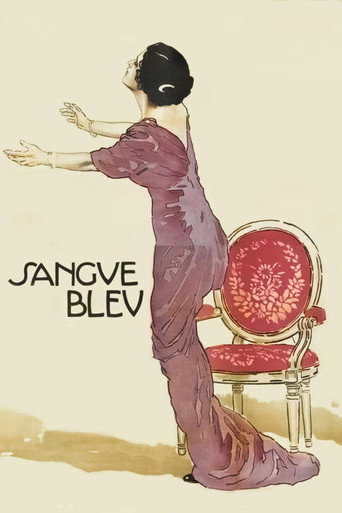
More about this film
About the production
Release dateFebruary 1917 (Italy)
Box officeUnknown - box office records from 1917 Italian cinema are not comprehensively documented
ProductionFilm d'Arte Italiana, Cines
Filmed inRome, Italy, Turin, Italy
Filmed during the height of World War I, which created significant production challenges including material shortages and restricted movement. The film utilized elaborate Art Nouveau-inspired sets and costumes designed to showcase Lyda Borelli's ethereal presence. Special effects techniques of the era, including multiple exposures and dissolves, were employed to create the supernatural transformation sequences. The production faced wartime censorship issues due to its occult themes, requiring several scenes to be reshot or modified.
Themes
Faustian bargainThe price of vanityEternal youth vs. true loveSupernatural interventionFemale agency and power
Themes & topics
pact with the deviltransformationeternal youthforbidden lovesupernaturalbrotherstragedybeautysoultemptationgothicmelodramaart nouveau
Historical background
Production circa 1917 meant fixed cameras, intertitles or early sound rigs, and studio economies that shaped every scene in Satan's Rhapsody.
Why this film matters
Historians treat Satan's Rhapsody as evidence of what typical 1917 audiences could see in a program slot.
Making of
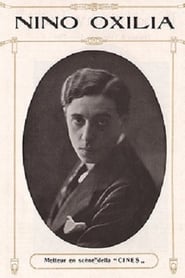
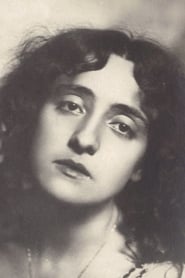
The production of 'Satan's Rhapsody' was marked by the extraordinary collaboration between director Nino Oxilia and star Lyda Borelli, who had previously worked together on 'The Fatal Kiss' (1916). Oxilia, a man of letters as well as cinema, brought his poetic sensibility to the film's visual language, creating dreamlike sequences that pushed the boundaries of silent film storytelling. Borelli, known for her intense and stylized acting method, worked closely with Oxilia to develop a performance that blended theatrical gesture with cinematic subtlety. The film's most technically challenging sequence involved the transformation of the elderly countess into the young Alba, which required days of preparation and multiple camera setups. The wartime conditions meant that the production had to work with limited resources, leading to creative solutions for special effects and set design. Tragically, Oxilia was killed in action shortly after the film's completion, making 'Satan's Rhapsody' his final artistic testament.
What critics said
Modern retrospectives screen Satan's Rhapsody to illustrate 1917 pacing and camera norms.
Did you know?
- Lyda Borelli, the film's star, was widely known divas of Italian silent cinema and was known as the 'Divine Duse' of film, inspiring the term 'diva film' genre
- The film's original Italian title 'Rapsodia Satanica' is considered one of the masterpieces of the Italian diva film genre
- Director Nino Oxilia was also a poet and playwright, and this was his final film before his death in World War I in 1917
- The film featured an original musical score by composer Pietro Mascagni, famous for his opera 'Cavalleria Rusticana'
- The transformation scenes were considered groundbreaking for their time, using sophisticated double exposure techniques
- The film was thought to be lost for decades until a copy was discovered in the 1990s in the Netherlands
- Lyda Borelli's performance style in this film influenced many later actresses, including Theda Bara in American cinema
- The film's themes of youth, beauty, and supernatural bargains were particularly resonant during the trauma of World War I
- The two brothers in the film were played by actors who were real-life brothers, adding authenticity to their on-screen dynamic
- The film's elaborate costumes required over 200 costume changes for Borelli, setting a record for Italian cinema at the time
Visual style
The cinematography by Alberto Chentrens and Giovanni Tomatis was revolutionary for its time, employing innovative lighting techniques to create an otherworldly atmosphere. The film made extensive use of chiaroscuro effects to emphasize the dual nature of the protagonist's existence between youth and age, good and evil. Special attention was paid to lighting Lyda Borelli to enhance her ethereal quality, using soft focus and backlighting to create a halo effect in key scenes. The transformation sequence utilized multiple exposures and careful editing to achieve a seamless metamorphosis that was technically remarkable for 1917. The film's visual style drew from Art Nouveau and Symbolist painting traditions, creating a dreamlike quality that blurred the boundaries between reality and the supernatural.
Innovations
The film pioneered several technical innovations that would become standard in later cinema. The transformation sequence used sophisticated double exposure techniques that allowed the elderly countess and young Alba to appear simultaneously in the same frame, creating a ghostly visual effect. The production employed elaborate matte paintings and glass shots to create supernatural environments. The film's use of color tinting was particularly sophisticated, with different tints used to indicate emotional states and supernatural occurrences. The editing techniques, particularly in the dream sequences, showed an advanced understanding of montage and rhythmic cutting. The makeup and prosthetics used for the transformation scenes were considered the most advanced of their time, taking hours to apply and requiring multiple makeup artists.
Music
The original score was composed by Pietro Mascagni, one of Italy's most celebrated opera composers, marking one of the earliest examples of a major classical composer writing specifically for cinema. The score, now lost, was described as a 'symphonic rhapsody' that incorporated leitmotifs for the main characters and themes. The music was performed live in theaters during screenings, with full orchestral accompaniment in major cities. The restored version features a newly commissioned score by composer Timothy Brock, based on period-appropriate musical styles and references to Mascagni's known compositional techniques. The original score's integration with the narrative was considered groundbreaking, with music directly commenting on and enhancing the emotional content of scenes.
Famous quotes
Youth without love is but a longer death.
The devil's bargain always demands the heart's true treasure.
In this new beauty, I find only the old loneliness magnified.
To be desired by all but loved by none - this is the devil's cruelest jest.
When time stands still, the heart must break.
Memorable scenes
- The transformation sequence where the elderly countess makes her pact with Mephisto and gradually becomes young again through a series of dissolves and double exposures, accompanied by orchestral swells and dramatic lighting changes
- The mirror scene where Alba sees both her youthful reflection and the ghost of her old self, creating a haunting visual representation of her divided nature
- The climactic scene where both brothers declare their love simultaneously, forcing Alba to choose between damnation and emotional fulfillment
- The opening sequence in the dark, candle-lit chamber where the pact is made, with shadows dancing on the walls as Mephisto appears
- The final scene where Alba must face the consequences of her choice, with the camera pulling back to reveal her isolated in an ornate but empty room
What audiences thought
The film was a significant popular success upon its release in Italy, with audiences particularly drawn to Lyda Borelli's magnetic screen presence and the film's supernatural themes. Contemporary accounts describe packed theaters and emotional audience reactions, with some viewers reportedly fainting during the transformation sequences. The film's themes of eternal youth and beauty struck a chord with war-weary audiences seeking escape and fantasy. Despite its artistic ambitions, the film was accessible enough to attract mainstream audiences, becoming one of the box office successes of 1917 Italian cinema. Modern audiences, through festival screenings and the restored version, have responded positively to the film's visual beauty and emotional power, with many noting its surprising sophistication for a film of its era.
Film connections
Influenced by
- Goethe's Faust
- Oscar Wilde's The Picture of Dorian Gray
- Gothic literature tradition
- Italian opera (particularly Verdi and Puccini)
- Symbolist poetry
- Art Nouveau aesthetic movement
- German Romanticism
- Decadent movement literature
This film influenced
- The Cabinet of Dr. Caligari (1920)
- Nosferatu (1922)
- The Phantom of the Opera (1925)
- Sunrise: A Song of Two Humans (1927)
- The Blue Angel (1930)
- Beauty and the Beast (1946)
- The Devil and Daniel Webster (1941)
- Angel Heart (1987)
Film restoration
The film was believed lost for over 70 years until a nitrate print was discovered in the Dutch Film Archive in the 1990s. This print, while incomplete, contained the majority of the film and was subsequently restored by the Cineteca di Bologna in collaboration with the British Film Institute. The restoration used digital technology to repair damage and reconstruct missing scenes using production stills and continuity scripts. The restored version premiered at the Venice Film Festival in 1995. While some footage remains missing, particularly from the third act, the restored version represents approximately 85% of the original film. The original Mascagni score is lost, but a reconstruction based on period sources has been created for modern screenings.
Where to watch
- The Criterion Collection (Blu-ray/DVD with restored version and new score)
- MUBI streaming platform (periodically available)
- The British Film Institute's streaming service BFI Player
- Special screenings at film archives and cinematheques (Cineteca di Bologna, MoMA Film Department)
- University film studies collections and academic libraries
- Classic film streaming services specializing in silent cinema