
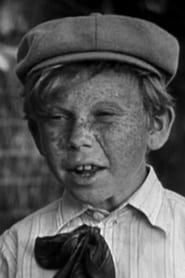
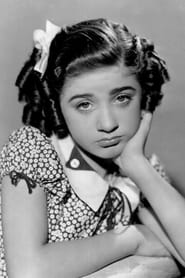

Shivering Shakespeare
"Our Gang fractures Quo Vadis on stage"
Keys: Space play/pause · ←/→ 10s · F fullscreen · M mute · </> speed
About this film
Just as pre-war life, the gang is participating in a program sponsored by the Golden Age Dramatic League. They present their own fractured version of Quo Vadis. Things go from bad to worse when the neighborhood tough kids disrupt the show. The pie fight is given a new twist by use of some slow motion
Cast & crew
More films like this
More Comedy films
View all →







More from Robert A. McGowan
View all →
More about this film
About the production
Release dateJanuary 25, 1930
BudgetApproximately $30,000 (estimated for Our Gang two-reelers of the era)
Box officeNot applicable (short film distributed as part of MGM packages)
ProductionHal Roach Studios, Metro-Goldwyn-Mayer (MGM)
Filmed inHal Roach Studios - 8822 Washington Blvd, Culver City, California, USA, Gamut Hall, Los Angeles (Interiors)
The film was produced under the working title 'The Gladiator's Dilemma.' It was the 95th entry in the Our Gang series and one of the early 'all-talking' shorts. Interestingly, while credited to Anthony Mack, this was actually a pseudonym for Robert A. McGowan, the nephew of the series' senior director Robert F. McGowan. The production utilized the Western Electric Sound System, which was the industry standard at the time for high-quality audio recording.
Themes
Amateurism vs. ProfessionalismChildhood RebellionSocial Class ParodyThe Chaos of PerformanceCommunity Conflict
Themes & topics
Our GangLittle Rascalspie fightstage playRoman gladiatorslow motionparodyneighborhood bulliesamateur dramatics1930s comedy
Historical background
Production in 1930 placed Shivering Shakespeare among pre-war releases competing for attention in a rapidly expanding market.
Why this film matters
Retrospective programs include Shivering Shakespeare when mapping pre-war output across genres and national cinemas. Shivering Shakespeare is an Our Gang short film, the 95th in the series, directed by Anthony Mack.
Making of
The production of 'Shivering Shakespeare' was a logistical challenge due to the large number of child extras required for the audience scenes. The studio had to hire additional teachers, including Mrs. K. Morrison and Mrs. H. Harrison, to supervise the children on set and ensure compliance with California's strict child labor laws. The pie fight was particularly difficult to film because the 'all-talking' equipment of 1929 was bulky and sensitive to the mess; microphones had to be carefully hidden to avoid being splattered with custard. Additionally, the 'elephant' costume worn by Edgar Kennedy was a recycled prop from a previous Hal Roach production, modified to look more amateurish for the 'school play' setting.
What critics said
Festival revivals have renewed discussion of Shivering Shakespeare among pre-war specialists.
Did you know?
- The film features a rare use of slow-motion cinematography during the pie fight sequence, a technique seldom used in early sound comedies.
- Director Robert A. McGowan used the name 'Anthony Mack' to avoid confusion with his uncle, Robert F. McGowan, who produced the film.
- The play performed by the kids is a parody of the 1924 silent epic 'Quo Vadis.'
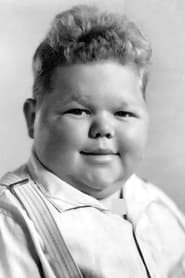
- Norman 'Chubby' Chaney had to have his script lines written on the inside of his Roman robe because he had difficulty memorizing the complex dialogue.
- The pie vendor in the film, often misidentified as Dorothy Coburn, was actually played by Clara Guiol.
- Edgar Kennedy, famous for his 'slow burn' comedy style, appears as Kennedy the Cop and performs inside a clumsy elephant costume.
- The film was copyrighted on December 17, 1929, but not released until January 1930.
- A young Edith Fellows appears in a small role as a screaming child frightened by the elephant costume.
- The pies used in the finale were real and cost 10 cents each according to the on-screen kiosk, which listed flavors like chocolate, banana cream, and mince.
- The film contains a brief instance of silent-era style footage, likely due to technical limitations during the transition to sound.
Visual style
Photographed by Art Lloyd and Harry Gerstad, the film uses a static camera style typical of early sound films to accommodate the 'icebox' soundproof booths. However, it breaks this rigidity during the finale with the innovative use of slow-motion to emphasize the impact of the pies hitting the actors' faces. The lighting is high-key, typical of Roach comedies, ensuring all the physical gags are clearly visible.
Innovations
The primary technical achievement is the integration of slow-motion photography into a sound film, which required precise synchronization to ensure the audio didn't drift during the speed-ramped visual sequences. It also showcased the studio's ability to manage large-scale physical comedy (the pie fight) within the constraints of early sound-on-disc and sound-on-film recording.
Music
The film features a live piano accompaniment by T. Marvin Hatley, who would later compose the famous 'Leaping Cuckoos' theme for Laurel and Hardy. The sound recording was handled by Elmer Raguse using the Western Electric system. Notable sound effects include the 'raspberry' noises blown by Wheezer and the thunder effects created by Edgar Kennedy backstage using a sheet of metal.
Famous quotes
Mrs. Kennedy: 'I hope that I have adored you with the history of my efforts to bring to this city a palpitating consciousness of things artistic.'
Wheezer (backstage): [Blows a loud raspberry during the introduction]
Chubby (as Nero): 'I'll do it or bite the dust!'
Audience Member: 'Young lady, bring me one pie!'
Mrs. Kennedy: 'If you take that attitude toward the drama, you'll all grow up to be rowdies!'
Memorable scenes
- The opening introduction where Wheezer repeatedly interrupts Mrs. Kennedy's pretentious speech with 'raspberries' from behind the curtain.
- Norman 'Chubby' Chaney as a nervous Nero, constantly lifting his toga to read lines he has written on his underwear.
- The 'elephant' reveal, where Edgar Kennedy's legs are clearly visible beneath a poorly constructed animal costume, terrifying a small child in the audience.
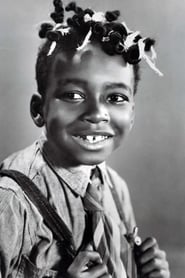
- The slow-motion pie impact sequence, where a pie hits Farina squarely in the face in extreme detail.
- The finale where the kids, led by Chubby, decide to stop fighting the bullies and instead pelt the bossy Mrs. Kennedy with chocolate pies.
What audiences thought
Contemporary audiences, particularly children, responded enthusiastically to the slapstick violence and the relatable 'school play gone wrong' premise. The film was a staple of Saturday matinee screenings for decades. Today, it is remembered fondly by 'Little Rascals' fans as one of the quintessential 'messy' shorts of the Jackie Cooper/Chubby Chaney era.
Film connections
Influenced by
- Quo Vadis (1924)
- The Battle of the Century (1927)
- Shakespearean Theater
- Vaudeville slapstick
This film influenced
- The Little Rascals (1994)
- Bugsy Malone (1976)
- The Muppets (various stage-disaster tropes)
Film restoration
The film is well-preserved and has undergone a high-definition restoration by ClassicFlix as part of 'The Little Rascals: The ClassicFlix Restorations, Volume 1.' It is also in the public domain in the United States.
Where to watch
- Plex (Streaming)
- Amazon Prime Video (via ClassicFlix collection)
- YouTube (Official Little Rascals Channel)
- The Little Rascals: The Complete Collection (DVD/Blu-ray)