

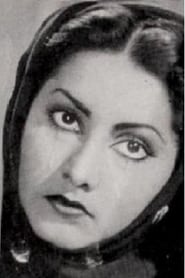

Sikandar
"Alexander's army meets Porus at the Indian border."
Keys: Space play/pause · ←/→ 10s · F fullscreen · M mute · </> speed
About this film
Alexander the Great reaches the Jhelum and the Indian border after conquering Persia and the Kabul valley, where Sohrab Modi's King Puru (Porus) awaits. Their confrontation pits Macedonian invasion against Indian resistance.
Cast & crew
More films like this
More War films
View all →

More from Sohrab Modi
View all →


More about this film
About the production
Release dateJanuary 3, 1941
BudgetEstimated to be expensive Indian films of its time, costing approximately 2-3 lakh rupees (a massive sum in 1941)
Box officeA commercial success, running for over 25 weeks in many theaters and becoming one of the highest-grossing films of 1941
ProductionMinerva Movietone
Filmed inMumbai (Bombay), India, Various locations in and around Bombay studios
Elaborate sets designed to recreate ancient Greece and India, with thousands of extras for the battle sequences. Sohrab Modi invested heavily in authentic-looking costumes and armor. The chariot scenes and battle formations were choreographed with military precision. The production faced challenges due to wartime restrictions on materials, but Modi's determination to create an epic spectacle overcame these obstacles. The film's grandeur set new standards for production values in Indian cinema.
Themes
Colonial resistance and anti-imperialismDignity in defeatCultural clash and mutual respectLeadership and kingshipNational pride and identity
Themes & topics
Alexander the GreatKing PorusBattle of HydaspesAncient IndiaHistorical epicWar dramaGreek invasionIndian resistanceAncient warfareHonor and dignityCultural encounterEpic battleHistorical figureAncient civilizationMilitary conquest
Historical background
Made in 1941, in British Raj, under Sohrab Modi, Sikandar belongs to drama film filmmaking as studio systems and national cinemas competed for audiences. Sikandar or Sikander is a 1941 epic Bollywood film directed by Sohrab Modi and starring Prithviraj Kapoor as Alexander the Great.
Why this film matters
Within drama film history, Sohrab Modi's name attaches to the work; 1941 film by Sohrab Modi.
Making of
The making of 'Sikandar' was a monumental undertaking for Indian cinema in 1941. Sohrab Modi, known for his perfectionism, spent months researching historical details about Alexander's campaign in India. He consulted history books and met with scholars to ensure authenticity. The casting was particularly significant - Prithviraj Kapoor, a towering figure in Indian theater and cinema, was chosen to play Alexander after Modi saw his commanding stage presence. Kapoor underwent extensive preparation, studying Alexander's character and mannerisms. The battle sequences were choreographed over several weeks, with real horses and specially constructed weapons. The film's music director, Mir Saheb, composed a grand orchestral score that blended Western classical elements with Indian melodies, creating a unique soundscape for the historical epic. The production faced shortages due to World War II, but Modi's resourcefulness ensured the film maintained its epic scale. The dialogue recording was particularly challenging as it required perfect Urdu pronunciation from all actors, a standard Modi maintained for all his productions.
What critics said
Contemporary reviews of Sikandar are sparse in open sources; later catalog entries chiefly summarize plot and credits.
Did you know?
- Prithviraj Kapoor's portrayal of Alexander was so convincing that many viewers believed he was actually of foreign origin
- Made during British rule and contained subtle anti-colonial undertones through its depiction of foreign invasion and Indian resistance
- Sohrab Modi not only directed and starred in the film but also produced it under his Minerva Movietone banner
- The battle sequences were filmed with over 5,000 extras, making it one of the largest crowd scenes in Indian cinema at the time
- The film's dialogue was written in Urdu, which was common for prestigious productions of the era
- The chariots used in the film were specially constructed and required horses to be trained extensively for the scenes
- The film's success established Minerva Movietone as one of India's premier production houses
- Alexander's costume weighed over 20 kilograms and had to be worn by Prithviraj Kapoor for long shooting periods
- One of the first Indian historical epics to gain international attention
- Despite being made in 1941, the film's sets and production quality rivaled contemporary Hollywood historical films
Awards & recognition
- Best Film Award from the Indian Film Journalists Association (1941)
- Best Director Award for Sohrab Modi from the Bengal Film Journalists' Association (1941)
- Best Actor Award for Prithviraj Kapoor from various film critics' associations
Visual style
The cinematography by Y.D. Sarpotdar was revolutionary for its time, employing techniques rarely seen in Indian cinema. The film featured sweeping panoramic shots of battlefields, innovative camera movements during action sequences, and dramatic lighting that enhanced the epic scale. Sarpotdar used deep focus techniques to capture the massive battle scenes with thousands of extras, creating a sense of grandeur previously unseen in Indian films. The close-ups during dramatic confrontations between Alexander and Porus were particularly effective in conveying the emotional intensity. The film's visual style drew inspiration from Hollywood historical epics but maintained a distinct Indian aesthetic. The use of shadows and lighting in the palace scenes created a theatrical yet cinematic atmosphere that suited the grand performances. The cinematography successfully balanced the intimate character moments with the spectacular battle sequences, creating a cohesive visual narrative that elevated the film beyond mere spectacle.
Innovations
Several technical innovations in Indian cinema. The battle sequences featured some of the earliest uses of multiple camera setups to capture large-scale action from different angles simultaneously. The special effects team created convincing illusions of arrows flying and armies clashing using innovative techniques available in 1941. The sound design was particularly advanced for its time, with clear dialogue recording even during noisy battle scenes. The film's editing, by Baburao Patel, created smooth transitions between intimate character moments and grand spectacle. The production design featured some of the most elaborate sets constructed in Indian cinema up to that point, including detailed recreations of ancient Greek and Indian architecture. The costume department created historically inspired armor and clothing that looked authentic on screen. The film also experimented with color tinting in certain sequences, though it was primarily a black and white production. These technical achievements set new standards for Indian cinema and influenced subsequent historical epics.
Music
The film's music was composed by Mir Saheb, with lyrics by Aman Dehlvi and Safdar Aah. The soundtrack blended Western classical orchestration with Indian classical elements, creating a unique sound appropriate for a historical epic. The background score during battle sequences used powerful percussion and brass sections to heighten the drama, while the quieter moments featured subtle Indian ragas. The film included several memorable songs that became popular, particularly the patriotic numbers that resonated with the freedom movement. The title song 'Sikandar' and Porus's defiant anthem were especially well-received. The music was recorded using the best available technology of the time, with live orchestras performing in studio sessions. The soundtrack's success lay in its ability to enhance the historical setting while remaining accessible to contemporary audiences. The film's music played a crucial role in establishing the emotional tone and was considered one of the finest scores of the early 1940s in Indian cinema.
Famous quotes
Alexander: 'How would you like to be treated?' Porus: 'As one king treats another!'
Alexander: 'I came, I saw, but I did not conquer your spirit.'
Porus: 'A king may lose his kingdom, but not his honor.'
Alexander: 'In you, I have found the true meaning of courage.'
Porus: 'Better to die a free king than live a conquered slave.'
Alexander: 'History will remember this day when East met West as equals.'
Memorable scenes
- The climactic Battle of Hydaspes with thousands of extras and elaborate war formations
- The tense confrontation between defeated Porus and victorious Alexander in the royal court
- Porus's defiant speech to his troops before the battle
- Alexander's contemplative scenes overlooking the Indian landscape
- The emotional moment when Alexander returns Porus's kingdom
- The opening sequence showing Alexander's conquests leading up to India
What audiences thought
A tremendous commercial success, drawing unprecedented crowds to theaters across India. It ran for over 25 weeks in many major cities, a remarkable achievement for that era. Audiences were particularly moved by the patriotic undertones and the dignified portrayal of Indian resistance. The dialogue, especially Porus's famous response to Alexander, became widely quoted and entered popular culture. The film's success transcended regional and linguistic barriers, despite being in Urdu, as its themes of valor and national pride resonated universally. The battle sequences generated excitement and discussion among viewers, with many attending multiple times to fully appreciate the spectacle. The film's popularity extended beyond India to other countries with Indian diaspora populations. Even decades after its release, 'Sikandar' remained a reference point for historical epics in Indian cinema, with older generations often recalling it as a defining cinematic experience of their youth.
Film connections
Influenced by
- Hollywood historical epics of the 1930s
- Classical Indian theater traditions
- Persian and Urdu historical literature
- Western classical historical dramas
- Ancient Greek and Indian historical texts
- Victorian-era historical paintings
- Indian nationalist literature
This film influenced
- Samrat Chandragupta (1958)
- Sikandar-e-Azam (1965)
- Jai Santoshi Maa (1975) - in terms of epic scale
- Lagaan (2001) - in themes of resistance against foreign rule
- Jodhaa Akbar (2008)
- Bajirao Mastani (2015)
- Padmaavat (2018)
- Numerous Indian historical epics that followed
Film restoration
Partially preserved with some reels missing or damaged. The National Film Archive of India (NFAI) has restored portions of the film, but complete restoration remains challenging due to the age and condition of the original negatives. Some versions available for viewing are reconstructed from multiple sources. The film has been digitized in parts by various archives, but a complete pristine version does not exist. Efforts are ongoing to preserve what remains of this cinematic landmark.
Where to watch
- The film is occasionally screened at classic film festivals and retrospectives
- Some portions are available on YouTube through official film archive channels
- The National Film Archive of India occasionally organizes special screenings
- DVD releases exist through classic film distributors, though quality varies
- Digital versions may be available on specialized classic cinema streaming platforms