
Song of the Flower Basket
"Three men fall in love with the same young girl who works in a tonkatsu restaurant in the."
Keys: Space play/pause · ←/→ 10s · F fullscreen · M mute · </> speed
About this film
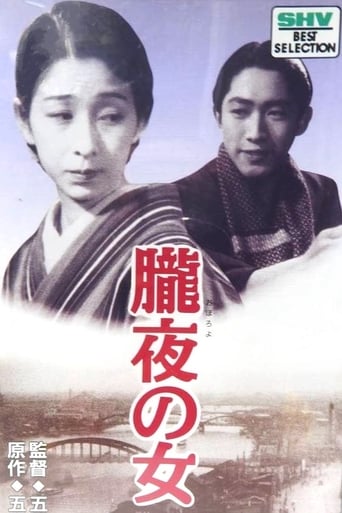
Three men fall in love with the same young girl who works in a tonkatsu restaurant in the Shitamachi district of Tokyo.
Cast & crew
More Drama films
View all →






More from Heinosuke Gosho
View all →
More about this film
About the production
Release dateNovember 23, 1937
Box officeBox office records from 1937 Japan are not comprehensively documented
ProductionShochiku Studios
Filmed inTokyo, Japan (specifically Shitamachi district), Shochiku Studios, Ofuna
Filmed during a transitional period in Japanese cinema when sound technology was becoming standard. The production faced challenges balancing traditional Japanese storytelling with emerging cinematic techniques. Director Gosho insisted on authentic location shooting in Shitamachi to capture the genuine atmosphere of working-class Tokyo, which was unusual for the time when most Japanese films were shot entirely on studio sets.
Themes
Class struggle and social mobilityFemale independence and choiceUrban modernization vs. traditionThe complexity of romantic loveWorking-class dignity
Themes & topics
love triangleworking classTokyorestaurantindependent womansocial classurban liferomancedramapre-war JapanShitamachitonkatsuchoiceindependence
Historical background
Made in 1937, in Japan, under Heinosuke Gosho, Song of the Flower Basket belongs to feature filmmaking as studio systems and national cinemas competed for audiences.
Why this film matters
Within feature history, Heinosuke Gosho's name attaches to the work; 1937 film directed by Heinosuke Gosho.
Making of
Heinosuke Gosho was meticulous about authenticity in his films, and for 'Song of the Flower Basket', he insisted on extensive research into the daily lives of Shitamachi residents. The cast spent weeks observing real restaurant workers in the district to perfect their roles. Kinuyo Tanaka underwent special training to learn the proper techniques of working in a tonkatsu restaurant, including the specific movements and timing required for the job. The film was shot during a transitional period when Japanese cinema was moving from silent to sound, and Gosho skillfully incorporated both techniques. The production team faced challenges filming on location in the busy Shitamachi district, as local residents were often curious about the film crew and would gather to watch the shooting. Gosho used this curiosity to his advantage, sometimes incorporating real passersby into background shots to enhance the film's authenticity. The three male leads developed a genuine competitive dynamic during filming, which Gosho encouraged to bring more realism to their on-screen rivalry.
What critics said
Contemporary reviews of Song of the Flower Basket are sparse in open sources; later catalog entries chiefly summarize plot and credits.
Did you know?
- The film's original Japanese title is 'Hana Kago no Uta' (花籠の歌), which literally translates to 'Song of the Flower Basket'.
- Director Heinosuke Gosho was known excelled in shomin-geki (films about common people), and this work is considered one of his finest examples of the genre.
- Kinuyo Tanaka, who plays the lead role Oshige, would later become one of Japan's first female directors in the 1950s.
- The film was released just months before the outbreak of the Second Sino-Japanese War, which would dramatically change Japanese cinema and society.
- The tonkatsu restaurant setting was particularly significant as tonkatsu (breaded pork cutlet) was a relatively new and modern Western-influenced dish in 1930s Japan.
- This was one of the last Japanese films before the government implemented stricter censorship controls on cinema content.
- The film's realistic portrayal of working-class life was groundbreaking for its time, avoiding the romanticized versions often seen in contemporary Japanese cinema.
- Shūji Sano, one of the three suitors, became a regular collaborator with Gosho and appeared in many of his subsequent films.
Awards & recognition
- Kinema Junpo Award - Best Film of 1937
Visual style
The cinematography by Jōji Ohara is notable for its naturalistic style and innovative use of location shooting. Unlike most Japanese films of the period, which were heavily reliant on studio sets, Gosho and Ohara filmed extensively in the actual streets of Shitamachi, capturing the authentic atmosphere of the working-class district. The camera work is characterized by its mobility and observational quality, often following characters through the narrow streets and alleys of Tokyo. Ohara employed natural lighting techniques that were ahead of their time, particularly in the restaurant scenes where the warm glow of lanterns and cooking fires creates an intimate, lived-in feeling. The film's visual style balances documentary-like realism with carefully composed shots that emphasize the emotional states of the characters. The cinematography also effectively contrasts the cramped, bustling energy of the Shitamachi district with moments of quiet intimacy, creating a visual rhythm that mirrors the film's narrative structure.
Innovations
The film was technically innovative for its time, particularly in its use of location shooting in an era when most Japanese films were studio-bound. Director Gosho and his crew developed portable lighting equipment that allowed them to film in the narrow streets of Shitamachi, a significant technical achievement for 1937. The film also demonstrated advanced sound recording techniques for the period, capturing clear dialogue and ambient sounds in challenging acoustic environments. The production team created a functioning tonkatsu restaurant set that allowed for realistic cooking scenes, requiring careful coordination of sound, lighting, and action. The film's editing, by Tsuruko Nishikubo, employed techniques that were relatively sophisticated for the time, including smooth transitions between location and studio shots. The movie also showcases an early example of what would become known as the 'Japanese long take' style, with several scenes filmed in extended continuous shots that emphasize the natural flow of action and dialogue.
Music
The film's music was composed by Shirō Fukai, who was one of Shochiku Studios' most reliable composers during the 1930s. The score combines traditional Japanese musical elements with Western-influenced melodies, reflecting the cultural fusion depicted in the film's story. The title theme, which gives the film its name, is a melancholic melody that recurs throughout the film to underscore Oshige's emotional journey. The soundtrack also incorporates diegetic music from the restaurant setting, including popular songs of the period that would have been playing on the radio. As this was an early sound film, the audio quality reflects the technical limitations of the time, but Fukai's compositions are clear and effective. The sound design emphasizes the ambient noises of the Shitamachi district - the sizzle of cooking tonkatsu, the chatter of customers, the sounds of the street - creating an immersive auditory experience that complements the visual realism.
Famous quotes
Even in this small restaurant, the whole world comes to us - in their appetites and in their stories.
A woman's heart is not a piece of tonkatsu to be won by the highest bidder.
In Shitamachi, we may be poor, but we have something money cannot buy - our dignity.
Love is like cooking - it requires the right ingredients, the right timing, and a warm heart.
The streets remember everything, even when we try to forget.
Memorable scenes
- The opening sequence where Oshige skillfully prepares tonkatsu while managing multiple customers, showcasing her competence and grace under pressure.
- The moonlit scene where Oshige walks through the empty streets of Shitamachi after closing time, reflecting on her choices and future.
- The climactic confrontation in the restaurant where all three suitors arrive simultaneously, leading to an emotional showdown.
- The tender moment when Oshige teaches a young orphan how to properly eat tonkatsu, revealing her nurturing character.
- The final scene where Oshige makes her decision, standing confidently in the restaurant doorway as the morning light floods the street.
What audiences thought
The film was well-received by Japanese audiences upon its release, particularly in Tokyo where viewers recognized the authentic depiction of Shitamachi life. The relatable characters and situations resonated with working-class moviegoers who rarely saw their lives represented on screen. Kinuyo Tanaka's performance was especially popular, and she became one of Japan's biggest stars following this film. The film's box office performance was solid, though not spectacular, which was typical for serious dramas of the period. Audiences appreciated the film's blend of romance, comedy, and social commentary. In the decades since its release, the film has developed a cult following among classic cinema enthusiasts and is frequently shown at film festivals and retrospectives dedicated to Japanese cinema history.
Film connections
Influenced by
- German expressionist cinema (visual style)
- French poetic realism (narrative approach)
- Traditional Japanese theater (character archetypes)
- American screwball comedies (romantic tension)
- Japanese literary naturalism (realistic portrayal of ordinary life)
This film influenced
- Late Spring (Yasujirō Ozu, 1949)
- Tokyo Story (Yasujirō Ozu, 1953)
- Floating Clouds (Mikio Naruse, 1955)
- When a Woman Ascends the Stairs (Mikio Naruse, 1960)
- The Family Game (Yoshishige Yoshida, 1983)
Film restoration
The film is preserved in the archives of the National Film Center of Japan and has been restored by Shochiku Studios. While some original nitrate elements were lost, a complete 35mm print exists and has been used for digital restoration. The film was screened at the 2003 Cannes Film Festival as part of a retrospective on Japanese cinema, confirming its good preservation status. The restored version was released on Blu-ray in Japan as part of the Shochiku Masters collection in 2015, making it accessible to modern audiences.
Where to watch
- Available on DVD/Blu-ray from Shochiku's classic cinema collection
- Streaming on the Criterion Channel (periodically)
- Available for viewing at the National Film Center of Japan
- Screened occasionally at film festivals specializing in classic Japanese cinema
- Available through some university film studies programs
- Accessible through the Japanese Film Archive's online platform (for academic use)