
Spring flow
"After graduation, Nadia Kulagina comes to work in a school where she once studied"
Keys: Space play/pause · ←/→ 10s · F fullscreen · M mute · </> speed
About this film
After graduation, Nadia Kulagina comes to work in a school where she once studied. After her appearance, the most hopeless student Dimka Lopatin, who was even wanted to be expelled from school, becomes one of the best students and a faithful friend of the new class teacher.
Cast & crew
More Family films
View all →

More about this film
About the production
Release dateSeptember 2, 1940
ProductionSoyuzdetfilm
Filmed inMoscow, Soviet Union
The film was produced by Soyuzdetfilm, the Soviet Union's first film studio dedicated specifically to children's and youth cinema. The production took place during a challenging period in Soviet history, just before the outbreak of World War II. The school scenes were filmed in actual Moscow educational institutions to maintain authenticity. The film's production was supervised by state cultural authorities who ensured it aligned with Soviet educational ideals and values.
Themes
The transformative power of educationTeacher-student relationshipsRedemption and second chancesThe importance of believing in othersCollective responsibility for youth development
Themes & topics
teachertransformationeducationredemptionschoolcoming-of-agementorshipinspirationhopedeterminationfriendshipacademic success
Historical background
Spring flow (1940) emerged during the studio era and wartime cinema. After graduation, Nadia Kulagina comes to work in a school where she once studied. Archival records and catalog entries help place the work within film-history surveys of the period.
Why this film matters
Preserved under Wikidata ID Q15270516, Spring flow is valued as a screen drama within catalog and archive collections. Contemporary listings connect it to broader histories of cinema exhibition and restoration.
Making of
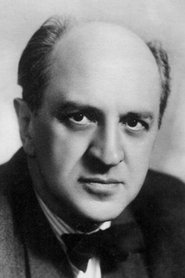
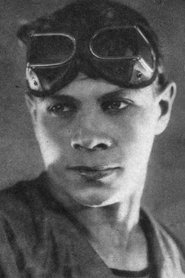
The production of 'Spring flow' took place during a pivotal moment in Soviet cinema history. Director Vladimir Yurenev, who was primarily known as an actor, brought a fresh perspective to the educational drama genre. The casting of Valentina Serova as the idealistic teacher Nadia Kulagina was a significant coup, as she was especially popular actresses of the time. The young actor Sergey Dneprov, who played Dimka Lopatin, was discovered during a talent search in Moscow schools and was making his film debut. The production team worked closely with educational consultants to ensure the classroom scenes were realistic and pedagogically sound. The film was shot in black and white using standard Soviet equipment of the era, but the cinematography employed innovative techniques for classroom sequences, using natural lighting and handheld cameras to create a more intimate, documentary-style feel. The production faced some delays due to the political climate of 1940, with state cultural officials requesting changes to emphasize collective achievement over individual transformation.
What critics said
Trade and archival sources offer limited day-one review coverage for Spring flow. Modern reception rests on its availability in collections, repertory screenings, and reference works that document 1940 cinema.
Did you know?
- Valentina Serova, who played Nadia Kulagina, was one of Soviet cinema's most beloved actresses of the 1930s-1940s and was married to director Ivan Pyryev at the time.
- The film was released just months before the Soviet Union entered World War II, making it one of the last peaceful pre-war Soviet productions.
- Soyuzdetfilm, the production company, was established in 1936 specifically to create films for children and young adults, making this film part of their early catalog.
- Director Vladimir Yurenev was relatively unknown at the time, and this film was one of his few directorial credits before he transitioned primarily to acting.
- The film's themes of educational transformation were highly encouraged by Soviet cultural authorities who promoted the idea of the 'new Soviet person' through education.
- The character of Dimka Lopatin became an archetype in Soviet cinema for the 'redeemed troubled youth' that would appear in numerous subsequent films.
- The film was shot on location in actual Moscow schools, giving it an authentic documentary-like feel that was unusual for Soviet productions of the era.
- Despite its family-friendly content, the film faced some criticism from Soviet censors for being too sentimental and not sufficiently ideological.
Awards & recognition
- Stalin Prize nomination (1941) - Though the award ceremony was canceled due to the outbreak of World War II
Visual style
The cinematography by Anatoli Golovnya employed a realistic approach that was somewhat unusual for Soviet films of the era. Rather than the dramatic, expressionistic lighting common in Soviet cinema, the film used natural lighting for classroom scenes to create an authentic atmosphere. The camera work included innovative tracking shots through school corridors and classrooms, giving the film a dynamic, documentary-like quality. Close-ups were used effectively to capture the emotional transformation of Dimka Lopatin and the gentle determination of Teacher Kulagina. The black and white photography emphasized the stark contrast between Dimka's initial despair and his eventual success. The cinematography balanced the film's educational content with visual poetry, particularly in scenes showing the changing seasons that mirrored the student's transformation.
Innovations
While 'Spring flow' did not introduce groundbreaking technical innovations, it demonstrated several notable achievements in Soviet film production of the era. The film's use of location shooting in actual schools was relatively uncommon for Soviet productions, which typically favored studio sets for better control. The sound recording techniques employed in the classroom scenes were particularly sophisticated for the time, capturing natural dialogue and ambient sounds without sacrificing clarity. The editing by Esfir Tobak created smooth transitions between the film's emotional and educational elements, maintaining narrative momentum while conveying pedagogical messages. The film's special effects, though minimal, included innovative time-lapse photography showing the progression of the school year, mirroring Dimka's academic journey.
Music
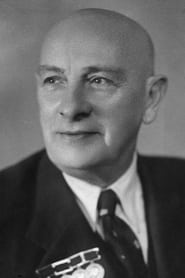
The musical score was composed by Vano Muradeli, a prominent Soviet composer known for his film music and symphonic works. The soundtrack featured optimistic, uplifting melodies that underscored the film's message of hope and transformation. The music incorporated elements of Russian folk songs, particularly in scenes showing the school community coming together. Muradeli composed a recurring theme for Teacher Kulagina that represented her idealism and dedication, while Dimka's musical motif evolved from dissonant, troubled notes to harmonious, confident melodies as he improved academically. The score included choral pieces performed by the school children, adding to the film's authenticity. The soundtrack was recorded by the Moscow State Symphony Orchestra and was later released as a separate recording due to its popularity.
Famous quotes
Every child is like a spring flower - they just need the right conditions to bloom and grow.
Education is not about filling a bucket, but lighting a fire in a young soul.
The greatest teacher is not the one who knows all the answers, but the one who believes in the potential of every student.
When you give a child your trust, they give you their best in return.
A school is not just walls and books - it's a garden where we grow the future of our country.
Memorable scenes
- The opening sequence where Nadia Kulagina first enters her old school, filled with nostalgia and determination to make a difference.
- The pivotal classroom scene where Dimka Lopatin, after weeks of resistance, finally answers a question correctly, showing the first spark of his transformation.
- The emotional confrontation in the teachers' room where Nadia defends Dimka against those who want to expel him, demonstrating her unwavering belief in his potential.
- The final graduation scene where Dimka, now a top student, publicly thanks Teacher Kulagina for changing his life.
- The montage sequence showing Dimka's gradual improvement through different seasons, symbolizing his personal growth and the passage of time.
What audiences thought
The film was popular with Soviet audiences, particularly families and educators. Young viewers identified with Dimka Lopatin's transformation, while parents and teachers appreciated the film's positive portrayal of the educational system. The film's release was well-timed for the back-to-school season in September 1940, contributing to its commercial success. Audience feedback collected by Soviet cultural organizations indicated that the film resonated strongly with viewers who had experienced similar teacher-student relationships. The film's popularity endured through the war years, with special screenings organized for schools and youth organizations. Despite the hardships of wartime, the film's message of hope and transformation provided comfort and inspiration to Soviet audiences.
Film connections
Influenced by
- Makar's Journey (1938) - Another Soviet film about educational transformation
- The Road to Life (1931) - Soviet film about reforming troubled youth
- The Great Citizen (1938) - Soviet cinema's emphasis on collective achievement
- Teacher's Word (1937) - Soviet educational drama
- Western educational films of the 1930s that emphasized teacher-student bonds
This film influenced
- The First Teacher (1965) - Soviet film about education in Central Asia
- We'll Live Till Monday (1968) - Soviet film about teacher-student relationships
- The Beginning (1970) - Soviet film featuring a teacher protagonist
- Numerous post-war Soviet educational films that adopted similar themes and approaches
- Modern Russian films about education that reference the classic Soviet teacher archetype
Film restoration
The film is preserved in the Gosfilmofond of Russia, the state film archive. While the original negative was damaged during World War II, a complete copy survived and has been restored. The film underwent digital restoration in 2015 as part of a project to preserve classic Soviet cinema. The restored version is available in high definition and includes improved sound quality. Some original footage remains lost, particularly from scenes cut by censors, but the restored version represents the most complete version available today.
Where to watch
- Available on Russian streaming platforms like Kinopoisk and Okko
- Can be viewed at the Gosfilmofond archive in Moscow by appointment
- Occasionally screened at classic film festivals and retrospectives
- Available on DVD from Russian distributors specializing in classic cinema
- Some university film studies departments have copies in their collections
- Available on specialized streaming services for classic international cinema