The Cradle of Courage
"Ex-thief turned wartime policeman"
Keys: Space play/pause · ←/→ 10s · F fullscreen · M mute · </> speed
About this film
Wartime service converts crook 'Square' Kelly into an officer who must arrest his old gang. William S. Hart stars in the 1920 redemptive Western-police drama.
Cast & crew
More films like this
More Adventure films
View all →
More from William S. Hart
View all →
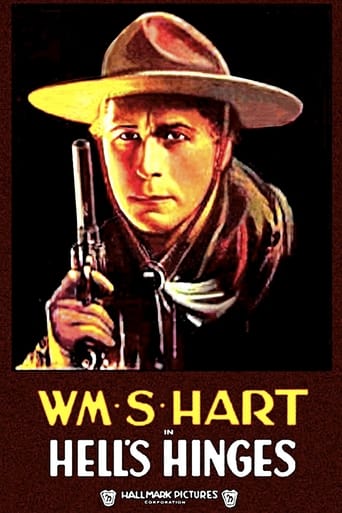


More about this film
About the production
Release dateMarch 21, 1920
Box officeExact figures unknown, but Hart films of this period were generally successful
ProductionWilliam S. Hart Productions, Paramount Pictures
Filmed inLos Angeles, California, San Fernando Valley
The film was produced during Hart's peak period as a silent film star. Hart was known for his meticulous attention to detail and often performed his own stunts. The war scenes were filmed on constructed sets rather than on location, as was common for the period. The production utilized actual war veterans as extras to add authenticity to the military sequences.
Themes
Themes & topics
Historical background
Released in 1920, The Cradle of Courage belongs to the silent feature period and reflects production norms of its release season.
Why this film matters
The Cradle of Courage contributes to understanding regional output and audience tastes around 1920.
Making of
William S. Hart was not only the star but also had significant creative control over his productions. He was known for his hands-on approach to filmmaking, often participating in script development and editing. The war sequences were particularly challenging to film, requiring extensive set construction and coordination of large numbers of extras. Hart insisted on using real military uniforms and equipment whenever possible to maintain authenticity. The film was shot during the transitional period when the industry was moving from short films to feature-length productions, requiring Hart and his team to adapt their storytelling techniques for longer narratives.
What critics said
Review records for The Cradle of Courage are typical of 1920: brief for shorts, more sustained for features.
Did you know?
- William S. Hart was one of the highest-paid actors of the silent era, earning up to $15,000 per week during this period
- The film was one of Hart's first non-Western features, showcasing his versatility as an actor
- Ann Little was a popular silent film actress who often starred opposite Hart in his productions
- The film's title refers to the idea that war and adversity forge courage in individuals
- Hart was known for his realistic acting style, which contrasted with the more melodramatic performances common in silent films
- The film was released just two years after World War I ended, making its war themes particularly resonant with audiences
- Tom Santschi was a veteran character actor who appeared in over 200 films during his career
- Hart personally supervised the editing of all his films to ensure they met his artistic standards
- The film's production coincided with the height of the Red Scare, which may have influenced its themes of law and order
- Hart was a real-life cowboy before becoming an actor, bringing authentic experience to his roles
Visual style
The cinematography by Joseph H. August employed the dramatic lighting techniques characteristic of late silent era filmmaking. The war sequences utilized innovative camera movements and compositions to create a sense of chaos and urgency. August's work contrasted the dark, shadowy world of Kelly's criminal past with the bright, hopeful imagery of his redemption. The film made effective use of close-ups to capture Hart's nuanced performance, particularly in scenes depicting Kelly's internal conflicts.
Innovations
The film featured innovative techniques for depicting war sequences on a limited budget, including the use of miniatures and creative camera angles. The production employed early forms of process photography to create realistic battlefield effects. The editing techniques used to convey the passage of time during Kelly's military service were considered advanced for the period. The film also demonstrated sophisticated use of location shooting mixed with studio work, creating a seamless visual narrative.
Music
As a silent film, The Cradle of Courage would have been accompanied by live musical performance during its original theatrical run. The typical score would have included popular songs of the era, classical pieces, and specially composed mood music. The war scenes would have featured martial music and dramatic compositions, while the romantic sequences would have used softer, more melodic themes. No specific composer is credited for the original score, as was common practice for films of this period.
Famous quotes
A man who's faced death in war doesn't fear the consequences of doing what's right
Courage isn't the absence of fear, but doing what's right despite it
You can't escape your past, but you can choose your future
Memorable scenes
- The climactic confrontation between Kelly and his former gang members where he must choose between his old loyalties and his new duty as a police officer
- The war sequence showing Kelly's transformation from criminal to soldier
- The emotional scene where Kelly decides to join the police force, symbolizing his commitment to redemption
What audiences thought
The film was well-received by audiences of its time, particularly among veterans and their families who could relate to the protagonist's journey. Hart's popularity ensured strong initial attendance, and the film's themes of redemption and patriotism resonated strongly with post-war American audiences. The film performed solidly at the box office, though it didn't achieve the same level of commercial success as some of Hart's Western productions. Audience feedback from the period indicates that viewers appreciated the film's serious treatment of war's psychological impact.
Film connections
Influenced by
- The Great Train Robbery (1903)
- D.W. Griffith's war films
- Contemporary literature about WWI veterans
This film influenced
- Later films about returning veterans
- Gangster films of the 1930s
- War redemption narratives
Film restoration
The film is partially preserved with some reels missing. The Library of Congress holds incomplete prints of the film. Restoration efforts have been ongoing, but the complete version may be lost. Some fragments exist in various film archives, and portions have been preserved through the National Film Preservation Foundation.
Where to watch
- The film is not currently available on major streaming platforms
- Some fragments may be viewed through the Library of Congress's digital collections
- Occasionally screened at silent film festivals and special events
- May be available through specialized film archives or private collectors