The Death of Ivan the Terrible
"Based on Aleksey Tolstoy's piece of the same name."
Keys: Space play/pause · ←/→ 10s · F fullscreen · M mute · </> speed
About this film
Based on Aleksey Tolstoy's piece of the same name.
Cast & crew
More films like this
More Drama films
View all →







More from Vasiliy Goncharov
View all →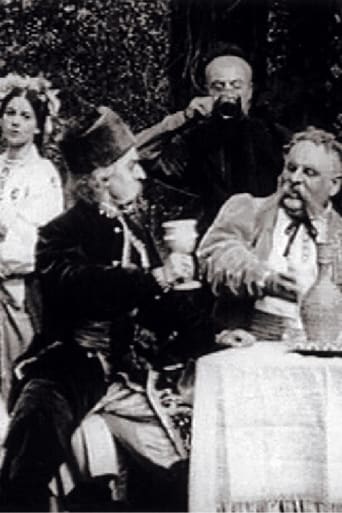

More about this film
About the production
Release dateDecember 1909
BudgetNot documented for 1909 Russian productions
Box officeBox office records not maintained for this era of Russian cinema
ProductionKhanzhonkov Film Company
Filmed inMoscow, Russian Empire
This was one of the earliest narrative films produced by Alexander Khanzhonkov's studio, which was pioneering Russian cinema. The film was shot on location in Moscow using primitive cameras and natural lighting. As an early production, it faced significant technical challenges including limited film stock and basic equipment. The production likely employed stage actors from Moscow theaters, as professional film actors did not yet exist in Russia. The historical costumes and sets were created by theater designers, giving the film a theatrical aesthetic typical of early cinema.
Themes
Power and its corrupting influenceMortality and the fear of deathLegacy and historical memoryTyranny and its consequencesPolitical succession and instability
Themes & topics
deathtsarhistorical dramapower struggleRussian history16th centuryroyal courtsuccession crisistyrannymortalitypolitical intriguehistorical figure
Historical background
Made in 1909, in Russian Empire, under Vasily Goncharov, The Death of Ivan the Terrible belongs to silent filmmaking during early cinema when shorts dominated nickelodeon programs. The Death of Ivan the Terrible, is a 1909 Russian short film directed and written by Vasili Goncharov.
Why this film matters
Within silent history, Vasily Goncharov's name attaches to the work; surviving prints help researchers study silent-era craft; 1909 film by Vasily Goncharov.
Making of
The making of The Death of Ivan the Terrible represented a significant milestone in early Russian cinema. Director Vasiliy Goncharov, transitioning from theater to film, had to adapt his directing techniques for the new medium of cinema. The production faced numerous challenges typical of the era, including unreliable cameras that could only shoot short takes, and the need for extremely bright lighting due to the low sensitivity of early film stock. The cast, primarily drawn from Moscow's theatrical circles, had to learn to adjust their acting styles for the camera, toning down the exaggerated gestures common in stage performances. The historical costumes and props were borrowed from theater companies, as dedicated film production resources did not yet exist. The film was shot in makeshift studios in Moscow, often in converted warehouses or theaters with glass roofs to utilize natural light. Post-production was rudimentary, with simple editing techniques and hand-painted color effects added to certain scenes. The entire production likely took only a few days to complete, which was typical for films of this period.
What critics said
Contemporary reviews of The Death of Ivan the Terrible are sparse in open sources; later catalog entries chiefly summarize plot and credits.
Did you know?
- This is one of the earliest surviving Russian narrative films, making it historically significant for Russian cinema heritage
- Director Vasiliy Goncharov was one of Russia's first professional film directors and helped establish the Russian film industry
- The film was produced during the golden age of Tsarist cinema, before the 1917 revolution transformed the country's film industry
- Aleksey Tolstoy's play on which the film is based was a popular stage production in Moscow theaters
- The film was shot on 35mm film, which was the standard format of the time
- Only fragments of this film are believed to survive today, as many early Russian films were lost during the revolutionary period
- The death scene was considered particularly shocking for 1909 audiences due to its realistic portrayal
- This film was part of a series of historical epics produced by Khanzhonkov to appeal to Russian audiences' interest in their national history
- The film's intertitles were in Russian, making it one of the earliest films to use Cyrillic text
- It was screened in both Russia and internationally, helping establish Russia's reputation for historical films
Visual style
The cinematography of The Death of Ivan the Terrible reflects the primitive state of film technology in 1909. The film was likely shot using hand-cranked cameras with fixed lenses, resulting in a static visual style typical of early cinema. The cinematographer would have faced significant challenges with lighting, as early film stock required extremely bright illumination. Most scenes were probably shot in broad daylight or under powerful arc lights, creating harsh shadows and limited tonal range. The camera placement would have been straightforward, with medium shots and long shots predominating, as close-ups were still rarely used. The visual composition likely borrowed heavily from theatrical staging, with actors arranged in tableaux-like groupings. Movement within the frame would have been minimal, as the heavy cameras of the era made tracking shots difficult. Despite these technical limitations, the cinematography succeeded in creating a sense of historical atmosphere through the careful arrangement of costumes, props, and actors. The film's visual style, while primitive by modern standards, was effective for its time and helped establish the visual language of Russian historical cinema.
Innovations
The Death of Ivan the Terrible, while technically primitive by modern standards, represented several achievements for Russian cinema in 1909. The film demonstrated the feasibility of producing historical epics in Russia, despite limited technical resources and infrastructure. The production managed to create convincing historical atmosphere using theatrical costumes and props, showing that Russian filmmakers could achieve period authenticity on screen. The film's narrative structure, telling a complete historical story in a short running time, represented an early mastery of cinematic storytelling techniques. The use of multiple scenes and locations showed an advancement beyond the single-scene films that dominated early cinema. The film also demonstrated the potential of cinema as a medium for bringing Russian literature and history to life, paving the way for more ambitious adaptations in the following years. While the film did not introduce any revolutionary technical innovations, it successfully applied existing film technology to a distinctly Russian subject matter, helping establish a technical foundation for the Russian film industry. The production also showed that Russian filmmakers could compete with foreign productions in terms of technical quality and artistic ambition.
Music
As a silent film, The Death of Ivan the Terrible would have been accompanied by live musical performance during its theatrical run. The typical practice in Russian cinemas of 1909 involved a pianist or small orchestra providing musical accompaniment that matched the mood of each scene. For a historical drama like this, the music would likely have included classical pieces by Russian composers such as Tchaikovsky or Mussorgsky, along with popular songs of the era. The score would have been particularly dramatic during the death scene, with somber, funeral-like music to enhance the emotional impact. Some larger theaters might have employed special sound effects, such as thunder or bells, to accompany key moments in the narrative. The musical accompaniment was crucial in conveying emotion and atmosphere in the absence of synchronized sound. Unfortunately, no specific information about the original musical accompaniment for this film survives, as was common for silent films of this period. The experience of watching the film in 1909 would have been significantly different from viewing it today, with the live music adding an important dimension to the presentation.
Famous quotes
No dialogue survives from this silent film
Memorable scenes
- The death scene of Ivan the Terrible, which was considered particularly powerful and realistic for its time, showing the aged tyrant's final moments surrounded by his courtiers and family members, with dramatic gestures and facial expressions conveying the gravity of the moment.
What audiences thought
The Death of Ivan the Terrible was well-received by Russian audiences in 1909, who were fascinated by seeing their national history depicted on screen. The film's subject matter resonated strongly with viewers who were familiar with Ivan the Terrible's reputation from history lessons and literature. Audiences particularly responded to the dramatic death scene, which was considered powerful and moving despite the technical limitations of early cinema. The film helped demonstrate to Russian theater-goers that cinema could be more than just a novelty and could handle serious, dramatic subjects. Contemporary accounts suggest that the film was successful enough to encourage Khanzhonkov to produce more historical films with Russian themes. The film's popularity also indicated that Russian audiences preferred films that reflected their own culture and history over the foreign productions that dominated the market at the time. This audience reception helped establish a market for Russian-produced films and contributed to the growth of the domestic film industry in the years before the revolution.
Film connections
Influenced by
- Aleksey Tolstoy's play 'The Death of Ivan the Terrible'
- Russian historical literature
- Russian theatrical traditions
- Contemporary French historical films
- Stage melodrama conventions
This film influenced
- Sergei Eisenstein's 'Ivan the Terrible' (1944, 1958)
- Other early Russian historical epics
- Khanzhonkov's subsequent historical productions
Film restoration
The film is believed to be partially lost, with only fragments surviving in Russian film archives. Some scenes may exist in the Gosfilmofond archive in Moscow, but the complete film is not known to survive in its entirety. The loss is typical of early Russian films, many of which were destroyed during the revolutionary period and subsequent political upheavals.
Where to watch
- The film is not commercially available due to its fragmentary survival status. Film scholars may be able to view surviving fragments at the Gosfilmofond archive in Moscow or through specialized academic film collections. Occasionally, fragments may be shown in retrospective screenings of early Russian cinema at film festivals or museum exhibitions.