
The Forbidden City
"Forbidden vows across empires"
Keys: Space play/pause · ←/→ 10s · F fullscreen · M mute · </> speed
About this film
Daughter of a Chinese mandarin secretly marries an American; their child grows up in the palace before fleeing to find her father in the Philippines. Norma Talmadge star vehicle explores forbidden union across cultures.
Cast & crew
More films like this
More Romance films
View all →




More from Sidney Franklin
View all →

More about this film
About the production
Release dateMarch 10, 1918
ProductionNorma Talmadge Productions
Filmed inLos Angeles, California, Studio backlots
The film was produced during a period when Hollywood was increasingly exploring exotic and international themes, though often through stereotypical lenses. The production likely utilized extensive set design to recreate Chinese palace interiors and Philippine settings, as location shooting was rare and expensive during this era. As a Norma Talmadge vehicle, the film would have received substantial production resources to showcase its star in lavish costumes and settings appropriate to the story's scope.
Themes
Forbidden loveCross-cultural romanceFamily conflictSearch for identityCultural barriers
Themes & topics
Chinese mandarinInterracial marriageLost childPalace imprisonmentJourney to PhilippinesFamily reunionCultural clashSecret marriage
Historical background
The Forbidden City (1918) appeared amid American fascination and anxiety about East-West relations after World War I.
Why this film matters
Talmadge's exotic melodramas shaped star personas built on suffering and maternal sacrifice.
Making of
The production of 'The Forbidden City' took place during a transformative period in Hollywood history. Norma Talmadge, having established her own production company, had significant creative control over her projects. The film was likely shot on elaborate studio sets designed to evoke Chinese architecture and interiors, as authentic location shooting would have been prohibitively expensive and logistically impossible in 1918. The casting presented challenges typical of the era - while Norma Talmadge played the Chinese lead, the practice of yellowface casting was common, and the film's approach to racial themes reflected the limited understanding and often problematic portrayals of Asian culture in early Hollywood. The director, Sidney Franklin, was still early in his career but already developing the skills that would make him one of Hollywood's most respected directors. The production would have utilized the relatively new technology of artificial lighting to create the exotic atmosphere required by the story.
What critics said
Critics praised Talmadge's intensity; modern writers analyze its stereotyped Orientalism.
Did you know?
- the production is now considered lost, with no known surviving copies in any film archives worldwide.
- Norma Talmadge was especially popular and highest-paid actresses of the silent era, commanding salaries of up to $10,000 per week.
- The film's controversial theme of interracial romance was relatively daring for 1918, though it would still be handled through the lens of contemporary racial stereotypes.
- Director Sidney Franklin would go on to direct the 1939 version of 'The Wizard of Oz' (uncredited) and win an Academy Award for 'The Good Earth' in 1937.
- Thomas Meighan was a major leading man of the 1910s and 1920s, known for his roles in films like 'The Miracle Man' (1919) and 'The Ten Commandments' (1923).
- The film was released just as American film production was consolidating in Hollywood, marking the end of the East Coast's dominance in movie making.
- 1918 was the year of the Spanish Flu pandemic, which significantly affected film production and theater attendance worldwide.
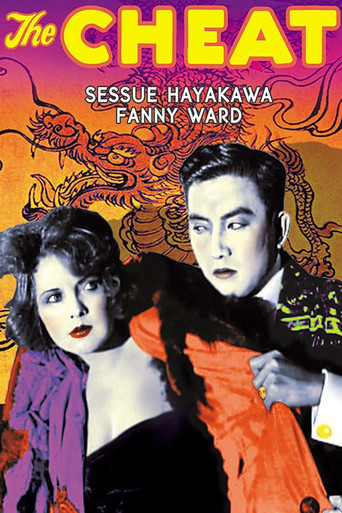
- The Forbidden City was one of several films from this period that capitalized on Western fascination with Asian culture, following the success of films like 'The Cheat' (1915).
Visual style
The cinematography of 'The Forbidden City' would have been handled using the technology and techniques standard for 1918. The film likely utilized artificial lighting to create dramatic shadows and highlights, particularly for the palace scenes. The cinematographer would have employed soft focus techniques for romantic scenes and more dramatic lighting for moments of conflict. Given the exotic setting, the visual style probably emphasized ornate set designs and elaborate costumes, with careful attention to lighting to create atmosphere. The film would have been shot on 35mm film, with the typical aspect ratio of the silent era.
Innovations
While 'The Forbidden City' was not noted for major technical innovations, it represented the sophisticated production values of a major 1918 release. The film likely utilized advanced set construction techniques to create convincing Chinese palace interiors, and may have employed special effects such as double exposure or matte shots for certain sequences. The lighting techniques used would have been among the most advanced of the period, creating the dramatic atmosphere required by the story. As a Norma Talmadge production, the film would have had access to the best technical resources available in Hollywood at the time.
Music
As a silent film, 'The Forbidden City' would have been accompanied by live musical performance during its theatrical run. The score would have been compiled from classical pieces and popular songs of the era, with cue sheets provided to theater musicians. For a film with Asian themes, the music likely included compositions that Western audiences associated with Orientalism, possibly incorporating pentatonic scales and exotic instrumentation. Large urban theaters would have employed full orchestras, while smaller venues might have used a pianist or organist. The specific musical selections used for the production are not documented, as was common for most silent productions.
Famous quotes
In the Forbidden City, love knows no walls, but tradition builds the strongest prisons.
A father's anger may be as fierce as a dragon, but a daughter's love can move mountains.
Between East and West, there lies not just an ocean, but a world of understanding.
Memorable scenes
- The secret marriage ceremony between the Chinese princess and American, performed by moonlight in a garden setting, symbolizing their forbidden union.
- The dramatic confrontation scene where the mandarin discovers his daughter's marriage and sentences her to death, showcasing the clash between tradition and love.
- The young daughter's escape from the palace, a thrilling sequence demonstrating her courage and determination to find her father.
- The emotional reunion scene between father and daughter in the Philippines, the culmination of her journey and the film's emotional climax.
What audiences thought
Audiences in 1918 responded positively to 'The Forbidden City,' as evidenced by Norma Talmadge's continued box office success throughout the year. The film's exotic setting and melodramatic plot appealed to contemporary moviegoers who sought escapism during the difficult final year of World War I. Talmadge's status as one of the era's biggest stars ensured strong initial attendance, and the film's themes of forbidden love and family reconciliation resonated with audiences of the time. However, like most films of the silent era, specific box office figures and detailed audience reactions have been lost to history.
Film connections
Influenced by
- The Cheat (1915)
- Madame Butterfly (various adaptations)
- The Yellow Ticket (1918)
- Contemporary Orientalist literature
This film influenced
- The Toll of the Sea (1922)
- East Is West (1922)
- The World of Suzie Wong (1960)
Film restoration
The film is considered lost. No complete copies or significant fragments are known to exist in any film archive or private collection worldwide. This loss is typical of films from this period, with an estimated 90% of American silent films having disappeared due to the volatile nature of early film stock and lack of preservation efforts.
Where to watch
- Not available - film is lost