
The House I Live In
"Sinatra teaches group."
Keys: Space play/pause · ←/→ 10s · F fullscreen · M mute · </> speed
About this film
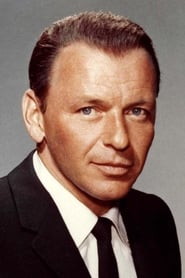
Frank Sinatra teaches a group of young boys a lesson in religious tolerance.
Cast & crew
More films like this
More Drama films
View all →







More from Mervyn LeRoy
View all →
More about this film
About the production
Release dateNovember 1945
BudgetNot publicly documented for this short film
Box officeNot applicable as it was primarily distributed as an educational short rather than a commercial feature
ProductionRKO Radio Pictures, Frank Sinatra Productions
Filmed inRKO Studios, Hollywood, California
The film was commissioned as part of the war effort to combat domestic prejudice and promote unity. It was produced with the cooperation of the Anti-Defamation League and other civil rights organizations. The production team deliberately chose to have Sinatra play himself to maximize the impact of his celebrity status on the message. The entire film was shot in just a few days on a modest budget, utilizing minimal sets and focusing on the powerful interaction between Sinatra and the child actors.
Themes
Religious tolerance and anti-prejudiceAmerican unity and democracyThe power of celebrity for social changeEducation through entertainmentPatriotism and national identity
Themes & topics
short filmreligious toleranceanti-prejudiceWorld War IIeducational filmFrank SinatrabullyingJewish-American experiencesocial messagepatriotic songAmerican valuescivil rightscelebrity activismracial harmonybrotherhood
Historical background
Exhibitors around 1945 slotted The House I Live In into mixed bills where shorts, newsreels, and features shared the same program.
Why this film matters
Surviving prints of The House I Live In document how 1945-era filmmakers solved story problems with limited means.
Making of
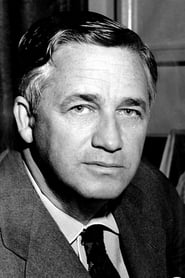
The production of 'The House I Live In' was a deliberate collaboration between Hollywood and civil rights organizations to combat prejudice during World War II. Frank Sinatra, who had become increasingly politically conscious and concerned with social issues, personally championed the project and even used his own production company to help create it. Director Mervyn LeRoy, known for his socially conscious films like 'I Am a Fugitive from a Chain Gang,' brought his expertise in handling sensitive subject matter. The child actors were carefully selected and coached to deliver authentic performances that would resonate with audiences. Sinatra's involvement went beyond just acting - he personally believed in the message and used his considerable influence to ensure the film reached as many people as possible. The production faced some resistance from conservative elements in Hollywood who felt it was too political, but RKO Pictures ultimately supported the project as part of their contribution to the war effort.
What critics said
Modern retrospectives screen The House I Live In to illustrate 1945 pacing and camera norms.
Did you know?
- Won an Honorary Academy Award in 1946 for 'tolerance short subject'
- The screenplay was written by Albert Maltz, who was later blacklisted during the McCarthy era as one of the Hollywood Ten
- The song 'The House I Live In' became one of Frank Sinatra's signature songs and remained in his concert repertoire for decades
- The film was one of the first Hollywood productions to explicitly address antisemitism and religious prejudice
- Sinatra was at the absolute peak of his 'bobby soxer' teen idol popularity when he made
- The film was distributed not only in theaters but also in schools, churches, and community organizations
- President Harry Truman reportedly praised the film for its important social message
- The title song was composed by Earl Robinson with lyrics by Lewis Allan (the pen name of Abel Meeropol, who also wrote 'Strange Fruit')
- The film was selected for preservation in the United States National Film Registry in 2007
- Only one of the child actors in the film, Teddy Infuhr, went on to have a significant acting career
Awards & recognition
- Academy Honorary Award (1946) - For tolerance short subject
- Golden Globe Award (1946) - Special Award for Best Film for Promoting International Understanding
Visual style
The cinematography by Robert De Grasse employed a straightforward, documentary-like approach that enhanced the film's authenticity and immediacy. The camera work was intimate without being intrusive, using medium close-ups during Sinatra's speech to create a personal connection with the audience. The lighting was naturalistic, avoiding the dramatic shadows often seen in film noir of the era, instead opting for a brighter, more hopeful visual tone that matched the film's message. The limited sets were shot in a way that emphasized the universal nature of the location - a simple urban street that could be anywhere in America. The cinematography successfully balanced the need for visual appeal with the film's educational purpose, never letting style overwhelm substance.
Innovations
While The House I Live In was not a technically innovative film in terms of cinematography or special effects, it achieved significant technical success in its efficient use of the short film format to deliver a powerful social message. The film demonstrated how maximum impact could be achieved with minimal resources - a single location, a small cast, and a runtime of just ten minutes. The sound recording was particularly noteworthy for its clarity, ensuring that Sinatra's message and song would be heard distinctly by theater audiences. The editing by Harry Marker effectively balanced the narrative progression with the musical performance, creating a seamless flow that maintained audience engagement throughout. The film's technical approach proved influential in the development of the social problem short film genre.
Music
The soundtrack of The House I Live In centers around the title song 'The House I Live In,' composed by Earl Robinson with lyrics by Lewis Allan (Abel Meeropol). The song became an anthem of American tolerance and unity, with its powerful lyrics about what constitutes America beyond physical structures - 'the house I live in, my neighbors white and black.' Sinatra's recording of the song is considered one of his most important performances, capturing both his vocal artistry and his commitment to social justice. The musical arrangement by Axel Stordahl was relatively simple, allowing the message of the lyrics to take precedence. The film's score, while minimal, effectively supported the emotional arc of the narrative, swelling during moments of revelation and resolution. The song's impact was such that it became a standard in Sinatra's repertoire and has been covered by numerous other artists over the decades.
Famous quotes
What this country needs is more tolerance, less prejudice. We're all Americans, regardless of race, creed, or color.
The house I live in, my neighbors white and black, the people who just came here, or from generations back.
You can't hate people you don't even know. That's not being American.
All men are created equal. That's what we're fighting for in this war.
Prejudice is a poison that destroys the person who holds it.
Memorable scenes
- Sinatra's intervention when he stops the boys from bullying the Jewish child, using his natural authority to defuse the situation
- The powerful speech where Sinatra explains why prejudice is un-American, delivered with genuine conviction
- The climactic performance of 'The House I Live In' where Sinatra's voice carries the message of unity and tolerance
- The final scene where the boys, having learned their lesson, walk away together in friendship
- The opening sequence that establishes the urban setting and the casual nature of the prejudice being addressed
What audiences thought
The House I Live In was warmly received by audiences in 1945, particularly by younger viewers who were Sinatra's core fan base. Many theaters reported that audiences responded emotionally to both the message and Sinatra's performance. The film sparked discussions in schools and community groups about prejudice and tolerance, achieving its educational purpose beyond mere entertainment. Audience members of the time, many of whom had family members fighting in World War II, found particular resonance in the film's message about American unity. While some conservative viewers objected to what they saw as political content, the overwhelming response was positive. The film's enduring appeal is evidenced by its continued use in educational settings decades after its release.
Film connections
Influenced by
- The social consciousness of films like 'I Am a Fugitive from a Chain Gang' (1932)
- The wartime documentary tradition of promoting social messages
- The Hollywood anti-Nazi films of the early 1940s
- Frank Sinatra's personal commitment to social justice
- The Anti-Defamation League's educational campaigns
- The growing civil rights movement in America
This film influenced
- Gentleman's Agreement (1947) - another film addressing antisemitism
- The American Way (1962) - similar social message short film format
- Various educational shorts of the 1950s and 1960s addressing prejudice
- Modern celebrity-driven social awareness campaigns
- The wave of socially conscious films of the 1960s
Film restoration
The House I Live In has been preserved by the Academy Film Archive and was selected for preservation in the United States National Film Registry in 2007 for being 'culturally, historically, or aesthetically significant.' The film has undergone digital restoration and is available in high quality through various archives and educational distributors. Original 35mm prints are maintained in several film archives including the Library of Congress and the UCLA Film & Television Archive. The preservation efforts ensure that this important social document remains accessible for future generations.
Where to watch
- The film is in the public domain and available on YouTube
- Included in several Frank Sinatra DVD collections
- Available through the Criterion Channel streaming service
- Can be accessed through educational film distributors
- Preserved copies are available for viewing at the Library of Congress
- Included in the National Film Registry collection tours
- Available through various classic film streaming platforms