The Intrigue
"A sci-fi/espionage film in which world powers vie for control of a death ray during World."
Keys: Space play/pause · ←/→ 10s · F fullscreen · M mute · </> speed
About this film
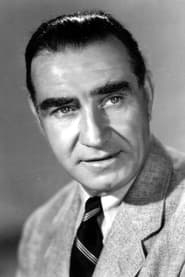
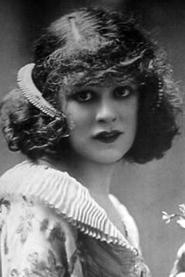
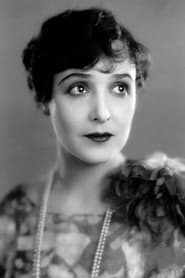
Frank Lloyd directed the film which was written by Julia Crawford Ivers and photographed by her son James Van Trees. The star is young Lenore Ulric and a young, then-unknown King Vidor makes one of his earliest appearances in a film as an actor. The movie is also one of the earliest surviving films of Vidor's wife Florence. A sci-fi/espionage film in which world powers vie for control of a death ray during World War I as an undercover countess infiltrates enemy ranks to prevent them from getting their hands on the weapon.
Cast & crew
More films like this
More Drama films
View all →







More from Frank Lloyd
View all →

More about this film
About the production
Release dateOctober 9, 1916
BudgetApproximately $15,000 - $25,000 (Estimated based on Pallas Pictures standards)
ProductionPallas Pictures, Paramount Pictures (Distributor)
Filmed inLos Angeles, California, Pallas Pictures Studio, Hollywood
The film was a collaboration between director Frank Lloyd and screenwriter Julia Crawford Ivers, a prolific female pioneer in early Hollywood. It was produced by Pallas Pictures, a short-lived subsidiary of Famous Players-Lasky. The production utilized early special effects to depict the 'death ray' in action, including a demonstration scene involving a sheep and a crate of explosives. Notably, the film features a very young King Vidor in an uncredited acting role years before he became a director himself.
Themes
The Ethics of InventionWar ProfiteeringFemale Agency and EspionageScientific ResponsibilityPatriotism vs. Global Morality
Themes & topics
death rayworld war Iundercover spyinventorespionagecountessscientific discoveryarms race
Historical background
Made in 1916, in United States, under Frank Lloyd, The Intrigue belongs to silent filmmaking amid the silent era's rapid stylistic experiments. The Intrigue is a surviving 1916 silent film drama produced by Pallas Pictures and released through Paramount Pictures.
Why this film matters
Within silent history, Frank Lloyd's name attaches to the work; surviving prints help researchers study silent-era craft; 1916 film by Frank Lloyd.
Making of
The production was a family affair in many ways, with Julia Crawford Ivers writing the script and her son James Van Trees handling the camera work. Frank Lloyd, though early in his career, was already known for his efficiency and ability to handle complex melodramas. The casting of Lenore Ulric was a significant coup for Pallas Pictures, as she was a celebrated stage actress whose 'magnetic' screen presence was heavily marketed. During filming, the production faced the challenge of depicting futuristic technology with limited resources, leading to the use of creative lighting and 'iris' shots to focus the audience's attention on the ray gun's effects. The film also reflects the transition of the industry from New York to Hollywood, as Pallas was one of the many companies establishing roots in the burgeoning California film scene.
What critics said
Contemporary reviews of The Intrigue are sparse in open sources; later catalog entries chiefly summarize plot and credits.
Did you know?
- The film is cited by the Historical Dictionary of Science Fiction as one of the earliest recorded uses of the term 'ray gun' in a descriptive context.
- Lenore Ulric, a major Broadway star, is credited as 'Lenore Ulrich' in this film; she later dropped the 'h' from her surname.
- The film features the screen debut of Florence Vidor, who would go on to become a major silent film star and the wife of director King Vidor.
- King Vidor appears in the film as an unbilled extra, marking one of his earliest professional experiences in the film industry.
- The screenwriter, Julia Crawford Ivers, was the mother of the film's cinematographer, James Van Trees.
- The film was thought to be lost for decades before a tinted print was discovered and preserved by the Library of Congress.
- Despite being a war-themed film, it avoids naming specific European nations to maintain neutrality and international marketability.
- The 'death ray' device was actually referred to in the script as an 'X-ray cannon'.
- Director Frank Lloyd would later win two Academy Awards for Best Director (for 'The Divine Lady' and 'Cavalcade').
Visual style
James Van Trees utilized a largely naturalistic style, though he employed 'Rembrandt-style' high-contrast lighting for interior scenes involving the inventor’s workshop. The film makes extensive use of the 'proscenium' view common in the 1910s, but Frank Lloyd introduced several 'nifty' directorial flourishes, including deep-focus compositions and the effective use of iris-ins and iris-outs to punctuate dramatic moments.
Innovations
The film is notable for its early use of practical special effects to simulate the destructive power of the X-ray gun. It is also a rare surviving example of a 1910s feature that successfully integrated science fiction elements into a standard war melodrama.
Music
As a silent film, it had no original recorded score. Modern restorations, such as the Kino Lorber release, feature a newly composed piano score by silent film specialist Ben Model.
Famous quotes
Countess Sonia: 'For the good of future civilization, you must destroy this terrible instrument of destruction.'
Memorable scenes
- The demonstration of the X-ray gun where it incinerates a sheep and a crate of explosives to prove its lethality to the foreign ambassadors.
- The early wartime sequence depicting a field hospital, which was noted by critics for its surprisingly gritty and realistic execution for the time.
- The climax where the inventor, moved by the Countess's plea, burns his blueprints and destroys the machine to prevent it from falling into the wrong hands.
What audiences thought
Contemporary audiences in 1916 were reportedly enthralled by the 'death ray' concept, which fit the 'sweet spot' of public expectations for wartime thrills. The film was a successful vehicle for Lenore Ulric, helping to solidify her status as a cross-over star from the stage to the screen.
Film connections
Influenced by
- The Exploits of Elaine (1914)
- The Perils of Pauline (1914)
- The scientific romances of H.G. Wells
This film influenced
- The Invisible Ray (1936)
- The Girl from U.N.C.L.E. (TV Series)
- Various 'Deadly Invention' tropes in 1930s serials
Film restoration
Preserved. A complete, color-tinted print is held by the Library of Congress. It was recently restored and released on Blu-ray as part of the 'Pioneers: First Women Filmmakers' collection.
Where to watch
- Kino Lorber Blu-ray (Pioneers: First Women Filmmakers)
- Kanopy (via participating libraries)
- Amazon Prime Video (Digital Rental/Purchase)