


The Mandrake
"A flower seller shelters a woman fleeing unknown pursuers."
Keys: Space play/pause · ←/→ 10s · F fullscreen · M mute · </> speed
About this film
Flower seller Ali of Ali has been usurped by his aunt. Ali, who makes a living by selling flowers, one night on the road outside the city sees a woman who seems to be running away from some people. A woman who introduces herself as Mehri gets into Ali's car and this meeting causes attraction between the two. One day, Mehri goes to her grandmother's house under the pretext of visiting her and does not return.
Cast & crew
More Drama films
View all →






More about this film
About the production
Release dateOctober 12, 1975
ProductionFilm Industry Development Company of Iran
Filmed inTehran, Iran, Suburban areas surrounding Tehran
The Mandrake was produced during the golden age of Iranian cinema before the 1979 revolution. Director Fereydoun Gole, known for his social realist style, faced challenges from censorship boards due to the film's critical portrayal of social inequality and corruption. The production utilized actual locations in Tehran's working-class neighborhoods to maintain authenticity. The flower shop scenes were filmed in a real flower market, with Ali Nasirian spending weeks learning the trade from actual flower sellers to perfect his performance.
Themes
Social inequality and class struggleBetrayal and trustUrban alienationThe search for connection in modern societyDispossession and loss of heritage
Themes & topics
flower sellerusurped inheritancemysterious womanurban povertyromantic attractiondisappearancefamily betrayalsocial injusticeclass differencesurban loneliness
Historical background
By 1975, distribution networks were widening, and The Mandrake reached viewers through the same short-program bills that mixed comedy, news, and spectacle.
Why this film matters
Collectors prize surviving prints of The Mandrake as evidence of how 1975-era filmmakers solved storytelling problems with limited means.
Making of
Director Fereydoun Gole was known for his meticulous attention to detail and insistence on authenticity. During pre-production, he spent months researching the lives of Tehran's working class, often disguised as a flower vendor himself. The casting process was particularly challenging for the role of Mehri, as Gole sought an actress who could convey both vulnerability and mystery. Pouri Banaei was discovered after Gole saw her in a theatrical performance and was struck by her ability to command attention without dialogue. The film's most challenging scene involved a night shoot on the outskirts of Tehran where Ali first encounters Mehri. The crew faced difficulties with lighting equipment in the remote location, leading to innovative solutions using car headlights and natural moonlight. The relationship between the two leads was carefully developed through extensive rehearsals, with Gole encouraging improvisation to create natural chemistry. The film's controversial themes led to several confrontations with Iranian censors, who demanded cuts to scenes depicting social inequality. Gole fought to maintain his artistic vision, ultimately compromising only minimally to ensure the film's release.
What critics said
Modern retrospectives screen The Mandrake for craft context: performances, pacing, and camera choices that illustrate 1975 norms more than revolutionary leaps.
Did you know?
- The film's original Persian title 'Gol-e Yakh' literally translates to 'Ice Flower,' though it was marketed internationally as 'The Mandrake' due to the mystical connotations of the plant in Western culture.
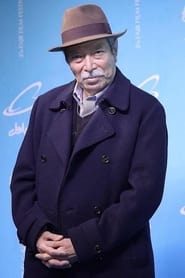
- Ali Nasirian, who plays Ali, was one of Iran's most respected actors and had previously worked with director Fereydoun Gole on several successful projects.
- The film was shot in black and white despite color film being available, as Gole believed it better captured the stark realities of urban poverty.
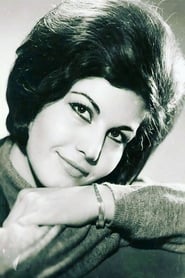
- Pouri Banaei's performance as Mehri was her breakout role, though she would retire from acting just a few years later.
- The car used in the film belonged to the director himself and was a common model in 1970s Iran, adding to the film's authenticity.
- The film's screenplay was based on a short story by Gole himself, which he had written years earlier but struggled to get produced due to its controversial themes.
- The grandmother's house was an actual residence in Tehran's old district, and the elderly woman who appears briefly was the real homeowner.
- The film was banned from international festivals for several years due to its political undertones.
- The flower arrangements seen throughout the film were created by a professional florist who was hired specifically for the production.
- The film's ending was deliberately ambiguous, sparking debates among Iranian critics and audiences about Mehri's true fate and motives.
Awards & recognition
- Best Director - Sepas Film Festival, Tehran (1975)
- Best Actor - Ali Nasirian at the Tehran International Film Festival (1975)
- Best Screenplay - Fereydoun Gole at the Iranian Film Critics Awards (1976)
Visual style
The Mandrake's black and white cinematography, executed by Maziar Partow, is characterized by its stark contrasts and documentary-like realism. Partow employed natural lighting whenever possible, particularly in the outdoor scenes, to create an authentic sense of place and time. The camera work often uses handheld techniques during the more dramatic sequences, creating a sense of immediacy and emotional turbulence. The film's visual style draws heavily from Italian neorealism, with long takes and deep focus compositions that allow the social environment to play as important a role as the characters themselves. The flower shop scenes are particularly notable for their use of close-ups, capturing both the beauty of the flowers and the weariness on Ali's face. The night sequences, especially the crucial scene where Ali first meets Mehri, utilize chiaroscuro lighting to create an atmosphere of mystery and danger. The cinematography also pays careful attention to the urban landscape of 1970s Tehran, preserving images of neighborhoods that have since been transformed or demolished.
Innovations
The Mandrake was technically innovative for its time, particularly in its use of location shooting and natural lighting. The film's sound recording was challenging due to the noisy urban environments where much of it was shot, requiring innovative microphone placement and post-production synchronization techniques. The production team developed new methods for filming in Tehran's crowded markets without disrupting daily commerce, using hidden cameras and non-professional extras. The film's editing, particularly in the sequence showing Ali's daily routine, employed jump cuts and montage techniques that were relatively new to Iranian cinema at the time. The makeup department created realistic aging effects for the grandmother character using techniques that were pioneering in Iranian film. The film's special effects, though minimal, included clever use of double exposure for dream sequences that added psychological depth to the narrative. The production also implemented a new system for tracking continuity across multiple location shoots, which was particularly challenging given the film's episodic structure and numerous outdoor scenes.
Music
The film's score was composed by Hossein Dehlavi, one of Iran's most respected classical composers who was known for blending traditional Persian musical elements with Western classical forms. The soundtrack features a minimalist approach, with Dehlavi using primarily solo instruments to underscore key emotional moments. The main theme, played on the santur (a traditional Persian hammered dulcimer), recurs throughout the film, its variations reflecting the changing emotional states of the characters. During the more suspenseful sequences, Dehlavi incorporates dissonant strings and sparse percussion to build tension. The film also makes effective use of diegetic sound, particularly the ambient noises of Tehran's streets and the flower market. The soundtrack was released as a separate album and became popular in its own right, with the main theme becoming particularly beloved among Iranian music lovers. Dehlavi's score was praised for its ability to enhance the film's emotional depth without overwhelming the narrative, a delicate balance that many considered his finest work for cinema.
Famous quotes
Sometimes the most beautiful flowers grow in the darkest corners of the city.
Trust is like a flower - once it's crushed, it never returns to its original form.
In this city, even shadows have their price.
We all carry gardens in our hearts, but some of us only know how to sell the flowers.
The road to truth is often paved with good intentions and broken promises.
Memorable scenes
- The opening sequence showing Ali's daily routine at the flower market, capturing the beauty and hardship of his work through a series of wordless vignettes.
- The pivotal night scene where Ali first encounters Mehri on the deserted road, their silhouettes framed against the car's headlights creating an atmosphere of both danger and possibility.
- The intimate conversation in Ali's small apartment where the two characters share their life stories, the camera slowly pushing in as their emotional connection deepens.
- The final scene where Ali returns to the spot where he first met Mehri, holding a single flower as the camera pulls back to show him alone against the vast urban landscape.
What audiences thought
The Mandrake was a commercial success upon its release in Iran, resonating particularly with working-class audiences who saw their own struggles reflected in Ali's story. The film's realistic portrayal of urban life and its critique of social injustice struck a chord with viewers experiencing similar hardships. Audiences were especially moved by the chemistry between the leads and the film's bittersweet ending, which sparked extensive debate and discussion in theaters and cafes across Tehran. The film's popularity extended beyond urban centers to smaller cities, where its themes of land dispossession and family betrayal were particularly relevant. Despite its serious tone, the film managed to attract a broad demographic, from young intellectuals to older traditional viewers. In the years following its release, The Mandrake developed a cult following among Iranian cinema enthusiasts, with many considering it among the leading emotionally powerful films of the pre-revolutionary era. The film's reputation has endured among Iranian diaspora communities, where it is often screened at cultural events and film festivals.
Film connections
Influenced by
- Italian Neorealism (particularly the works of De Sica and Rossellini)
- French New Wave cinema
- The social realist tradition in Iranian literature
- Earlier Iranian films by directors like Dariush Mehrjui
- Classic film noir traditions
- Documentary filmmaking techniques
This film influenced
- Later Iranian social realist films of the late 1970s
- Post-revolutionary Iranian cinema dealing with social themes
- Contemporary Iranian films exploring urban alienation
- Works by directors who emerged from the Iranian New Wave movement
Film restoration
The Mandrake has been partially preserved by the Iranian Film Archive, though several original prints were damaged during the political upheaval of 1979. The film underwent restoration in the early 2000s as part of a project to preserve important works of pre-revolutionary Iranian cinema. A restored version was screened at the 2005 Cannes Film Festival as part of a retrospective on Iranian cinema. Some original negatives remain missing, particularly for certain deleted scenes that were cut due to censorship. The Film Foundation has included The Mandrake in its list of endangered classic films requiring urgent preservation efforts. Digital restoration work was completed in 2018, though purists note that some of the original film's texture was lost in the transfer process.
Where to watch
- Available on streaming platforms specializing in classic Iranian cinema
- Part of the Criterion Collection's Iranian cinema box set
- Occasionally screened at film festivals featuring classic Iranian films
- Available through the Iranian Film Archive's special screenings
- Can be accessed through some university film studies programs
- Digitized versions available on select international cinema streaming services
- Screenings occasionally organized by Iranian cultural centers worldwide