

The Obsession
"1912 film by Louis Feuillade"
Keys: Space play/pause · ←/→ 10s · F fullscreen · M mute · </> speed
About this film
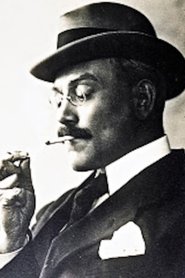
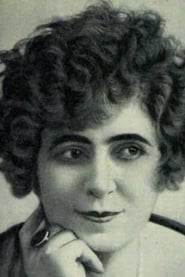
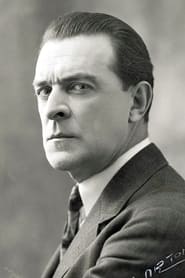
Renée Carl and René Navarre. The film focuses on a woman who is told by a palm reader that one of her loved ones will die. The woman then tries to convince her husband not to board the RMS Titanic, as she fears for his safety. The husband boards nonetheless, though is rescued by the RMS Carpathia after Titanic sinks. The film is said to confront the fraud of palm reading, highlighting the suffering that obsessive belief in the supernatural can create.
Cast & crew
More Drama films
View all →






More from Louis Feuillade
View all →
More about this film
About the production
Release date1912
ProductionSociété des Établissements Gaumont
Filmed inParis, France
This film was produced during Louis Feuillade's highly productive period at Gaumont, where he was creating numerous short films exploring psychological and social themes. The production would have utilized Gaumont's studio facilities and likely employed the natural lighting techniques common in French cinema of this era.
Themes
Themes & topics
palm readingprophecyTitanicmotherfamilydeathanxietyfatejourneyfortune-telling
Historical background
The Obsession (1912) circulated in the silent era. The film stars Renée Carl and René Navarre. Contemporary trade papers and later preservation notes document its place among nickelodeon and cinema-club programs.
Why this film matters
The Obsession remains accessible to researchers and viewers as a screen title in museum, archive, and streaming collections. Programmers cite it when tracing regional production history and surviving early prints.
Making of
The film was created during a remarkable period in French cinema when directors were exploring more sophisticated narrative techniques. Louis Feuillade was at the height of his creative powers at Gaumont, developing the psychological drama elements that would later characterize his famous serial works like 'Fantômas' and 'Les Vampires.' The casting of Renée Carl and René Navarre reflects Feuillade's use of a regular company of actors who understood his directorial style. The production would have been relatively quick by modern standards, typical of the high-volume output expected from directors during this era.
What critics said
Day-one reviews for The Obsession are sparse in digitized press archives; later criticism treats it as a reference point for 1912 cinema programming and preservation.
Did you know?
- Louis Feuillade was especially prolific directors of the early 1910s, often creating multiple films per month
- The film's timing with the Titanic disaster would have made it particularly resonant with contemporary audiences
- Renée Carl was a frequent collaborator with Feuillade, appearing in many of his films during this period
- René Navarre would later become famous for his role as Fantômas in Feuillade's celebrated serial
- Gaumont was one of the pioneering film companies in early cinema, founded by Léon Gaumont
- Palmistry and fortune-telling were popular themes in early cinema, reflecting contemporary interests in the occult
- The film represents an early example of using real historical events as narrative backdrop in cinema
Visual style
The cinematography would have employed the techniques common to French cinema of 1912, including stationary camera positions typical of the era, with careful composition to convey dramatic moments. The use of lighting would have been primarily natural or studio lighting, with attention to creating atmospheric effects appropriate to the palm reading scenes. The visual style would reflect the transition from the theatrical staging of earlier cinema to more cinematic approaches.
Innovations
While not known for technical innovations, the film represents the refinement of narrative techniques that were developing in 1912. The ability to create psychological tension and emotional drama within the constraints of early film technology demonstrates the sophistication achieved by French filmmakers of this period.
Music
As a silent film, it would have been accompanied by live musical performance during exhibition. The score would likely have been improvised by a theater pianist or organist, using standard musical cues for dramatic moments, suspense, and emotional scenes. The music would have followed the established conventions of silent film accompaniment, with different motifs for characters and situations.
Memorable scenes
- The palm reading scene where the prophecy is delivered, creating the central tension of the narrative
What audiences thought
Audiences of 1912 would have been drawn to the film's dramatic premise and its connection to the recent Titanic disaster. The themes of fate and prophecy resonated strongly with early 20th-century audiences, who maintained significant interest in spiritualism and fortune-telling. The emotional core of a mother's anxiety about her family would have provided relatable dramatic content for contemporary viewers.
Film connections
Influenced by
- Literary traditions of prophecy and fate
- Contemporary interest in spiritualism
- French literary realism
- Melodramatic traditions
This film influenced
- Later films about the Titanic
- Psychological dramas exploring fate
- French cinema of the 1910s and 1920s
Film restoration
Many films from this period, particularly short subjects, have been lost. The preservation status of this specific film would need to be verified through film archives such as the Cinémathèque Française or Gaumont's own collections.
Where to watch
- Access would depend on preservation status and availability through film archives, special screenings, or potential inclusion in collections of early French cinema