

The Phantom Creeps
"A mad inventor builds machines to conquer the world."
Keys: Space play/pause · ←/→ 10s · F fullscreen · M mute · </> speed
About this film
In 1939, a mad scientist attempts to rule the world by creating various elaborate inventions.
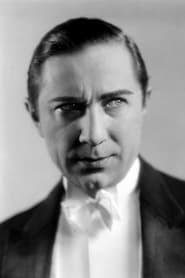
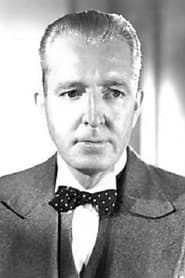
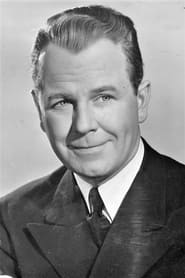
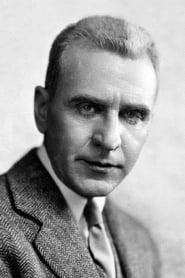
Cast & crew
More Science Fiction films
View all →

More from Saul A. Goodkind
View all →
More about this film
About the production
Release dateJanuary 9, 1939
Box officeUnknown (serials were typically profitable for Universal through theater rentals)
ProductionUniversal Pictures
Filmed inUniversal Studios, Universal City, California
The Phantom Creeps was one of Universal's most elaborate serial productions, featuring extensive special effects and miniatures work. The mechanical spider prop was particularly complex and expensive for its time. Production took place during Universal's golden age of horror and science fiction, allowing the studio to utilize existing sets and expertise from their horror film division. The serial was filmed in sequence over approximately 6-8 weeks, typical for Universal serial productions of the era.
Themes
Scientific ethics and responsibilityInternational espionage and warThe dangers of unchecked ambitionTechnology as a double-edged swordThe conflict between progress and morality
Themes & topics
Historical background
Released in 1939, The Phantom Creeps reached audiences during the early sound era, when exhibition and production norms differed sharply from today's.
Why this film matters
The Phantom Creeps remains viewable through digital archives, preserving 1939 screen culture for modern audiences.
Making of
The production of 'The Phantom Creeps' was typical of Universal's serial factory system but featured unusually elaborate special effects for its time. Director Ford Beebe, a veteran of serials, collaborated with Saul A. Goodkind to create a fast-paced thriller that could capitalize on Bela Lugosi's star power. The mechanical spider, one of the serial's most memorable props, required multiple operators and caused several delays during filming when it malfunctioned. Lugosi, though typecast as a villain, embraced the role of Dr. Zorka and contributed ideas for his character's motivations and mannerisms. The production team faced challenges with the invisibility effects, requiring careful planning of camera movements and actor positioning. The serial was rushed into production to capitalize on the success of Lugosi's previous Universal horror films, resulting in a compressed filming schedule that sometimes led to continuity errors between chapters.
What critics said
Trade coverage around 1939 discussed The Phantom Creeps in terms of craft and audience appeal rather than blockbuster scale.
Did you know?
- This was Bela Lugosi's last major serial role for Universal Pictures, marking the end of his most prolific period at the studio
- The mechanical spider prop used in the serial was so elaborate that it was reused in other Universal productions, including 'The Spider Woman Strikes Back' (1946)
- The serial was originally planned as a feature film called 'The Phantom Robot' but was expanded into a 12-chapter serial due to Lugosi's popularity
- Many of the special effects and props were recycled from Universal's earlier horror films, including 'Frankenstein' and 'The Invisible Man'
- The serial was heavily edited into a feature-length version for television release in the 1950s, losing approximately 40% of its original footage
- Bela Lugosi performed many of his own stunts, including scenes with the dangerous electrical equipment
- The invisibility belt effect was achieved using early matte photography techniques, considered quite advanced for 1939
- The serial was one of the first to feature a robot as a central plot device, influencing later science fiction productions
- Dorothy Arnold was chosen for the female lead partly because she could perform her own stunts in the action sequences
- The disintegrator ray prop was so convincing that it was reportedly investigated by government officials concerned about its potential real-world applications
Visual style
The cinematography, handled by Jerome Ash and William A. Sickner, utilized the full range of Universal's technical capabilities. The serial employed extensive use of matte photography for the invisibility effects, optical printing for the ray gun sequences, and careful lighting to create the laboratory atmosphere. The camera work was notably dynamic for a serial, with moving shots and dramatic angles that enhanced the action sequences. The cinematographers made effective use of Universal's standing sets, particularly the laboratory sets that had been built for the Frankenstein films. The visual style balanced the dark, shadowy lighting of horror films with the brighter, more straightforward lighting needed for action sequences.
Innovations
The serial featured several notable technical achievements for its time, particularly in special effects and miniature work. The mechanical spider was an elaborate prop that required multiple operators and could move independently, representing a significant advancement in practical effects. The invisibility effects, achieved through careful matte photography and double exposure techniques, were among the most sophisticated of their era. The disintegrator ray effects utilized innovative optical printing techniques that created convincing disintegration sequences. The serial also featured early use of process photography for background projection in driving sequences. These technical innovations helped establish Universal as a leader in special effects during the late 1930s.
Music
The musical score was composed by Hans J. Salter, Universal's house composer who worked on many of their horror and science fiction films. Salter created a distinctive leitmotif for Dr. Zorka that recurs throughout the serial, helping to establish the character's menacing presence. The soundtrack made extensive use of Universal's music library, incorporating themes from earlier horror films to enhance the atmosphere. The sound effects were particularly important for the scientific gadgets, with the disintegrator ray and mechanical spider each receiving distinctive audio signatures. The musical accompaniment helped maintain tension during the cliffhanger endings and provided continuity across the twelve chapters.
Famous quotes
With my inventions, I shall rule the world! No one can stop Dr. Zorka!
You fools! You cannot comprehend the power of my mind!
The world will bow before my genius or be destroyed by it!
Science is the only true power, and I am its master!
Your primitive weapons are useless against my superior intellect!
Memorable scenes
- The dramatic reveal of the mechanical spider crawling through the laboratory, showcasing the elaborate prop work and creating genuine tension
- Dr. Zorka's first demonstration of the invisibility belt, with Lugosi gradually disappearing using sophisticated matte effects
- The cliffhanger ending of chapter 6, where Captain West is trapped in the disintegrator ray chamber as the machine powers up
- The final laboratory explosion sequence, utilizing impressive pyrotechnics and miniature work for the climax
- The scene where Zorka's robot servant first comes to life, featuring early robot design and movement techniques
What audiences thought
The serial was popular with Saturday matinee audiences, particularly children and teenagers who formed the core market for chapter plays. Theater owners reported good attendance throughout its run, with many patrons returning weekly to follow the continuing adventures of Dr. Zorka. The combination of Lugosi's star power, elaborate special effects, and cliffhanger endings proved successful in maintaining audience interest across all twelve chapters. In later years, the serial developed a cult following among classic film enthusiasts and Lugosi fans, with its television and home video releases finding new audiences. The serial's reputation has grown over time, with many modern viewers appreciating its imaginative approach to science fiction and Lugosi's charismatic performance as the villainous scientist.
Film connections
Influenced by
- Frankenstein (1931)
- The Invisible Man (1933)
- Flash Gordon serials
- Earlier Universal horror films
- German Expressionist cinema
- Scientific romance literature of the 19th century
This film influenced
- The Invisible Agent (1942)
- The Spider Woman Strikes Back (1946)
- Later Universal science fiction films
- 1950s science fiction serials
- Television science fiction series of the 1950s
Film restoration
The serial is preserved in its complete 12-chapter form in the Universal Pictures archives. It has been restored and released on DVD by various distributors, including the Universal Vault Series. The original nitrate negatives have been preserved and transferred to safety film. Some minor deterioration is present in certain chapters, but the serial remains largely intact and viewable. The feature-length television version has also been preserved, though it represents a significantly edited version of the original material.
Where to watch
- Available on DVD from Universal Pictures Home Entertainment
- Streaming on various classic film subscription services
- Available for digital purchase on Amazon Prime Video and iTunes
- Occasionally broadcast on Turner Classic Movies
- Public domain versions available on YouTube and Internet Archive