

The Servant Girl's Legacy
"Twenty-five dollars — not a fortune"
Keys: Space play/pause · ←/→ 10s · F fullscreen · M mute · </> speed
About this film
Servant girl Mary inherits twenty-five dollars, not thousands; suitors and employers flee when the truth arrives. Social satire on fortune-hunters in class-conscious comedy.
Cast & crew
More films like this
More Comedy films
View all →







More from Arthur Hotaling
View all →
More about this film
About the production
Release dateJuly 1914
ProductionLubin Manufacturing Company
Filmed inJacksonville, Florida
This film was part of the Lubin Manufacturing Company's extensive output of comedy shorts in their Jacksonville studio, which was one of the early film industry's major production centers before Hollywood's dominance. The film was produced during the peak of Jacksonville's brief but significant period as a filmmaking hub from 1908-1917, when the city attracted filmmakers with its favorable climate and varied locations.
Themes
Social class mobilityGreed vs. genuine affectionThe corrupting influence of wealthTrue love transcending social statusHypocrisy of the upper class
Themes & topics
Historical background
The Servant Girl's Legacy (1914) plays to immigrant audiences familiar with telegram inheritance gags.
Why this film matters
Inheritance hoax plots recur in silent comedy exposing performative class mobility.
Making of
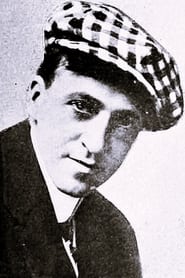
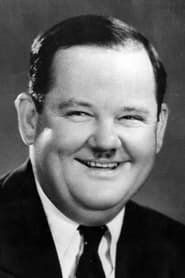
The production took place during Jacksonville's golden age as a film production center, where the Lubin Company operated one of the world's most sophisticated film studios. Arthur Hotaling, the director, was known for his efficient shooting techniques and ability to extract strong comedic performances from his actors. Oliver Hardy, who was still developing his screen persona, appears in a supporting role that features his early comedic timing before he adopted his famous 'Babe' Hardy character. The film was likely shot in just a few days, as was typical for one-reel comedies of this era, with minimal sets and straightforward camera work. The cast and crew would have been working under the studio system conditions of the time, with actors often appearing in multiple films simultaneously.
What critics said
Exhibitors booked it as relatable farce; archivists note typical Biograph-era structure.
Did you know?
- the production features Oliver Hardy in an early role before his partnership with Stan Laurel, making it historically significant for comedy film enthusiasts.
- The Lubin Manufacturing Company was one of the largest film producers in America before World War I, but went bankrupt in 1916, making many of their films rare today.
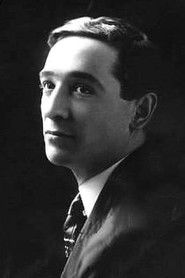
- Director Arthur Hotaling was instrumental in developing the comedy film genre and worked extensively with both Oliver Hardy and Stan Laurel before they became a team.
- The film was produced in Jacksonville, Florida, which was competing with Hollywood as a major film production center in the early 1910s.
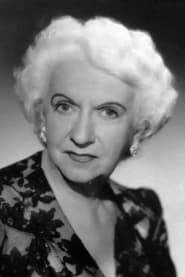
- Mabel Paige was a prolific actress in silent films, appearing in over 200 films between 1910 and 1947, though few of her early works survive.
- The plot theme of mistaken inheritance and social climbing was a popular trope in early comedy films, reflecting American society's fascination with wealth and class mobility.
- the production was released just months before the outbreak of World War I, which would dramatically change the film industry and international cinema.
- The typical one-reel format of 10-12 minutes was standard for comedy shorts in 1914, as theaters would show multiple shorts with feature presentations.
- Edward Lawrence, who appears in the production, was a regular supporting actor in Lubin productions but his career was relatively short-lived compared to his co-stars.
- The telegram as a plot device was particularly contemporary for 1914, as telegraph communication was still relatively new and exciting to audiences.
Visual style
The cinematography would have been typical of 1914 one-reel comedies, featuring static camera positions, medium shots for dialogue scenes, and wider shots for physical comedy. The black and white film stock of the era would have had high contrast and limited tonal range. Lighting would have been basic, primarily using natural light from studio windows or early artificial lighting. Camera movement was minimal due to the bulky equipment of the period, with editing used primarily to advance the narrative rather than for artistic effect. The visual style would have been functional rather than artistic, focusing on clearly presenting the action and performances.
Innovations
The film utilized standard technical practices of 1914, including 35mm film stock and basic editing techniques. No significant technical innovations are associated with this particular production, which represents the established technology of the period rather than pushing boundaries. The Lubin studios were known for their efficient production methods and relatively high technical standards for the era, but this was a routine comedy short rather than an ambitious technical production.
Music
As a silent film, 'The Servant Girl's Legacy' had no synchronized soundtrack. Musical accompaniment would have been provided live in theaters, typically by a pianist or small orchestra using stock music appropriate to the mood of each scene. The score would have included popular songs of the era, classical pieces, and specialized photoplay music designed for specific emotional effects. The quality and style of accompaniment would have varied significantly between theaters, from major urban picture palaces with full orchestras to small nickelodeons with a single piano.
Memorable scenes
- The moment when the servant girl receives the first telegram announcing her inheritance, causing the family's sudden change in attitude toward her; the climactic scene when the second telegram arrives revealing the true amount, and all her suitors immediately abandon her except for her faithful boyfriend; the contrast between how she's treated before and after learning the inheritance amount, highlighting the hypocrisy of her new admirers.
What audiences thought
Audiences in 1914 would have received the production as light entertainment during a typical theater program that included multiple shorts, newsreels, and possibly a feature presentation. The straightforward plot and clear moral lesson about true love versus gold-digging would have been easily understood and appreciated by contemporary audiences. The sight gags and physical comedy typical of the era would have provided the expected laughs. Modern audiences viewing the film would primarily be silent film enthusiasts interested in early comedy development and Oliver Hardy's early career.
Film connections
Influenced by
- Stage comedy traditions of vaudeville
- Earlier film comedies by Mack Sennett
- Popular theatrical melodramas about class
- Silent era slapstick conventions
This film influenced
- Later comedy shorts with similar mistaken fortune themes
- Films exploring social mobility through inheritance
- Early Laurel and Hardy comedies (thematically)
Film restoration
The preservation status of 'The Servant Girl's Legacy' is uncertain, as many Lubin Manufacturing Company films from this period are considered lost or exist only in fragmentary form. The Lubin company's archives were largely destroyed when the company went bankrupt in 1916, and their Jacksonville studio burned in 1915. If any copies survive, they would likely be in specialized film archives or private collections. The film's survival would be historically significant due to Oliver Hardy's early appearance.
Where to watch
- the title is not currently available on major streaming platforms or home video. If it survives, it may be accessible through specialized film archives such as the Library of Congress, the Museum of Modern Art's film collection, or the British Film Institute. Silent film enthusiasts might find screenings at specialized film festivals or archive events dedicated to early cinema. The film's rarity makes it unlikely to be widely available to general audiences.