The Song of the Wildwood Flute
"1910 film by D. W. Griffith"
Keys: Space play/pause · ←/→ 10s · F fullscreen · M mute · </> speed
About this film
But after he brings his bride home to his tent, he is shadowed by a jealous rival who leaves him for dead when he falls into a pit during a hunting trip. Despairing over Gray Cloud's inexplicable absence, Dove Eyes becomes so ill that the envious rival relents, rescues the trapped warrior, and makes possible the couple's reunion. Gray Cloud successfully woos Dove Eyes . Based on the story 'Legend of We-No-Nah' by Mrs.
Cast & crew
More films like this
More Drama films
View all →







More from D.W. Griffith
View all →
More about this film
About the production
Release dateNovember 21, 1910
ProductionBiograph Company
Filmed inFishkill, New York, Delaware Water Gap, New Jersey
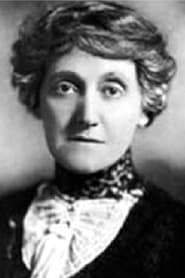
The film was produced during Biograph's prolific period when D.W. Griffith was refining the language of cinema. It was shot on location to provide a sense of naturalism that was rare for the era, utilizing the lush landscapes of the East Coast to stand in for the American wilderness. The production relied on the 'Biograph stock company' of actors, many of whom would go on to become the first true stars of the motion picture industry. The film was based on the story 'Legend of We-No-Nah' by Mrs. James H. Ryan, reflecting the era's fascination with romanticized Native American folklore.
Themes
Jealousy and RedemptionThe Power of MusicNature and the WildernessDevotion and LoyaltyThe Noble Savage
Themes & topics
Historical background
The Song of the Wildwood Flute (1910) circulated in the silent era. But after he brings his bride home to his tent, he is shadowed by a jealous rival who leaves him for dead when he falls into a pit during a hunting trip. Contemporary trade papers and later preservation notes document its place among nickelodeon and cinema-club programs.
Why this film matters
The Song of the Wildwood Flute remains accessible to researchers and viewers as a screen title in museum, archive, and streaming collections. Programmers cite it when tracing regional production history and surviving early prints.
Making of
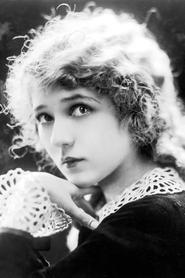
During the filming in Fishkill, New York, Griffith pushed his actors to perform their own stunts, including the scenes involving the pit. The production was characterized by Griffith's 'rehearsal' method, where he would have the actors practice scenes repeatedly before a single frame of expensive film was shot. Mary Pickford often clashed with Griffith during this period regarding her acting style; Griffith wanted more 'grand' gestures, while Pickford was pioneering a more subtle, naturalistic approach suited for the camera. The use of authentic-looking costumes was a priority for Griffith, who sought to move away from the 'stagey' look of earlier films.
What critics said
Day-one reviews for The Song of the Wildwood Flute are sparse in digitized press archives; later criticism treats it as a reference point for 1910 cinema programming and preservation.
Did you know?
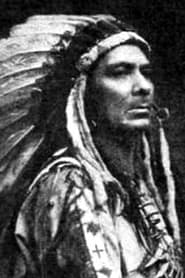
- The film features Dark Cloud, a real-life Brule Sioux Indian, in the lead role, which was progressive for a time when 'redface' was common.
- Mary Pickford, known as 'America's Sweetheart,' plays the female lead, Dove Eyes, just a few years before she became a global icon.
- This film is one of many 'Indian dramas' Griffith directed between 1908 and 1913, a genre he helped popularize.
- The flute used in the film serves as a central narrative device, representing the spiritual and romantic connection between the characters.
- Dell Henderson, who plays the villainous rival, later became a prolific director himself during the silent era.
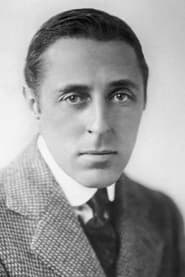
- The film was shot by G.W. 'Billy' Bitzer, Griffith's cinematographer who pioneered many modern camera techniques.
- The production company, Biograph, did not credit its actors at the time, leading fans to refer to Mary Pickford simply as 'The Biograph Girl'.
- The story was adapted from a popular contemporary magazine piece, showing the early link between literature and film.
Visual style
Billy Bitzer utilized natural lighting to great effect, particularly in the forest scenes. The film features early examples of the 'medium shot,' which allowed audiences to see the actors' facial expressions more clearly than the traditional 'long shot.' There is a notable use of depth in the frame, with action occurring in both the foreground and background to create a sense of three-dimensional space. The camera remains mostly static, as was the custom, but the framing is meticulously composed.
Innovations
The film is notable for its sophisticated narrative structure, using a 'rescue at the last minute' trope that Griffith would later perfect in 'The Birth of a Nation.' It also demonstrates an early mastery of continuity editing, ensuring that the spatial relationship between the pit and the village remained clear to the audience. The use of location shooting for the entire film was a significant technical and logistical undertaking for 1910.
Music
As a silent film, there was no recorded soundtrack. However, Biograph provided 'musical suggestions' to theater organists and pianists, which would have emphasized the 'woodwind' themes to mimic the sound of the flute mentioned in the title. In modern restorations, a new piano or orchestral score is typically added to evoke the period's atmosphere.
Famous quotes
Intertitle: 'The Song of the Flute - A message of love.'
Intertitle: 'The jealous rival watches his opportunity.'
Intertitle: 'The remorse of the traitor.'
Memorable scenes
- The opening scene where Gray Cloud woos Dove Eyes with his flute amidst a lush forest setting.
- The dramatic fall of Gray Cloud into the pit, captured with a high-angle shot to emphasize his isolation.
- The scene of Dove Eyes' decline, where Mary Pickford uses subtle facial expressions to convey deep mourning.
- The climax where the rival leads the tribe back to the pit, a classic Griffith 'race against time' sequence.
What audiences thought
Audiences in 1910 were captivated by the romantic and tragic elements of the story, as well as the 'exotic' setting of the Native American village. The film was a success for Biograph, further cementing Mary Pickford's popularity with the public. Early moviegoers were particularly moved by the 'flute' motif, which provided a visual representation of music in a silent medium. Today, it is mostly watched by film historians and students of silent cinema.
Film connections
Influenced by
- The Last of the Mohicans (Literature)
- The Legend of Hiawatha (Poetry)
- Early 19th-century landscape painting
This film influenced
- The Last of the Mohicans (1920)
- Broken Blossoms (1919)
- The Squaw Man (1914)
Film restoration
The film is preserved in the Library of Congress Paper Print Collection and has been restored by various film archives. It is available for study and viewing in several silent film compilations.
Where to watch
- YouTube (Public Domain)
- Library of Congress Digital Collections
- Kino Lorber's 'Griffith Masterworks' DVD/Blu-ray collections