
The Toll of the Sea
"Oh, Sea, now that life has been emptied I come to pay my great debt to you"
Keys: Space play/pause · ←/→ 10s · F fullscreen · M mute · </> speed
About this film
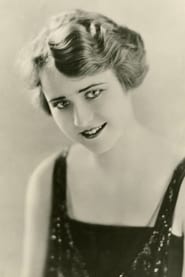
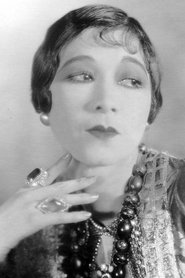
Anna May Wong on the set of The Toll of the Sea In 1919, a young Chinese woman, Lotus Flower, sees an unconscious man floating in the water at the seashore, and quickly gets help for him. The man is Allen Carver, an American. Soon the two have fallen in love, and they get married " Chinese fashion ".
Cast & crew
More films like this
More Drama films
View all →







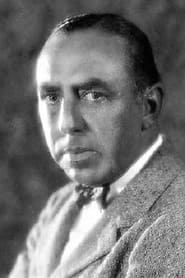
More from Chester M. Franklin
View all →


More about this film
About the production
Release dateNovember 26, 1922
Box officeModerately successful, helped demonstrate commercial viability of color films
ProductionTechnicolor Motion Picture Corporation
Filmed inTechnicolor Studio, Hollywood, California
The film was shot entirely using Technicolor's two-color process, which required special cameras and lighting. The production faced numerous technical challenges as the early color process was still experimental. Each scene had to be filmed twice with different color filters, and the process required extremely bright lighting levels that made conditions difficult for actors. The film was essentially a showcase for Technicolor's technology, which is why the company produced it themselves.
Themes
Cross-cultural romanceSacrifice and dutyCultural assimilationTragic loveEast-West cultural clash
Themes & topics
forbidden lovecultural differencestragedysacrificeinterracial romanceabandonmentChinese cultureAmerican abroadunrequited lovemotherhood
Historical background
The Toll of the Sea (1922) emerged during the silent-film era. Anna May Wong on the set of The Toll of the Sea In 1919, a young Chinese woman, Lotus Flower, sees an unconscious man floating in the water at the seashore, and quickly gets help for him. Archival records and catalog entries help place the work within film-history surveys of the period.
Why this film matters
Preserved under Wikidata ID Q2411291, The Toll of the Sea is valued as a screen drama within catalog and archive collections. Wikipedia's "The Toll of the Sea" entry connect it to broader histories of cinema exhibition and restoration.
Making of
The making of 'The Toll of the Sea' was as much about technological innovation as storytelling. Technicolor used this film as a showcase for their new two-color process, which involved filming scenes through red and green filters simultaneously. The cameras were bulky and noisy, requiring soundproof blimps. The lighting had to be extremely bright, sometimes causing actors to sweat heavily under the hot lamps. Anna May Wong, despite her young age, showed remarkable professionalism during the difficult shoot. Director Chester M. Franklin had to work closely with Technicolor engineers to achieve the desired color effects. The film was shot in just a few weeks, but post-production took months due to the complex color printing process.
What critics said
Trade and archival sources offer limited day-one review coverage for The Toll of the Sea. Modern reception rests on its availability in collections, repertory screenings, and reference works that document 1922 cinema.
Did you know?
- This was the first feature film made entirely in Technicolor's two-color process that received a wide theatrical release
- Anna May Wong was only 17 years old when she starred in this film, her first leading role
- The film was essentially a test vehicle for Technicolor's new color process, adapted from Puccini's opera Madame Butterfly
- Despite being set in China, most of the cast were white actors in Asian roles except for Wong
- The film's success helped convince Hollywood studios that color films could be commercially viable
- Only two copies of the original Technicolor print are known to exist today
- The film was rediscovered and restored in the 1980s by the British Film Institute
- Wong's performance was so compelling that it launched her as the first Chinese-American movie star
- The film's title refers to both the sea setting and the emotional toll of forbidden love
- The production cost was approximately $50,000, a substantial sum for 1922
Awards & recognition
- No major awards were given for color films in 1922 as the category didn't exist yet
Visual style
The cinematography by Ray Rennahan and Arthur Edeson was groundbreaking for its use of Technicolor's two-color process. The system used a beam-splitter prism to expose two strips of film simultaneously through red and green filters. This created a limited but striking color palette, with reds and greens appearing vivid while blues were rendered as gray-green. The cinematographers had to adapt their techniques to work with the special cameras and the high light levels required. They used the color capabilities to emphasize the exotic setting, with particular attention to traditional Chinese costumes and scenery. The underwater scenes were especially challenging to shoot in color but resulted in some of the film's most visually striking moments.
Innovations
The film's primary technical achievement was its successful use of Technicolor's two-color process for a feature-length production. This was only the second feature film to use this process after 'The Gulf Between' (1917), but it was the first to achieve wide distribution. The process involved filming through red and green filters simultaneously, then dyeing the processed film strips and cementing them together. The film demonstrated that color cinematography could be practical for commercial productions. The restoration process in the 1980s also represented a technical achievement, as archivists had to carefully preserve the fragile original prints while creating new viewing copies.
Music
As a silent film, 'The Toll of the Sea' would have been accompanied by live musical performances in theaters. The original score was composed by Josiah Zuro, who created a soundtrack that blended Western romantic themes with Chinese-inspired melodies. The music was designed to enhance the emotional impact of key scenes, particularly the tragic finale. Theater orchestras received cue sheets with specific musical suggestions for different scenes. For the restored version, modern composers have created new scores that attempt to capture the spirit of the original while utilizing contemporary musical resources.
Famous quotes
I have waited for you always, my husband. I have been faithful to you always.
In my country, when a woman marries, she marries for life.
The sea gives, and the sea takes away. Such is its toll.
I will not stand in the way of your happiness. Take your son and go.
Memorable scenes
- The opening scene where Lotus Flower discovers Allen washed ashore, with the ocean waves rendered in striking green-blue tones
- The wedding sequence featuring vibrant traditional Chinese costumes against natural scenery
- The heartbreaking farewell scene as Allen promises to return
- The final confrontation scene where Lotus Flower makes her sacrifice, featuring Wong's powerful emotional performance
- The underwater sequences that showcased the capabilities of early color cinematography
What audiences thought
Audiences in 1922 were primarily drawn to the novelty of seeing a full-length color film. Many viewers reported being mesmerized by the vibrant colors, particularly in scenes featuring Chinese costumes and scenery. The film performed well enough to encourage Technicolor to continue developing their process, though it wasn't a blockbuster hit. Modern audiences, viewing the restored version, are often struck by both the beauty of the early color process and Anna May Wong's performance. The film has developed a cult following among classic film enthusiasts and is frequently shown at retrospectives and film festivals focusing on either early color cinema or Asian American representation.
Film connections
Influenced by
- Madame Butterfly (opera)
- The Gulf Between (1917 film)
- Contemporary yellow peril literature
- Puccini's Madama Butterfly
This film influenced
- Madame Satan (1930)
- The Bitter Tea of General Yen (1933)
- Dragon Seed (1944)
- Sayonara (1957)
- M. Butterfly (1993)
Film restoration
The film has been preserved and restored. Two original Technicolor prints survive, one at the George Eastman Museum and another at the British Film Institute. The film was restored in 1985 by the British Film Institute in collaboration with the National Film Archive. The restoration process involved careful preservation of the original two-color elements and creation of new viewing copies. The restored version has been shown at film festivals worldwide and is available for archival viewing.
Where to watch
- The Criterion Collection (Blu-ray/DVD)
- The Museum of Modern Art (MoMA) film collection
- UCLA Film & Television Archive
- British Film Institute streaming service
- Various classic film streaming platforms
- Film archives and cinematheques during special screenings