

Triple Trouble
"An inept janitor turns an explosives lab upside down."
Keys: Space play/pause · ←/→ 10s · F fullscreen · M mute · </> speed
About this film
As Colonel Nutt is experimenting with explosives, a new janitor is joining his household. The inept janitor proceeds to make life difficult for the rest of staff.
Cast & crew
More films like this


More Comedy films
View all →







More from Charlie Chaplin
View all →


More about this film
About the production
Release dateAugust 26, 1918
Box officeUnknown - released without Chaplin's approval, likely modest returns
ProductionMutual Film Corporation
Filmed inLos Angeles, California, Mutual Film Studio lot
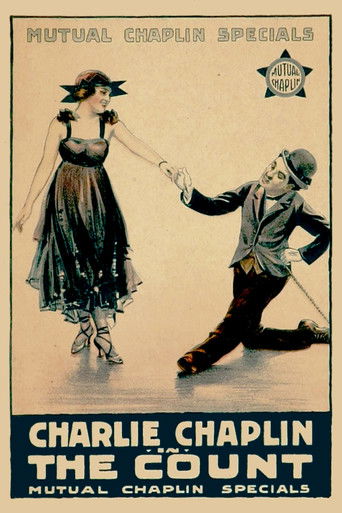
Triple Trouble was created without Charlie Chaplin's approval or involvement by Mutual Film Corporation after Chaplin left the studio. The film was assembled from unused footage and outtakes from Chaplin's earlier Mutual films 'The Count' (1916) and 'The Adventurer' (1917), along with newly shot connecting material. This unauthorized compilation represents one of the few Chaplin films released against his wishes, and Chaplin later sued to prevent its distribution. The film's patchwork nature explains its somewhat disjointed narrative and inconsistent character development.
Themes
Class conflictIncompetence vs. competenceEspionage and paranoiaDomestic chaosWar anxiety
Themes & topics
janitorexplosivesspymistaken identitychaosdomestic servicesabotagephysical comedyslapstickwartime
Historical background
By 1918, Triple Trouble was shaped by the silent era technology, distribution, and audience expectations.
Why this film matters
Triple Trouble (1918) helps trace genre evolution, performer careers, and exhibition practices of its period.
Making of
The creation of Triple Trouble represents among the leading unusual production stories in Chaplin's career. After Chaplin left Mutual Film Corporation in 1917 to form his own production company, Mutual found themselves with valuable unused footage from Chaplin's previous films. Rather than let this material go to waste, studio executives decided to piece together a new film from these outtakes, primarily from 'The Count' and 'The Adventurer.' They hired a director to shoot new connecting scenes to link the disparate footage into a somewhat coherent narrative. Chaplin was furious when he learned of this unauthorized use of his work, as he maintained strict creative control over his films. The legal battle that ensued set important precedents regarding artistic control and intellectual property rights in early Hollywood. The film's disjointed quality reflects its piecemeal construction, with noticeable continuity issues and tonal shifts between the different source materials.
What critics said
Modern notes on Triple Trouble emphasize preservation, stylistic choices, and its place within director or studio filmographies.
Did you know?
- Triple Trouble is one of the few Chaplin films that Chaplin himself disowned and tried to suppress, as it was released without his consent after he left Mutual Film Corporation.
- The film was created by splicing together deleted scenes from 'The Count' and 'The Adventurer' with newly filmed material to create a cohesive narrative.
- Chaplin successfully sued Mutual Film Corporation to prevent further distribution of the film, though it had already been released in theaters.
- This was the final film released during Chaplin's contract with Mutual, though he had already moved on to First National.
- The character of Colonel Nutt was played by Henry Bergman, who appeared in numerous Chaplin films as both character actor and makeup artist.
- The film features one of Chaplin's rare on-screen explosions, which was considered dangerous to film in the silent era.
- Albert Austin, who appears as the cook, was one of Chaplin's most reliable supporting players during the Mutual period.
- The German spy plot element reflects the World War I tensions of the period, though the film treats it purely as comedy.
- The janitor character is one of Chaplin's more working-class Tramp variations, showing the character in domestic service.
- Despite being unauthorized, the film still features Chaplin's signature physical comedy and timing, demonstrating his consistent performance quality even in unused footage.
Visual style
The cinematography in Triple Trouble reflects the standard practices of the Mutual Film Corporation period, with the characteristic use of medium shots and wide shots typical of Chaplin's comedies. The film features the clean, well-lit interiors that were a hallmark of Mutual's production values. Because it was assembled from footage shot at different times by different cinematographers, there are noticeable variations in lighting style and camera placement throughout the film. The explosion sequences demonstrate the technical challenges of filming such effects in the silent era, requiring careful timing and multiple camera setups. The film maintains the visual clarity and composition quality that Chaplin demanded, even in the unused footage, showing the high standards maintained at Mutual during Chaplin's tenure.
Innovations
Triple Trouble doesn't feature significant technical achievements, as it primarily repurposes existing footage from earlier Chaplin productions. The film does demonstrate the sophisticated editing techniques being developed in the late 1910s, particularly in how the editors attempted to create narrative continuity from disparate sources. The explosion sequences, while simple by modern standards, required careful coordination of practical effects and timing to achieve the desired comic effect. The film's existence itself represents an early example of compilation filmmaking, though this was done without artistic merit in mind. The lighting and camera work maintain the high technical standards of Chaplin's Mutual period, showing the professional quality of the studio's productions even in discarded material.
Music
As a silent film, Triple Trouble would have been accompanied by live musical performance during its original theatrical run. The typical accompaniment would have consisted of a pianist or small orchestra playing popular songs of the era along with classical selections appropriate to the on-screen action. For the explosion scenes, dramatic percussion would have been employed to enhance the comedic effect. Modern releases of the film feature newly composed scores by silent film accompanists, typically using piano or small ensemble arrangements that reflect the musical styles of the 1910s. Some contemporary versions include sound effects to enhance the physical comedy, though purists prefer silent presentation with only musical accompaniment.
Famous quotes
The janitor: 'I am the new janitor. I have come to clean up this place!' (while immediately creating a mess)
Colonel Nutt: 'My experiments require absolute quiet and precision!' (spoken as chaos erupts around him)
The cook: 'You call this cleaning? You're making more dirt than you're removing!'
Memorable scenes
- The opening sequence where Chaplin as the janitor attempts to enter the house while carrying an absurd amount of cleaning equipment, resulting in a cascade of falling mops, buckets, and brooms that blocks the doorway.
- The kitchen scene where the janitor's attempt to help the cook results in flour covering every surface and character, creating a snow-like effect in the domestic setting.
- The climactic explosion sequence where the janitor accidentally triggers Colonel Nutt's experimental explosives while trying to clean the laboratory, resulting in perfectly timed comic destruction that inadvertently stops the spy's plot.
What audiences thought
Audiences in 1918, still eager for any new Chaplin material, generally received Triple Trouble positively despite its flaws, though box office returns were reportedly modest compared to Chaplin's authorized releases. Many viewers likely didn't notice or care about the film's patchwork construction, simply happy to see their favorite comedian in new situations. Chaplin's immense popularity at the time meant that even subpar product could find an audience. Modern audiences typically encounter Triple Trouble only in Chaplin retrospectives or home video collections, where it's usually presented with explanatory notes about its unusual origins. Today, the film is primarily of interest to Chaplin enthusiasts and film scholars rather than general audiences.
Film connections
Influenced by
- The Count (1916)
- The Adventurer (1917)
- Mack Sennett comedies
- French farce
- Music hall tradition
This film influenced
- Later compilation films
- Jackie Chan's outtake films
- Modern blooper reels
Film restoration
Triple Trouble survives in reasonably good condition, though like many films from this period, it shows signs of deterioration. The film has been preserved by several archives including the Museum of Modern Art and the Library of Congress. Multiple versions exist with varying degrees of picture quality, as the film has been transferred numerous times for different home video releases. Some sequences show more wear than others, likely reflecting the different source materials used in its original compilation. The film is part of the Chaplin estate's official catalog, though it's rarely included in major retrospectives due to its unofficial status.
Where to watch
- The Criterion Collection DVD/Blu-ray 'Chaplin Mutual Comedies' box set
- The Chaplin Archives official streaming service
- Kino Lorber DVD collection 'The Chaplin Revue'
- Various public domain streaming platforms
- Film archives and cinematheques that occasionally screen Chaplin retrospectives