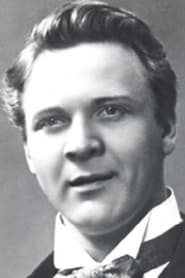
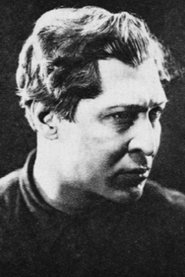

Tsar Ivan Vasilevich The Terrible
"Chaliapin as Ivan the Terrible—silent and strange."
Keys: Space play/pause · ←/→ 10s · F fullscreen · M mute · </> speed
About this film
Feodor Chaliapin performed the title role of Ivan the Terrible in this 1915 Russian silent, an unusual capture of an operatic bass on film with intertitles substituting for song. Khanzhonkov's production preserved Chaliapin's stage presence even though audiences could not hear his voice.
Cast & crew
More Drama films
View all →






More about this film
About the production
Release date1915
ProductionA. Khanzhonkov & Co.
Filmed inMoscow, Russian Empire
The film was produced by Alexander Khanzhonkov, one of Russia's pioneering film producers. It was created as a vehicle to capture the stage performance of Feodor Chaliapin Sr., who was internationally renowned for his portrayal of Ivan the Terrible in the opera 'Boris Godunov' and other theatrical works. The production faced the unique challenge of translating a primarily vocal and operatic performance into silent cinema, relying entirely on Chaliapin's physical acting and expressive capabilities. The film was shot during World War I, which created additional production difficulties including resource shortages and the general disruption of Russian cultural life.
Themes
Absolute power and its corrupting influenceThe psychological burden of tyrannyHistorical legacy and national identityThe conflict between personal morality and political necessityParanoia and the isolation of absolute rulers
Themes & topics
Russian historyTsarTyrannyPowerHistorical drama16th centuryOpera adaptationSilent filmPolitical dramaPsychological drama
Historical background
Tsar Ivan Vasilevich The Terrible (1915) reached screens through A. Khanzhonkov & Co.. Exhibitors of the time built silent-era bills that mixed shorts, features, and live acts, so a clear premise helped Tsar Ivan Vasilevich The Terrible travel between cities and exchange markets.
Why this film matters
Archivists and revival programmers still cite Tsar Ivan Vasilevich The Terrible (1915) when tracing studio habits, casting pools, and the visual rhetoric audiences once took for granted. Even modest surviving prints help map how Tsar Ivan Vasilevich The Terrible fit beside competing releases of its day.
Making of
The production of 'Tsar Ivan Vasilevich The Terrible' was a significant undertaking for the Russian film industry in 1915. Director Aleksandr Ivanov-Gai faced the unique challenge of capturing the essence of Feodor Chaliapin's stage performance without the benefit of sound. Chaliapin, who was accustomed to the grandeur of opera houses and theaters, had to adapt his acting style for the intimate medium of cinema. The film's sets were designed to replicate the opulence and darkness of Ivan's court, with particular attention to historical accuracy in costumes and props. The production team worked to create visual spectacle that could compensate for the lack of Chaliapin's famous bass voice. Interestingly, the inclusion of Richard Boleslavsky in a minor role represents one of the earliest documented instances of an actor who would later become a significant Hollywood director appearing in Russian cinema. The film was shot during wartime conditions, which created various logistical challenges including limited resources and the mobilization of some crew members for military service.
What critics said
Trade coverage around 1915 discussed Tsar Ivan Vasilevich The Terrible for pacing, clarity, and program fit rather than blockbuster grosses. Later writers value it as evidence of period style and as a reference point beside other films from the same era.
Did you know?
- the production represents one of the earliest cinematic attempts to capture a theatrical performance, preserving Feodor Chaliapin's iconic portrayal of Ivan the Terrible for posterity.
- The film is particularly notable for being silent despite featuring one of the greatest opera singers of all time in the lead role - audiences could only imagine the famous voice that accompanied Chaliapin's acting.
- Richard Boleslavsky, who had a minor role in the production, would later become a significant figure in Hollywood and direct 'Rasputin and the Empress' (1932), creating an interesting connection between early Russian cinema and Hollywood's fascination with Russian history.
- The film was produced by A. Khanzhonkov & Co., one of Russia's most important early film studios that also produced other significant works of Russian silent cinema.
- Feodor Chaliapin Sr. was already an international star when the production was made, having performed at the Metropolitan Opera in New York and other major venues worldwide.
- The film was created during a pivotal moment in Russian history - 1915, during World War I and just two years before the Russian Revolution that would transform the country's film industry.
- This was one of the first films to attempt a serious historical drama about Russian royalty, predating the famous Eisenstein films about Ivan the Terrible by decades.
- The film's title cards were particularly important since they had to convey the dramatic weight and historical context that Chaliapin's voice would have provided in a stage performance.
Visual style
The cinematography of this 1915 film reflects the technical capabilities and artistic sensibilities of Russian cinema during its golden age. The camera work was relatively static by modern standards, but employed careful composition to frame Chaliapin's powerful performance within historically detailed sets. The film utilized dramatic lighting to create the ominous atmosphere appropriate for a story about Ivan the Terrible, with strong contrasts between light and shadow to emphasize the psychological drama. The cinematographers made effective use of the limited space available in studio sets, creating depth through careful placement of props and actors. The film also incorporated some location shooting to establish authentic historical settings, a practice that was becoming more common in Russian productions of this period. The visual style was influenced by Russian theatrical traditions, with compositions that echoed stage design while taking advantage of cinema's ability to show intimate details and facial expressions.
Innovations
For its time, the film demonstrated several technical achievements that were notable for Russian cinema in 1915. The production employed sophisticated set design techniques to recreate the historical period of Ivan the Terrible's reign, showing the growing capabilities of Russian film studios in creating elaborate historical environments. The film's makeup effects for Chaliapin's transformation into the aging, tormented Tsar were considered advanced for the period. The camera work, while limited by the technology of the time, showed careful attention to framing and composition that enhanced the dramatic impact of Chaliapin's performance. The film also demonstrated improved editing techniques compared to earlier Russian films, with more sophisticated pacing and scene transitions. The production's ability to capture the nuances of a great theatrical performance on film represented an important technical and artistic achievement in the development of cinema as a medium for preserving performance art.
Music
As a silent film, 'Tsar Ivan Vasilevich The Terrible' would have been accompanied by live musical performance during its original theatrical run. The typical practice in Russian cinemas of 1915 involved either a pianist, small ensemble, or full orchestra providing musical accompaniment that was synchronized with the on-screen action. While no specific score documentation survives for the production, it's likely that the accompaniment drew from Russian classical music traditions, possibly incorporating works by composers like Mussorgsky, Rimsky-Korsakov, or Tchaikovsky who wrote extensively on Russian historical themes. The musical accompaniment would have been crucial in conveying the emotional weight of scenes that audiences expected to hear with Chaliapin's voice in theatrical productions. Some theaters might have used adapted versions of music from the operas in which Chaliapin performed the role, creating a familiar auditory context for viewers.
Famous quotes
Title card: 'In the heart of Russia, a Tsar's soul battles with demons of his own making.'
Title card: 'Power corrupts, but absolute power destroys the soul itself.'
Title card: 'The weight of the crown crushes the man beneath it.'
Memorable scenes
- The opening coronation scene where Chaliapin's Ivan first appears in full regalia, establishing his imposing presence and setting the tone for his tyrannical character through subtle gestures and facial expressions.
- The climactic madness scene where Ivan, tormented by his actions, delivers a powerful silent monologue through wild-eyed expressions and contorted movements, demonstrating Chaliapin's mastery of physical acting.
- The confrontation with the boyars where Ivan's paranoia becomes evident through his suspicious glances and defensive posture, showcasing the psychological depth of the performance without dialogue.
What audiences thought
The film attracted significant attention from Russian audiences who were eager to see their national opera star on screen. Despite the limitations of silent cinema, Chaliapin's fame ensured strong attendance, particularly among theater-goers who were familiar with his stage work. Many viewers reported being moved by Chaliapin's visual performance, though some expressed disappointment at not being able to hear his famous voice. The film's historical subject matter resonated with Russian audiences who had strong cultural connections to their nation's history. The wartime context of 1915 meant that cinema served as an important escape and cultural touchstone for many Russians dealing with the hardships of war. The film's success demonstrated the growing sophistication of Russian cinema audiences and their appreciation for artistic, historically-themed films rather than mere entertainment.
Film connections
Influenced by
- Russian theatrical traditions
- Feodor Chaliapin's stage performances
- Russian opera and ballet
- Historical paintings of Ivan the Terrible
- Russian literature about the Tsar period
This film influenced
- Ivan the Terrible (1944) by Sergei Eisenstein
- Ivan the Terrible, Part II (1946) by Sergei Eisenstein
- Tsar (2009) by Pavel Lungin
- Various Russian historical films of the Soviet period
Film restoration
The preservation status of 'Tsar Ivan Vasilevich The Terrible' (1915) is uncertain, and the film is believed to be partially or completely lost. Like many Russian films from the World War I period and pre-revolutionary era, it suffered from inadequate preservation methods and the chaos of the revolutionary period. Some sources suggest that fragments or stills from the film may exist in Russian film archives, particularly the Gosfilmofond archive, but a complete print has not been located. The loss of the production is particularly significant given its documentation of Chaliapin's performance and its importance in early Russian cinema history. The film represents one of many cultural casualties of the early 20th century political upheavals in Russia. Film historians continue to search for surviving elements in international archives and private collections.
Where to watch
- The film is currently not available for viewing due to its lost or incomplete preservation status
- Film archives and specialized cinema museums may have fragments or stills available for research purposes
- Some film historians have reproduced stills and production photographs that can be found in academic publications about early Russian cinema
- The Gosfilmofond Russian State Archive may have materials available for scholarly research by appointment