


Tunisian Victory
"Documentary made by the U"
Keys: Space play/pause · ←/→ 10s · F fullscreen · M mute · </> speed
About this film
Documentary made by the U.S. Army Signal Corps after the North African campaign.
Cast & crew
More Documentary films
View all →
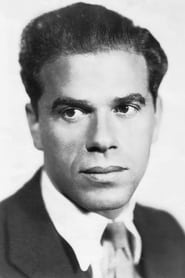
More from Frank Capra
View all →





More about this film
About the production
Release dateMarch 6, 1944
BudgetMilitary production, no commercial budget disclosed
Box officeNot commercially released - military distribution only
ProductionU.S. Army Signal Corps, British Ministry of Information, U.S. Office of War Information
Filmed inTunisia, Algeria, Morocco, Egypt, London studios for post-production
This was a rare collaborative effort between American and British film units, with both Frank Capra and Roy Boulting directing. The production faced significant challenges including obtaining combat footage from multiple sources, coordinating between different military units, and maintaining security around sensitive operational details. The film utilized over 100,000 feet of actual combat footage captured by combat cameramen from both nations. Post-production was complicated by the need to synchronize American and British perspectives while maintaining a unified narrative.
Themes
Allied cooperationThe human cost of victoryStrategic military planningThe reality of modern warfareInternational unity against fascism
Themes & topics
World War IINorth AfricaDesert warfareMilitary strategyAllied forcesPropaganda documentaryCombat footageTunisia campaignOperation TorchMilitary cooperation
Historical background
By 1944, sound cinema, wartime mobilization, and changing censorship norms were reshaping what audiences expected from narrative features.
Why this film matters
Tunisian Victory preserves a nonfiction record valued by historians studying how early audiences encountered real places, people, and events. Later revivals, archive screenings, and digitization have kept such titles accessible to researchers and dedicated viewers long after their first commercial runs.
Making of
The production of Tunisian Victory represented a remarkable feat of wartime filmmaking logistics. Capra and his team had to coordinate with multiple military units across three countries to gather footage while maintaining operational security. The editing process was particularly challenging as they had to weave together footage from different sources, shot at different times, into a coherent narrative. The dual narration system with American and British voices was innovative but required careful scripting to maintain continuity. Combat cameramen often worked under fire, with several being wounded or killed while capturing the footage used in the film. The post-production team worked around the clock in London studios, often dealing with damaged film reels and incomplete documentation of what had been filmed.
What critics said
Reception records for Tunisian Victory are uneven; interest today is concentrated among archivists, historians, and viewers of older cinema. Modern assessment tends to emphasize historical value, craft, and cultural context rather than box-office performance.
Did you know?
- This was the only film in the Why We Fight series to be a co-production between the United States and United Kingdom
- Frank Capra and British director Roy Boulting worked together, an unprecedented collaboration during wartime
- The film used actual combat footage from over 50 different combat cameramen who risked their lives filming during active operations
- Burgess Meredith, who narrates the American portions, would later become famous for playing the Penguin in Batman and Mickey in the Rocky films
- Leo Genn, who provides the British narration, was actually serving in the British Army when he recorded his parts
- The film was shown to both Allied troops and civilian audiences to boost morale and demonstrate the effectiveness of the Allied partnership
- Some combat footage was captured by cameras mounted on aircraft, providing unprecedented aerial views of the desert battles
- The original cut included footage that was later deemed too graphic for civilian audiences and was removed from the final version
- The film's success led to increased cooperation between American and British propaganda units throughout the remainder of the war
- General Eisenhower personally approved the final cut, ensuring it accurately represented the strategic significance of the North African campaign
Awards & recognition
- Academy Award nomination for Best Documentary Feature (1944)
- National Board of Review Award for Best Documentary (1944)
Visual style
The cinematography of Tunisian Victory is notable for its use of authentic combat footage captured under extremely dangerous conditions. The film incorporates a remarkable variety of shots including aerial reconnaissance footage, ground-level combat sequences, and strategic mapping sequences. The desert landscape presented unique challenges for exposure and focus, which the combat cameramen overcame with remarkable skill. The film makes effective use of contrast between sweeping desert panoramas and intimate close-ups of soldiers in action. The editing techniques employed to weave together footage from multiple sources while maintaining visual coherence were innovative for their time.
Innovations
Tunisian Victory pioneered several technical innovations in documentary filmmaking. The film developed new techniques for integrating footage from multiple sources shot under varying conditions into a seamless narrative. The use of animated maps and strategic overlays was particularly sophisticated for its time, helping audiences understand complex military movements. The post-production team developed new methods for restoring and enhancing damaged combat footage. The film also demonstrated innovative approaches to dual narration, creating a template for international co-productions. The synchronization of American and British film units during production set new standards for international documentary collaboration.
Music
The musical score was composed by Dimitri Tiomkin, who worked closely with Capra on several films. The soundtrack effectively blends martial themes with more somber passages reflecting the human cost of war. The use of both American and British musical motifs in the score reinforces the theme of Allied cooperation. Sound effects were carefully synchronized with the combat footage to enhance realism, though some sounds had to be recreated in post-production as many combat cameramen worked without sound recording equipment. The narration was recorded with careful attention to dramatic pacing, with Meredith's American delivery complementing Genn's more measured British tone.
Famous quotes
From the beaches of Morocco to the plains of Tunisia, this was the first great test of Allied cooperation in the field.
In the desert, water was more valuable than blood, and maps more precious than ammunition.
Victory in Tunisia was not just a military triumph, but a triumph of will, of planning, and of international cooperation.
The sands of North Africa witnessed the birth of a new kind of warfare, and a new kind of alliance.
Memorable scenes
- The opening sequence showing Allied landings on the beaches of North Africa under cover of darkness
- The dramatic aerial footage of the Battle of Kasserine Pass showing the scale of the conflict
- The final surrender scenes with thousands of Axis prisoners being processed
- The animated strategic maps showing the gradual encirclement of German forces in Tunisia
- The footage of British and American troops meeting and working together for the first time
What audiences thought
The film was extremely well-received by both military and civilian audiences. Soldiers who had fought in North Africa found it an accurate representation of their experiences, while civilians gained a new understanding of the reality of desert warfare. The dual narration approach was particularly effective in both countries, with audiences responding positively to seeing their own forces' contributions properly acknowledged. The film's realistic portrayal of combat, without excessive glorification of war, resonated with viewers seeking honest information about the conflict. Audience surveys conducted by the Office of War Information indicated that the film significantly increased public confidence in Allied military leadership and strategy.
Film connections
Influenced by
- The Battle of Midway (1942)
- Prelude to War (1942)
- The Nazis Strike (1943)
- British wartime newsreels
- German propaganda films studied as counter-examples
This film influenced
- The True Glory (1945)
- Report from the Aleutians (1943)
- The Battle of San Pietro (1945)
- Target for Tonight (1941)
- Desert Victory (1943)
Film restoration
The film has been preserved by the National Archives and Records Administration and the Library of Congress. A restored version was released in 2004 as part of the Frank Capra collection. The original nitrate negatives have been transferred to safety stock, and digital restoration has addressed many of the deterioration issues common with wartime films.
Where to watch
- Available on the National Archives website
- Included in the Frank Capra DVD collection
- Streaming on various public domain film sites
- Available through the Library of Congress digital collections
- Screened occasionally at military museums and war film festivals