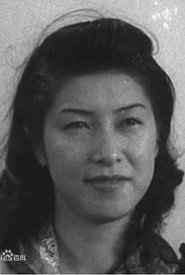
Women of the Night
"Women of the Night (1948)"
Keys: Space play/pause · ←/→ 10s · F fullscreen · M mute · </> speed
About this film
In early post-war Osaka, three women, war widow Fusako, her sister Natsuko, an expatriate from Korea, and Kumiko, Fusako's sister-in-law, descend into prostitution, all for their individual reasons.
Cast & crew
More films like this
More Drama films
View all →







More from Kenji Mizoguchi
View all →
More about this film
About the production
Release dateApril 27, 1948
ProductionShinko Kinema
Filmed inOsaka, Japan
Women of the Night was filmed on location in Osaka's actual red-light districts, giving the film an unprecedented documentary-like realism. Mizoguchi insisted on using real locations rather than studio sets to capture the authentic atmosphere of post-war urban decay. The production faced censorship challenges from the Allied occupation forces who initially objected to the film's frank depiction of prostitution and social criticism. The director fought to maintain the film's critical edge, eventually securing approval after making minimal changes. The film was shot quickly during a period when Mizoguchi was particularly prolific, completing it in just a few weeks.
Themes
Economic desperation and survivalFemale solidarity and betrayalPost-war social decayThe exploitation of women in patriarchal societyUrban alienation and anonymity
Themes & topics
prostitutionpost-war Japansocial realismurban povertyfemale solidarityeconomic hardshipOsakared-light districtwar widowsurvivalfamily breakdownsocial criticism
Historical background
Contemporary records classify Women of the Night (1948) as 1948 film by kenji mizoguchi, placing it within World War II and immediate postwar filmmaking.
Why this film matters
Women of the Night (1948) helps trace genre evolution, performer careers, and the material conditions of sound exhibition.
Making of
Kenji Mizoguchi was deeply committed to social realism and feminist themes throughout his career, and Women of the Night represents one of his most overtly political works. The director spent weeks researching the actual conditions in Osaka's brothels and red-light districts, interviewing former prostitutes and social workers. Kinuyo Tanaka's performance was particularly notable for its raw emotional intensity; she reportedly drew on her own experiences as a woman in patriarchal Japanese society. The film's controversial subject matter led to intense negotiations with Allied occupation censors, who initially demanded substantial cuts. Mizoguchi refused to compromise his artistic vision, arguing that the film was a necessary social critique. The production was remarkably fast, even by Japanese studio standards, with principal photography completed in just 16 days. Despite the tight schedule, Mizoguchi maintained his characteristic attention to visual composition, particularly in the film's powerful tracking shots through the crowded streets and narrow alleyways of Osaka's entertainment districts.
What critics said
Modern write-ups on Women of the Night (1948) tend to focus on preservation status, stylistic choices, and placement within director or studio filmographies.
Did you know?
- This was the first film in Mizoguchi's so-called 'women trilogy,' followed by 'My Love Has Been Burning' (1949) and 'The Life of Oharu' (1952)
- The film was inspired by real stories of women who turned to prostitution in post-war Japan
- Kinuyo Tanaka, who plays Fusako, was Mizoguchi's frequent collaborator and rumored lover
- The film's original Japanese title is 'Yoru no onnatachi'
- It was one of the first Japanese films to explicitly address the social problem of post-war prostitution
- The film's production coincided with the Japanese government's attempt to regulate prostitution through the 1948 Prostitution Prevention Law
- Mizoguchi used actual former prostitutes as extras to add authenticity to the scenes in the brothels
- The film was initially banned by the occupation censors for its 'pessimistic' view of post-war society
- Cinematographer Masao Mishima employed a distinctive high-contrast lighting style to emphasize the film's neo-realist aesthetic
- The film's release was delayed for several months due to censorship negotiations with the Allied occupation authorities
Awards & recognition
- Mainichi Film Concours - Best Actress (Kinuyo Tanaka, 1948)
- Kinema Junpo Award - Best Film (1948)
Visual style
Masao Mishima's cinematography in Women of the Night exemplifies the transition from classical Japanese film style to post-war realism. The film employs extensive location shooting in Osaka's streets and alleys, using natural light whenever possible to create an authentic urban atmosphere. Mishima utilizes long takes and tracking shots that follow the women through crowded spaces, emphasizing their vulnerability within the urban environment. The visual style contrasts the darkness of night scenes with harsh, overexposed daylight sequences, creating a visual metaphor for the women's dual existence. The camera work is notably more mobile than in pre-war Japanese cinema, reflecting the influence of Italian neorealism. Mishima's compositions frequently frame the women within architectural elements - doorways, windows, narrow passages - visually reinforcing their social confinement. The film's black and white photography achieves remarkable tonal range, particularly in the night scenes of the red-light district, where neon signs and street lamps create a haunting, expressionistic quality.
Innovations
Women of the Night pioneered several technical innovations in Japanese cinema. The film's extensive use of location shooting was unusual for the period, as most Japanese productions still relied heavily on studio sets. The sound recording techniques developed for the film allowed for clearer capture of dialogue in noisy urban environments, a significant challenge for location work. The cinematography employed faster film stock than was typical, enabling better performance in low-light conditions during night scenes. The editing style, while maintaining classical continuity, incorporated more rapid cutting in sequences of urban movement, reflecting the pace of modern city life. The film's production team developed new methods for lighting night exteriors that balanced authenticity with visual clarity. These technical achievements helped establish new standards for Japanese film production and influenced the more mobile, realistic style that would characterize Japanese cinema in the 1950s.
Music
The film's score was composed by Fumio Hayasaka, who would later become one of Akira Kurosawa's most important collaborators. Hayasaka's music for Women of the Night is notably restrained, reflecting Mizoguchi's preference for subtle underscore rather than overt emotional manipulation. The score combines Western classical influences with traditional Japanese musical elements, creating a sound that bridges pre-war and post-war Japanese cinema. Particularly effective is Hayasaka's use of silence in many scenes, allowing the ambient sounds of Osaka - street vendors, trains, distant music - to create atmosphere. The musical themes associated with the three women are subtly developed throughout the film, evolving as their situations change. The soundtrack also includes diegetic music from the brothels and entertainment districts, adding to the film's documentary-like authenticity. Hayasaka's score was praised for its ability to enhance the film's emotional depth without overwhelming the visual narrative.
Famous quotes
We do this because we have no choice. What would you have us do instead? Starve?
In the day we are shadows, but at night we become real.
The war took our men, the peace took our dignity.
Every customer is a reminder of what we've lost.
We sell our bodies, but they buy our souls.
Memorable scenes
- The opening sequence showing the devastated Osaka landscape with the three women walking separately through the rubble-strewn streets, establishing the film's tone and visual style
- The powerful scene in the brothel where the three women meet for the first time, their recognition and shared shame creating a moment of heartbreaking solidarity
- The night street sequence with the long tracking shot following the women through the neon-lit red-light district, capturing both the allure and danger of their world
- The climactic confrontation scene where Fusako confronts her brother about his inability to understand their circumstances
- The final scene where the three women walk away from the camera into the dawn, their future uncertain but their resolve intact
What audiences thought
The film generated significant controversy among Japanese audiences upon its release due to its frank depiction of prostitution and social decay. Many viewers found the subject matter shocking but also recognized its reflection of real post-war conditions. The film performed moderately well at the box office in urban centers, particularly in Osaka where its local setting resonated with audiences. Some conservative groups criticized the film for what they saw as an unpatriotic portrayal of Japanese society, while progressive audiences praised its social consciousness. Over time, as Japan's social conditions improved, the film came to be appreciated more for its artistic merits than its immediate social relevance. Today, it's primarily viewed by cinema enthusiasts and students of Japanese film history, who recognize it as a crucial work in the development of post-war Japanese cinema.
Film connections
Influenced by
- Italian Neorealism (particularly the works of Roberto Rossellini)
- German Expressionism (for the night scene lighting)
- Pre-war Japanese social problem films
- French Poetic Realism
- Documentary film techniques
This film influenced
- My Love Has Been Burning (1949)
- The Life of Oharu (1952)
- Street of Shame (1956)
- The Insect Woman (1963)
- The World of Geisha (1973)
Film restoration
Women of the Night has been preserved by the National Film Center of the National Museum of Modern Art, Tokyo. The original negative was thought to be lost for many years, but a complete 35mm print was discovered in the 1970s in a private collection. The film underwent a major restoration in the early 2000s as part of a project to preserve Mizoguchi's complete filmography. The restored version premiered at the Cannes Film Festival in 2003 as part of a Mizoguchi retrospective. The Criterion Collection released a digitally restored version on Blu-ray in 2015, making the film widely available in high quality for the first time. The restoration work addressed issues of film shrinkage, color fading in the original black and white elements, and sound degradation. The preservation status is now considered excellent, with multiple archival copies maintained in Japan, the United States, and Europe.
Where to watch
- The Criterion Collection (Blu-ray/DVD streaming)
- Kanopy (streaming service available through many libraries)
- FilmStruck (archive collection)
- MUBI (periodic streaming)
- The Criterion Channel
- Selected art house cinemas during retrospectives
- Museum of Modern Art (MoMA) film collection screenings
- British Film Institute (BFI) Player
- Academic film libraries and archives