A Life for a Life
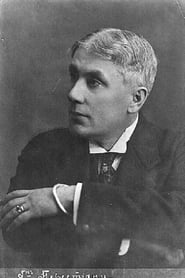
"1916 Yevgeni Bauer"
Keys: Space play/pause · ←/→ 10s · F fullscreen · M mute · </> speed
About this film
Wealthy Mrs. Khromova has a natural daughter, Musya, and an adopted daughter, Nata. The merchant Zhurov is in love with Nata, and hopes to marry her, but she is non-committal.
Cast & crew
More films like this
More Drama films
View all →







More from Yevgeni Bauer
View all →
More about this film
About the production
Release dateOctober 1916
Box officeUnknown - box office records from 1916 Russian Empire are not preserved
ProductionKhanzhonkov Film Company
Filmed inMoscow, Russian Empire
Filmed during the peak of Russian cinema's artistic achievements, just before the 1917 Revolution. The production took advantage of Khanzhonkov's advanced studio facilities in Moscow, which were among the most sophisticated in Europe at the time. Director Yevgeni Bauer was known for his meticulous attention to detail and innovative use of lighting and camera movement.
Themes
Family dynamicsLove and sacrificeSocial classDuty versus desireFemale identity
Themes & topics
family dramaromancesocial classadoptionlove trianglepsychological dramapre-revolutionary Russiasilent film
Historical background
Contemporary records classify A Life for a Life (1916) as 1916 film by yevgeni bauer, placing it within the silent era before feature-length dominance.
Why this film matters
A Life for a Life (1916) helps trace genre evolution, performer careers, and the material conditions of silent exhibition.
Making of
The film was created during what many historians consider the golden age of Russian cinema, when domestic productions rivaled those from France and Italy in artistic sophistication. Director Yevgeni Bauer was known for his innovative approach to visual storytelling, often using complex camera movements and lighting techniques that were ahead of their time. The casting of Vera Kholodnaya, who was rapidly becoming Russia's biggest film star, added significant star power to the production. The Khanzhonkov studio, where the film was made, was the most advanced film production facility in the Russian Empire, equipped with modern lighting and camera equipment. The production team had to work under challenging conditions due to wartime shortages and the growing social unrest that would soon lead to revolution.
What critics said
Modern write-ups on A Life for a Life (1916) tend to focus on preservation status, stylistic choices, and placement within director or studio filmographies.
Did you know?
- This was one of the last films made before the Russian Revolution dramatically changed the country's film industry
- Director Yevgeni Bauer died unexpectedly in June 1917, making this among his final completed works
- Vera Kholodnaya, who played Nata, became known as the 'Queen of Russian Silent Film' and was the highest-paid actress in Russian cinema
- The film was produced by Alexander Khanzhonkov, who was Russia's first major film producer and studio head
- The original Russian title was 'Zhizn za zhizn'
- Many Russian films from this period were lost during the revolution and subsequent political upheaval
- The film showcased Bauer's signature use of complex psychological storytelling
- The story explores themes common in Russian literature about family duty versus personal desire
- The film was released while Russia was still deeply involved in World War I
- Yevgeni Bauer was considered among the leading innovative directors of his time, pioneering techniques that would influence cinema worldwide
Visual style
The film features the sophisticated visual style characteristic of Yevgeni Bauer's work, including innovative use of lighting to create mood and emphasize psychological states. The cinematography employs careful composition and framing to enhance the dramatic impact of key scenes. Bauer was known for his use of deep focus and complex camera movements that were advanced for the time. The visual storytelling often used symbolic elements and visual metaphors to convey emotional and psychological themes. The film's look reflects the high production values of Khanzhonkov studio, which had access to modern equipment and skilled technicians.
Innovations
The film demonstrated the advanced technical capabilities of the Russian film industry in 1916, particularly in the areas of lighting and camera work. Yevgeni Bauer was known for pioneering techniques in mobile cinematography and complex lighting setups that created psychological depth. The production utilized the modern facilities of the Khanzhonkov studio, which featured advanced lighting equipment and sound stages that allowed for sophisticated visual effects. The film's editing techniques, including the use of cross-cutting to build tension, were innovative for the period.
Music
As a silent film, it would have been accompanied by live musical performance in theaters. The original score is not preserved, but typical Russian cinema presentations of the era would have featured piano or small orchestra accompaniment, often using classical pieces adapted to fit the mood of different scenes. The music would have been crucial to conveying the emotional content of the drama, particularly during key dramatic moments.
Famous quotes
No surviving dialogue quotes exist as this is a silent film with intertitles that have not been preserved in English translation
Memorable scenes
- The confrontation between the two sisters revealing their true feelings
- Zhurov's declaration of love to the non-committal Nata
- Mrs. Khromova's emotional scenes dealing with her two daughters
- The dramatic climax that forces characters to face their choices
What audiences thought
The film was well-received by Russian audiences in 1916, who were increasingly drawn to domestic productions featuring popular stars like Vera Kholodnaya. The emotional family drama resonated with viewers, and the film contributed to Kholodnaya's growing popularity as Russia's first major film star. Audience reactions were documented in contemporary newspapers, which noted the strong emotional responses the film elicited from viewers. The success of this and similar films demonstrated that Russian cinema had developed its own audience base that preferred domestic productions over foreign imports.
Film connections
Influenced by
- Russian literature of the 19th century
- European psychological dramas
- Contemporary Russian theatrical traditions
This film influenced
- Later Soviet psychological dramas
- International films exploring family dynamics
Film restoration
The film is considered partially lost or severely incomplete. Like many Russian films from this period, it suffered from the political and social upheaval of the revolution and the subsequent neglect of pre-revolutionary cinema. Some fragments or stills may exist in Russian film archives, but a complete version is not known to survive. The Gosfilmofond archive in Russia may hold some material related to this production.
Where to watch
- Not currently available for viewing due to preservation status
- Potential screenings at specialized film archives or silent film festivals
- May be accessible through Russian film archives for academic research