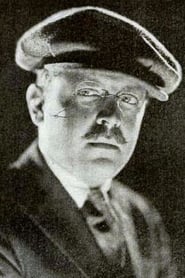

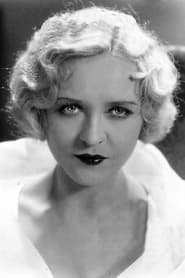
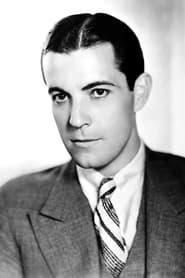
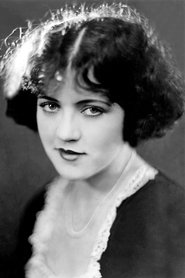
A Small Town Idol
"A scoundrel tries to steal the bride on her wedding day."
Keys: Space play/pause · ←/→ 10s · F fullscreen · M mute · </> speed
About this film
In 1921, in Sleepytown, cross-eyed Sam Smith and Mary Brown are about to get married. But the scoundrel, Jim Jones, wants Mary for himself. Jim uses a publicity still that Sam sent away for against him to show Sam the cad in the eyes of Mary. Disgraced and without Mary, Sam leaves town and heads for Hollywood to redeem himself. Despite not being typical leading man material, Sam is able to make a success of it in Hollywood, and wants to return to Sleepytown a new man and to get Mary back. But Jim will not give Mary up without a fight, he using any means, including lying, to turn the town, incl…
Cast & crew
More films like this
More Comedy films
View all →







More from Erle C. Kenton
View all →
More about this film
About the production
Release dateFebruary 13, 1921
Budget$350,000
Box office$13,950 (first week at Mission Theatre, LA)
ProductionMack Sennett Comedies, Associated Producers
Filmed inMack Sennett Studios, Edendale, Los Angeles, California, Los Angeles, California
This was Mack Sennett's most ambitious and expensive production to date, reportedly taking over a year to film. While some contemporary sources claimed a budget as high as $1,000,000, the verified cost was approximately $350,000, which was astronomical for a comedy at the time. The film was designed to elevate Ben Turpin from a short-subject comic to a feature-length star. It utilized many of Sennett's regular 'Bathing Beauties' and stock company actors to fill out the large-scale production.
Themes
Themes & topics
Historical background
Released in 1921, A Small Town Idol reached audiences during late silent cinema, when exhibition and production norms differed sharply from today's.
Why this film matters
A Small Town Idol remains viewable through digital archives, preserving 1921 screen culture for modern audiences.
Making of
The production was a grueling year-long process, unusual for comedies which were typically churned out in weeks. Mack Sennett and Erle C. Kenton collaborated closely to ensure the slapstick gags were integrated into a coherent feature-length narrative. The 'Hollywood' sequences were filmed on the actual Sennett lot, providing a meta-commentary on the film industry of the era. Turpin, known for his physical resilience, performed many of his own stunts, including the chaotic chase scenes that served as the film's climax.
What critics said
Trade coverage around 1921 discussed A Small Town Idol in terms of craft and audience appeal rather than blockbuster scale.
Did you know?
- Ramon Novarro appears in an early uncredited role as a dancer, billed under his birth name Ramon Samaniegos.
- The film was edited down to two reels in 1933 by Mack Sennett himself to be re-released with added sound effects and narration.
- In 1939, Warner Bros. re-issued the condensed version as part of their 'Broadway Brevities' series.
- Ben Turpin's famous crossed eyes were actually insured with Lloyd's of London for $25,000 against them ever uncrossing.
- The film features a 'movie within a movie' sequence where Sam's hometown watches his Hollywood success on screen.
- James Finlayson, who plays the villain, later became famous as the double-taking foil to Laurel and Hardy.
- The film was included on the National Board of Review's 'Exceptional Photoplays' list in 1921.
- A 1960 TV version titled 'Nickelodeon Theatre' featured new narration by Jim Backus (the voice of Mr. Magoo).
Awards & recognition
- National Board of Review: Exceptional Photoplays (1921)
Visual style
The film features standard silent-era cinematography with a focus on wide shots to capture physical gags. However, it also utilizes 'trick' photography and fast-motion effects to enhance the slapstick sequences, a hallmark of the Sennett style. The lighting in the Hollywood studio scenes is notably more sophisticated than the rural Sleepytown scenes to emphasize the contrast between the two worlds.
Innovations
The film was notable for its large-scale set pieces and the seamless integration of 'film-within-a-film' techniques. It also pushed the boundaries of the comedy genre by proving that slapstick could sustain a 70-minute narrative without losing audience interest.
Music
Originally silent with live orchestral accompaniment. The 1933 and 1939 re-releases added a synchronized score featuring upbeat, whimsical orchestral music typical of early sound comedies, along with synchronized sound effects for the slapstick falls and crashes.
Famous quotes
Sam Smith: 'I'll go to Hollywood and show them all!' (Intertitle)
Mary Brown: 'I don't care what they say, Sam, I know you're a good boy.' (Intertitle)
Narrator (1939 version): 'And so, our cross-eyed hero sets out to conquer the world of make-believe!'
Memorable scenes
- The 'Hollywood Studio' sequence where Sam accidentally wreaks havoc on a serious film set.
- The climactic lynch mob scene where Sam's acting skills are used to stall for time.
- The homecoming parade where Sam returns to Sleepytown in a lavish car, confusing the locals.
- The 'movie within a movie' where the townspeople react to seeing Sam on the big screen.
What audiences thought
Audiences in 1921 embraced the film enthusiastically, particularly the relatable 'underdog' story of Sam Smith. The film's mix of pathos and extreme physical comedy resonated widely, making it one of the top-grossing comedies of the year. Its longevity was proven by the multiple re-releases in the 1930s, 1940s, and 1960s.
Film connections
Influenced by
- The 'Keystone Kops' shorts
- D.W. Griffith's melodramas (parodied)
- The real-life Hollywood 'gold rush' of the early 1920s
This film influenced
- Show People (1928)
- Sullivan's Travels (1941)
- The Artist (2011)
Film restoration
The film is preserved. While the original 7-reel version is rare, the abridged 1933/1939 versions are widely available. Copies exist in the Gosfilmofond archive in Russia and the Library of Congress.
Where to watch
- Internet Archive (Abridged version)
- YouTube (Public Domain uploads)
- Specialized Silent Film DVD collections (e.g., Mack Sennett Collection)