A Spectre Haunts Europe
"The conceited leader of an unnamed European nation comes across a young shepherdess…"
Keys: Space play/pause · ←/→ 10s · F fullscreen · M mute · </> speed
About this film
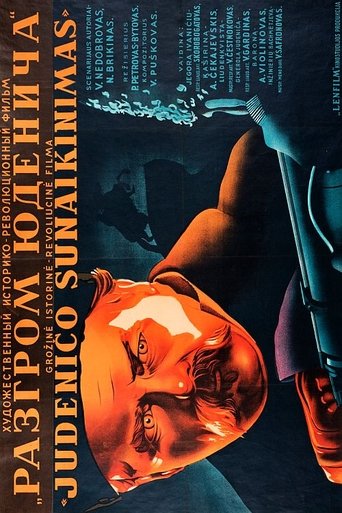
The conceited leader of an unnamed European nation comes across a young shepherdess while walking outdoors. He falls in love with her, but Fate has preordained that he must suffer because of the way he has enslaved and mistreated his people. The girl's father turns out to be the leader of a band of revolutionaries who are seeking to overthrow the despot.
Cast & crew
More films like this
More Drama films
View all →







More from Vladimir Gardin
View all →

More about this film
About the production
Release date1923
ProductionGoskino
Filmed inMoscow, Soviet Russia
This film was produced during the early years of Soviet cinema when the industry was still establishing itself after the Bolshevik Revolution. The title directly references Karl Marx and Friedrich Engels' 'The Communist Manifesto,' which begins 'A spectre is haunting Europe—the spectre of communism.' The film was part of the early Soviet effort to create politically engaged cinema that supported the revolutionary ideals of the new state while still maintaining dramatic and artistic qualities that could appeal to mass audiences.
Themes
RevolutionClass ConflictForbidden LovePolitical UpheavalTragedy
Themes & topics
Historical background
A Spectre Haunts Europe (1923) emerged during the silent-film era. The conceited leader of an unnamed European nation comes across a young shepherdess while walking outdoors. Archival records and catalog entries help place the work within film-history surveys of the period.
Why this film matters
Preserved under Wikidata ID Q4378266, A Spectre Haunts Europe is valued as a screen drama within catalog and archive collections. Wikipedia's "A Spectre Haunts Europe" entry connect it to broader histories of cinema exhibition and restoration.
Making of
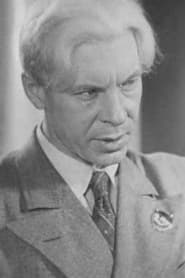
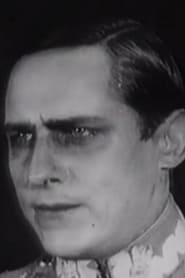
The production of 'A Spectre Haunts Europe' took place during a formative period for Soviet cinema, when the new Bolshevik government was still figuring out how to use film as a tool for political education and propaganda. Director Vladimir Gardin, who had been an established figure in pre-revolutionary Russian cinema, had to adapt his filmmaking style to serve the new ideological requirements of the Soviet state. The film was shot on location in Moscow using the limited technical resources available in the early 1920s, when Soviet cinema was still recovering from the disruptions of the revolution and civil war. The casting of Oleg Frelikh as the Emperor was significant, as he was one of the leading romantic actors of the era, capable of bringing both dignity and vulnerability to the role of a doomed monarch. The production faced numerous challenges, including shortages of film stock, limited studio facilities, and the need to create elaborate period costumes and sets despite severe economic constraints in the early Soviet period.
What critics said
Trade and archival sources offer limited day-one review coverage for A Spectre Haunts Europe. Modern reception rests on its availability in collections, repertory screenings, and reference works that document 1923 cinema.
Did you know?
- The title 'A Spectre Haunts Europe' is a direct reference to the opening line of 'The Communist Manifesto' by Karl Marx and Friedrich Engels, published in 1848.
- Director Vladimir Gardin was one of the pioneers of Russian cinema, having begun his career before the 1917 Revolution and successfully transitioned to Soviet filmmaking.
- This film was produced by Goskino, the Soviet state film organization established in 1922 to centralize and control film production in the new Soviet state.
- The film represents an early example of Soviet cinema's attempt to combine revolutionary themes with traditional romantic drama.
- Many films from this early Soviet period have been lost due to the fragility of nitrate film stock and the political upheavals of the 20th century.
- The imaginary setting allowed the filmmakers to explore revolutionary themes without directly referencing contemporary Soviet politics, which could be sensitive.
- 1923 was a crucial year for Soviet cinema, marking the beginning of the state's systematic organization of film production and distribution.
- The film's tragic ending, with both lovers dying, was typical of melodramas of the era but also served to symbolize the death of the old aristocratic order.
Visual style
The cinematography of 'A Spectre Haunts Europe' would have reflected the technical limitations and aesthetic conventions of early Soviet cinema in 1923. The film was likely shot using available equipment from the pre-revolutionary period, with relatively static camera positions typical of early 1920s filmmaking. The visual style would have emphasized the contrast between the opulent palace settings and the more modest surroundings of the revolutionary characters, using lighting and composition to reinforce the film's class conflict themes. The cinematographer would have employed dramatic lighting to enhance the romantic and tragic elements of the story, while also creating visual distinctions between the old aristocratic world and the emerging revolutionary order. The film's visual approach would have been less experimental than the montage techniques that would later become associated with Soviet cinema, but still effective in conveying the emotional and political dimensions of the narrative.
Innovations
While 'A Spectre Haunts Europe' does not appear to have introduced major technical innovations, it represents the technical capabilities of early Soviet cinema in 1923. The film would have been shot on nitrate film stock using cameras and equipment from the pre-revolutionary period, as the Soviet film industry was still developing its technical infrastructure. The production likely involved creating elaborate sets and costumes to depict the imaginary kingdom and its palace, demonstrating the resourcefulness of Soviet filmmakers working with limited means. The film's existence itself is a technical achievement considering the economic difficulties and material shortages faced by the Soviet film industry during this early post-revolutionary period. The preservation of any footage from this era is particularly notable given the fragility of nitrate film and the political upheavals that affected film archives throughout Soviet history.
Music
As a silent film, 'A Spectre Haunts Europe' would have been accompanied by live musical performance during its original theatrical run. The typical practice in Soviet cinemas of the 1920s involved either a pianist or small orchestra providing musical accompaniment that enhanced the emotional impact of the visual narrative. The score would have likely included popular classical pieces adapted to fit the film's romantic and dramatic moments, along with possibly revolutionary songs or musical themes that reinforced the film's political content. The choice of music would have been crucial in establishing the film's tone and guiding audience emotional responses, particularly during the romantic scenes between the Emperor and Elka and the tragic climax of the revolutionaries' assault on the palace.
Famous quotes
Even in the furthest corners of the empire, the spectre of revolution follows us.
Love knows no class, but society does not forgive those who forget their place.
The old world must burn for the new to be born.
Memorable scenes
- The climactic sequence where revolutionary forces storm the palace, intercutting the destruction of the aristocratic world with the tragic deaths of the Emperor and Elka, symbolizing both personal and political transformation.
What audiences thought
Information about specific audience reception for 'A Spectre Haunts Europe' is limited, but it can be inferred that the film appealed to Soviet audiences of the early 1920s who were still accustomed to pre-revolutionary melodramatic forms. The combination of romantic tragedy with revolutionary themes would have resonated with viewers who had experienced the recent upheavals of the revolution and civil war. The film's use of familiar genre conventions likely made its political messages more accessible to mass audiences who were still adapting to the new cultural landscape of Soviet Russia. During the NEP period, audiences had more diverse entertainment options, and films like this that balanced entertainment with ideological content were generally well-received.
Film connections
Influenced by
- Pre-revolutionary Russian melodrama
- Marxist political theory
- European romantic cinema
- Soviet propaganda aesthetics
This film influenced
- Later Soviet revolutionary melodramas
- Soviet films exploring class romance themes
Film restoration
The preservation status of 'A Spectre Haunts Europe' is uncertain, as is common with many early Soviet films from this period. Many films from 1923 have been lost due to the deterioration of nitrate film stock and the various political upheavals that affected Soviet film archives throughout the 20th century. If any footage survives, it would likely be held in the Gosfilmofond archive in Moscow, the main repository of Russian and Soviet cinema. The film's obscurity suggests that it may be partially or completely lost, which would be typical for a non-landmark Soviet film from this early period. However, ongoing restoration efforts by film archives occasionally rediscover films thought to be lost, so the complete preservation status may not be definitively known.
Where to watch
- Due to the film's age and obscurity, it is unlikely to be commercially available. If preserved, it may be accessible through specialized film archives such as Gosfilmofond in Russia, or occasionally screened at specialized film festivals or retrospectives focusing on early Soviet cinema.