
A Woman
"Two women, one soaked husband"
Keys: Space play/pause · ←/→ 10s · F fullscreen · M mute · </> speed
About this film
Charlie flirts in the park, soaks a father in a lake, and dines with two smitten women until jealousy erupts at home. Chaplin's Essanay short piles flirtation gags into domestic chaos.
Cast & crew
More films like this
More Comedy films
View all →







More from Charlie Chaplin
View all →


More about this film
About the production
Release dateJuly 12, 1915
ProductionEssanay Film Manufacturing Company
Filmed inEssanay Studios, Niles, California
This film was one of several Chaplin productions at Essanay where he employed drag comedy, a recurring element in his early work. The film was shot during Chaplin's productive period at Essanay's Niles studio, where he had more creative freedom than at his previous studio, Keystone. The transformation scene where Chaplin shaves his mustache and dons women's clothing required careful makeup and costume work for the time. The lake sequence was filmed on location, presenting technical challenges for the era's equipment.
Themes
Gender identityDisguise and mistaken identitySocial conventionsCourtship and romanceFamily dynamics
Themes & topics
dragdisguiseparklakedinner invitationmistaken identitytransformationcomedy of errorsfamily outinghide-and-seek
Historical background
A Woman (1915) belongs to Chaplin's prolific Essanay year when he refined the Tramp's romantic troublemaking.
Why this film matters
The park-and-lake sequence typifies Chaplin's conversion of Keystone violence into character-driven embarrassment.
Making of
The production of 'A Woman' took place during Chaplin's tenure at Essanay Studios, where he had greater creative control than at his previous workplace. Chaplin was known for his meticulous attention to detail and often demanded multiple takes to perfect his physical comedy routines. The drag transformation scene required extensive preparation, with Chaplin spending considerable time in makeup to create a convincing female appearance. Edna Purviance, who was relatively new to films, received personal coaching from Chaplin on acting techniques for the camera. The lake sequence posed significant challenges for the camera equipment of 1915, requiring special protective measures. Chaplin's improvisational approach meant that many gags were developed during filming rather than being pre-scripted. The film's success helped establish Purviance as Chaplin's leading lady for subsequent productions.
What critics said
Exhibitors prized Chaplin's name; later analysis places it mid-tier among his Essanay releases.
Did you know?
- This was one of the first films where Edna Purviance appeared with Chaplin, marking the beginning of their professional relationship that would span over 30 films.
- Chaplin's use of drag in the production was part of a tradition in vaudeville and early cinema, but he elevated it with his nuanced performance style.
- The film was released during Chaplin's most productive year, when he made over a dozen short films.
- Charles Inslee, who plays the father, was a veteran actor who had appeared in numerous films since 1908.
- The park scenes were filmed at the Essanay studio's outdoor sets, which were designed to resemble urban parks of the era.
- Chaplin was known for improvising many scenes during filming, often developing gags on set rather than following a strict script.
- the production was one of the last Chaplin shorts made before his move to Mutual Film Corporation, where he would receive significantly higher salaries.
- The transformation sequence where Chaplin becomes a woman was considered technically sophisticated for its time.
- The film's premise of mistaken identity and disguise would become a recurring theme in Chaplin's later work.
- Original prints of the production featured hand-colored tints in certain scenes, a common practice for important releases of the era.
Visual style
The cinematography in 'A Woman' was handled by Roland Totheroh, Chaplin's regular cameraman at Essanay. The film employs relatively static camera positions typical of the era, but shows careful composition in framing the comedy sequences. The transformation scene uses medium shots to emphasize Chaplin's change in appearance, while the park scenes utilize wider shots to establish the setting. The lake sequence required special camera techniques to capture the action safely. The film's visual style reflects the transition from the more primitive cinematography of early shorts to the more sophisticated techniques emerging in 1915. Lighting was carefully managed to enhance the comedy, particularly in the disguise sequences.
Innovations
While not groundbreaking in technical innovation, 'A Woman' demonstrated several refinements in film technique for its time. The makeup effects for Chaplin's drag transformation were considered advanced for 1915. The film's pacing shows Chaplin's growing understanding of cinematic rhythm and timing. The location shooting at the lake presented technical challenges that were successfully overcome. The film also shows sophisticated use of editing to build comedic sequences, with cuts timed to maximize laughter. The costume design for Chaplin's female disguise was particularly detailed, showing attention to period accuracy.
Music
As a silent film, 'A Woman' was originally accompanied by live musical performances in theaters. The typical score would have been compiled from popular classical pieces and original compositions by theater musicians. The music would have emphasized the comedic elements, with lively tempos during chase scenes and more romantic themes during the courtship sequences. Some theaters employed small orchestras, while others used solo pianists or organists. The score would have included musical cues synchronized with on-screen actions, a practice known as 'photoplay music.' Modern restorations of the film often feature newly composed scores that attempt to recreate the musical experience of 1915 audiences.
Famous quotes
(As a woman, in a high-pitched voice) 'Oh, what a charming evening!' (Context: Chaplin disguised as a woman attempting to maintain his cover during dinner)
(To the father while leading him to the lake) 'Just a little further, sir, the game is almost over!' (Context: Chaplin mischievously directing the blindfolded father toward water)
Memorable scenes
- The transformation sequence where Chaplin frantically shaves his mustache and dons women's clothing upstairs while hearing the men approach, showcasing his masterful physical comedy and timing
- The park bench scene where both mother and daughter independently fall for Chaplin and extend dinner invitations, creating the premise for the disguise
- The lake sequence where Chaplin leads the blindfolded father into water, demonstrating his skill at creating elaborate sight gags
- The dinner scene where both men find themselves attracted to Chaplin's female disguise, creating awkward and hilarious tension
What audiences thought
The film was well-received by audiences of 1915, who had come to expect innovative comedy from Chaplin. Theater owners reported strong attendance for screenings of 'A Woman,' with many requesting additional Chaplin films to satisfy public demand. The drag element was particularly popular with audiences, who appreciated Chaplin's commitment to the transformation and the humorous situations it created. The film's success contributed to Chaplin's growing international fame and helped establish him as the premier comedian of the silent era. Audience reaction to the film's more subtle humor indicated a growing sophistication among moviegoers, who were beginning to appreciate more nuanced comedy beyond simple physical gags.
Film connections
Influenced by
- Vaudeville traditions
- Music hall comedy
- French farce
- Shakespearean comedy of errors
- Mack Sennett's Keystone comedies
This film influenced
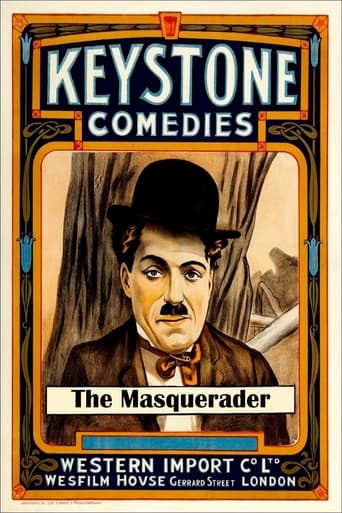
- The Masquerader (1914)
- The Idle Class (1921)
- A Woman of Paris (1923)
- Some Like It Hot (1959)
- Tootsie (1982)
- Mrs. Doubtfire (1993)
Film restoration
The film survives in complete form and has been preserved by several film archives, including the Library of Congress and the British Film Institute. Multiple prints exist in various collections, though some show varying degrees of deterioration. The film has been digitally restored by several organizations, including The Criterion Collection and Flicker Alley, with some versions featuring reconstructed color tints based on original release prints. The film is considered well-preserved for its era, with no significant lost footage.
Where to watch
- The Criterion Collection streaming service
- Flicker Alley DVD/Blu-ray collections
- YouTube (through official channels like the Chaplin Office)
- Kino Lorber DVD releases
- The Museum of Modern Art's film collection screenings
- Various public domain streaming platforms