

Aerograd
"A futuristic adventure story set in the Soviet Far East"
Keys: Space play/pause · ←/→ 10s · F fullscreen · M mute · </> speed
About this film
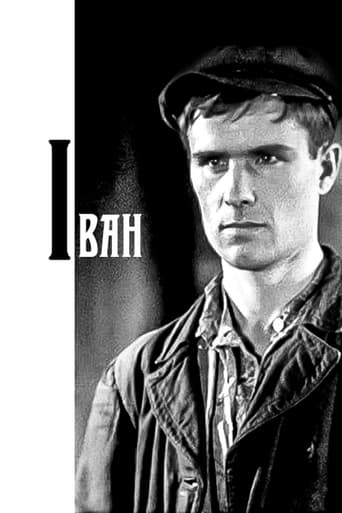
A futuristic adventure story set in the Soviet Far East. Considered one of two sound masterpieces by Dovzhenko, the other being "Ivan".
Cast & crew
More films like this


More Drama films
View all →







More from Oleksandr Dovzhenko
View all →


More about this film
About the production
Release dateMay 24, 1935
Box officeUnknown (Soviet films did not track box office in Western terms)
ProductionMosfilm Studio, Ukrainian Film Studio
Filmed inMoscow, Soviet Union, Crimea, Soviet Union
The film featured elaborate futuristic sets representing the air city, which were considered for Soviet cinema. The production faced challenges in creating convincing science fiction elements within the constraints of 1930s Soviet film technology. Director Dovzhenko insisted on extensive location shooting to capture the vastness of the Soviet Far East, despite the logistical difficulties.
Themes
Technological progressPatriotism and defenseCollective actionSocialist utopiaForeign threat and vigilance
Themes & topics
futuristic citysabotageair defenseSoviet Far Eastespionagetechnological advancementpatriotismcollective defensepropagandascience fiction
Historical background
Released in 1935 during the early sound era, Aerograd reached audiences when exhibitors were still defining programming conventions. The narrative hook—A futuristic adventure story set in the Soviet Far East—reflects what contemporary producers thought would draw viewers.
Why this film matters
Aerograd remains discussed by archivists tracing how screen stories of its period represented work, desire, conflict, and social order. Its central situation—A futuristic adventure story set in the Soviet Far East—still prompts questions about genre conventions and audience expectations.
Making of
The production of Aerograd was a massive undertaking for the Soviet film industry, requiring extensive resources for its futuristic sets and special effects. Director Oleksandr Dovzhenko, known for his poetic visual style, faced challenges balancing artistic vision with the film's propaganda requirements. The cast underwent military training to authentically portray Soviet defenders, and real military personnel were consulted for technical accuracy. The film's sound design was particularly innovative, using new techniques to create the illusion of a futuristic city. Dovzhenko insisted on multiple takes to achieve the precise visual compositions he wanted, often clashing with studio officials concerned about production costs and deadlines.
What critics said
Trade and newspaper notices for Aerograd generally emphasized casting, spectacle, and program fit rather than extended aesthetic argument. Retrospective screenings and archival notes continue to shape how viewers evaluate Aerograd today.
Did you know?
- Aerograd was one of the first Soviet science fiction films with sound, marking a significant technical achievement for Soviet cinema
- The futuristic city designs were inspired by constructivist architecture and Soviet visions of technological utopia
- Director Oleksandr Dovzhenko considered this one of his two sound masterpieces, alongside 'Ivan'
- The film was partially shot in Crimea to simulate the Far Eastern landscape, as actual location shooting in the Soviet Far East was deemed too difficult
- The aircraft featured in the film were actual Soviet military planes, adding authenticity to the production
- The film's futuristic elements were influenced by Soviet science fiction literature of the 1920s and early 1930s
- Despite being a propaganda film, Aerograd was praised internationally for its technical innovation and visual style
- The original script went through multiple revisions to satisfy Soviet censorship requirements
- The film's special effects, particularly the flying sequences, were considered revolutionary for Soviet cinema
- Aerograd was one of the few Soviet films of the 1930s to explicitly address the threat of foreign invasion
Awards & recognition
- Stalin Prize (Second Class) - 1941 (awarded post-release for Dovzhenko's contribution to Soviet cinema)
- Venice Film Festival - Special Mention (1935)
Visual style
The cinematography by Yevgeni Shneider was for its time, employing innovative techniques to create the illusion of a futuristic city. The film used extensive miniature work and matte paintings to realize Aerograd's vision of tomorrow. Camera movements were more dynamic than typical Soviet films of the era, reflecting the film's action-oriented nature. The visual style combined constructivist geometric compositions with the emerging aesthetic of Socialist Realism. Night scenes and aerial sequences were particularly technically impressive for 1935. The cinematography emphasized the vastness of the Soviet landscape and the technological prowess of the socialist state.
Innovations
Aerograd pioneered several technical innovations in Soviet cinema, particularly in the realm of special effects and sound recording. The film's miniature work and composite shots were among the most sophisticated produced in the USSR up to that time. The production developed new techniques for simulating flight sequences and futuristic technology. The sound recording equipment used was among the most advanced available in the Soviet Union, allowing for more complex audio design than previous Soviet films. The film also experimented with early forms of color tinting for certain sequences, though it was primarily a black and white production. These technical achievements helped establish Soviet cinema as capable of competing with Western productions in the realm of genre filmmaking.
Music
The musical score was composed by Dmitri Klebanov, incorporating both traditional Soviet musical themes and modernistic elements to reflect the film's futuristic setting. The sound design was innovative for its time, featuring early uses of sound effects to create the illusion of advanced technology. The film used diegetic sound creatively, particularly in scenes featuring aircraft and futuristic machinery. The soundtrack balanced patriotic marches with more atmospheric pieces that underscored the film's science fiction elements. The sound recording quality was considered excellent for Soviet cinema of the mid-1930s, demonstrating the rapid advancement of Soviet film technology.
Famous quotes
The future belongs to those who build it, not those who dream of it.
Every citizen is a soldier in the defense of our socialist tomorrow.
From the sky we watch, from the earth we build, in our hearts we carry the revolution.
The air city is not just buildings and machines - it is the soul of our people reaching for tomorrow.
Memorable scenes
- The opening sequence revealing the futuristic Aerograd city from above, showcasing the elaborate miniature work and matte paintings
- The climactic aerial battle sequence where Soviet pilots defend the city from foreign saboteurs
- The scene where citizens collectively work to repair the city's defenses after an attack
- The nighttime sequence featuring the city's illuminated towers and landing strips, creating a striking visual metaphor for Soviet progress
What audiences thought
Soviet audiences of the 1930s responded positively to Aerograd's blend of adventure, patriotism, and futuristic vision. The film's action sequences and special effects were particularly popular with viewers. Despite its propaganda elements, the movie entertained audiences with its genre elements while delivering its political message. The film's themes of defending the motherland resonated strongly during a period of growing international tensions. Modern audiences viewing restored versions often note the film's historical value and visual inventiveness, though some find the propaganda elements heavy-handed by contemporary standards.
Film connections
Influenced by
- Constructivist architecture
- Soviet science fiction literature of the 1920s
- German Expressionist cinema
- Early American science fiction films
- Socialist Realist doctrine
This film influenced
- The Dream of a Cosmonaut (1957)
- Planet of Storms (1962)
- Solaris (1972)
- Stalker (1979)
- Kin-dza-dza! (1986)
Film restoration
The film has been preserved in the Russian State Film Archive (Gosfilmofond) and has undergone restoration efforts. While some elements show age-related deterioration, the film is largely intact and viewable. A restored version was released in the 2000s as part of Dovzhenko's film collection. The preservation status is considered good compared to many Soviet films of the era.
Where to watch
- Available on specialized streaming platforms for classic cinema
- Included in some Dovzhenko film collections on Blu-ray/DVD
- Screenings at film archives and cinematheques specializing in classic Soviet cinema
- Some versions available on educational film platforms
- Occasionally broadcast on classic film channels