


Algiers
"Thief in the labyrinth Casbah"
Keys: Space play/pause · ←/→ 10s · F fullscreen · M mute · </> speed
About this film
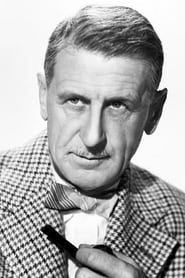
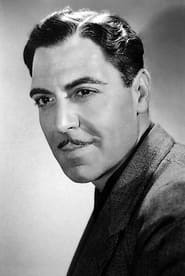
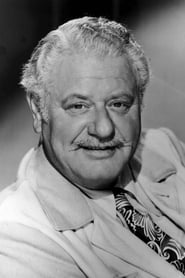
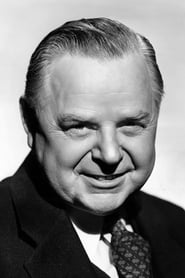
Jewel thief Pepe le Moko hides in the Algiers Casbah while police and suave inspector Slimane circle his capture. Charles Boyer, Hedy Lamarr, and Joseph Calleia star in John Cromwell's 1938 romance-thriller that gave Boyer the line inviting viewers to "come with me to the Casbah."
Cast & crew
More films like this
More Drama films
View all →







More from John Cromwell
View all →
More about this film
About the production
Release dateAugust 5, 1938
Budget$728,000
Box office$1,425,000 (domestic)
ProductionWalter Wanger Productions, United Artists
Filmed inHollywood Studios, California, Metro-Goldwyn-Mayer Studios, Culver City, California
The film was primarily shot on studio sets rather than on location in Algiers. The elaborate Casbah set was. Hedy Lamarr was discovered by producer Walter Wanger in Europe and this was her American film debut. Charles Boyer's accent and performance created such an impact that his character became a cultural reference point for exotic romanticism. The film faced initial censorship challenges due to its sympathetic portrayal of a criminal protagonist and the suggestion of illicit romance.
Themes
Exile and longing for homeThe conflict between freedom and securityThe destructive nature of romantic obsessionCultural collision between European and North African societiesThe impossibility of escaping one's past
Themes & topics
jewel thiefcasbahalgeriaexileforbidden lovepolice inspectorcriminal underworlddoomed romancefrench colonialismescapejealousybetrayalfemme fatalemoral ambiguitytragic hero
Historical background
Algiers was a Hollywood remake of Julien Duvivier's Pépé le Moko (1937), transposing French poetic realism to an American studio exotic. Lamarr's Hollywood debut and Boyer's romantic image were shaped by the film.
Why this film matters
'Algiers' had a profound impact on American cinema and popular culture, establishing the template for the exotic romantic thriller genre. The film created an enduring archetype of the sophisticated European criminal anti-hero that would influence countless films noir and crime dramas. Charles Boyer's portrayal of Pepe Le Moko established the 'continental lover' persona that would dominate romantic cinema for decades. The movie popularized the concept of the Casbah in American consciousness, making it synonymous with mysterious, exotic underworlds. Hedy Lamarr's performance introduced a new type of Hollywood leading lady - sophisticated, European, and sexually confident - that challenged the more innocent American star archetype. The film's visual style, with its dramatic use of shadows and exotic settings, influenced the development of film noir aesthetics in the 1940s. The movie's success demonstrated the commercial viability of films with non-American settings and protagonists, encouraging Hollywood to produce more internationally themed productions. The character of Pepe Le Moko became so ingrained in popular culture that it inspired everything from cartoon characters to advertising slogans.
Making of
The production of 'Algiers' was marked by significant casting challenges and innovations. Walter Wanger discovered Hedy Lamarr after seeing her in the Czech film 'Ecstasy' (1933) and personally brought her to America for this role. Charles Boyer, already an established star in French cinema, was specifically chosen for his authentic French accent and romantic presence. Director John Cromwell faced the challenge of creating an authentic Algerian atmosphere entirely on Hollywood soundstages, employing elaborate set designs by Alexander Toluboff and innovative lighting techniques to simulate the exotic North African environment. The film's famous visual style was enhanced by cinematographer James Wong Howe's use of deep focus and dramatic shadows to create the claustrophobic atmosphere of the Casbah. The production team consulted with French colonial officials to ensure authenticity in depicting the Casbah's social structure and criminal underworld. The film's romantic tension was heightened by the real chemistry between Boyer and Lamarr, which continued off-set and became a source of Hollywood gossip during production.
What critics said
Reviewers praised atmosphere and Boyer's charisma; some noted formulaic plot. It influenced later Casbah-set romances and remains Boyer's signature Hollywood role.
Did you know?
- Hedy Lamarr's famous line 'Come with me to the Casbah' was never actually spoken in the film, though it became widely associated with both her and Charles Boyer.
- The film was based on the 1931 French novel 'Pépé le Moko' by Henri La Barthe, writing under the pseudonym Ashelbé.
- Charles Boyer was so convincing as Pepe Le Moko that he received fan mail from actual criminals asking for advice.
- The Casbah set was so large and detailed that it took up two entire soundstages at the studio.
- The film was remade in 1948 as a musical titled 'Casbah' starring Tony Martin and Yvonne De Carlo.
- Walter Wanger paid $25,000 for the film rights to the French novel, a substantial sum at the time.
- The character of Pepe Le Moko inspired the name of the cartoon character 'Pepe Le Pew' from Warner Bros.
- Hedy Lamarr was originally billed under her married name 'Hedy Kiesler' but Walter Wanger convinced her to use Lamarr.
- The film was banned in several countries including Nazi Germany due to its portrayal of French colonial life.
- Charles Boyer's performance was so that he was typecast as a romantic European lead for years afterward.
Awards & recognition
- National Board of Review Award for Best Acting (Charles Boyer, 1938)
- National Board of Review Award for One of the Ten Best Films (1938)
Visual style
James Wong Howe's cinematography for 'Algiers' was notable in its use of lighting and camera techniques to create an atmospheric, claustrophobic environment. Howe employed innovative deep focus techniques to capture the intricate details of the Casbah set, allowing both foreground and background elements to remain sharp and contributing to the sense of a living, breathing community. His use of dramatic shadows and high-contrast lighting created a film noir aesthetic years before the genre was formally established. Howe experimented with unusual camera angles, including low-angle shots that emphasized the towering architecture of the Casbah and high-angle shots that created a sense of entrapment. The cinematographer utilized practical lighting effects to simulate the harsh North African sunlight and the mysterious shadows of the narrow Casbah streets. His work on the film demonstrated how lighting could be used to establish mood and character, with Pepe often shown in partial shadow to reflect his moral ambiguity. Howe's cinematography was particularly effective in the romantic scenes, using soft focus and backlighting to create an ethereal quality around Hedy Lamarr. The film's visual style influenced countless subsequent films and helped establish the visual language of film noir.
Innovations
'Algiers' featured several technical innovations that advanced the art of filmmaking. The film's elaborate Casbah set represented a breakthrough in production design, using forced perspective and detailed construction to create the illusion of a vast, labyrinthine environment within the confines of studio soundstages. The sound engineering team, led by Thomas T. Moulton, developed new techniques for capturing dialogue in the complex set environments, ensuring clear audio despite the challenging acoustics of the narrow street sets. The film's special effects team created innovative matte paintings and composite shots to extend the Casbah set beyond its physical boundaries, giving the impression of a sprawling urban environment. The makeup department developed new techniques for creating realistic weathering and aging effects on the actors, particularly for Charles Boyer's character to show the physical toll of his life in exile. The costume design team researched authentic Algerian clothing of the period, creating costumes that were both historically accurate and visually striking. The film's editing techniques, particularly in the chase sequences through the Casbah, employed rapid cutting and dynamic camera movements that were ahead of their time. These technical achievements contributed to the film's immersive quality and helped establish new standards for studio productions.
Music
Miklós Rózsa composed the original score for 'Algiers,' creating music that blended European classical traditions with North African musical elements to establish the film's exotic atmosphere. Rózsa's score incorporated authentic Algerian musical motifs and instruments, including the oud and various percussion instruments, to create an authentic sense of place. The composer's use of leitmotifs was particularly sophisticated, with specific musical themes representing Pepe's longing for Paris, Gaby's exotic allure, and the Casbah's mysterious atmosphere. The romantic theme that plays during Pepe and Gaby's scenes became popular film melodies of the 1930s. Rózsa's score was notable for its integration with the film's action, using rhythm and tempo to enhance the tension in chase sequences and the emotion in romantic moments. The soundtrack also featured source music that helped establish the film's setting, including traditional Algerian street music and French popular songs of the period. Rózsa's work on 'Algiers' earned him his first Academy Award nomination and established him as one of Hollywood's premier composers for dramatic films. The score's success led to Rózsa being hired for numerous other exotic-themed films throughout his career.
Famous quotes
Pepe Le Moko: 'You know, Gaby, you're the first woman who's ever made me want to leave the Casbah.'
Inspector Slimane: 'A man who is tired of the Casbah is tired of life.'
Gaby: 'I'm not afraid of anything in the Casbah, except maybe myself.'
Pepe Le Moko: 'In Paris, I would be nothing. Here, I am a king.'
Inspector Slimane: 'The Casbah is a cage, Pepe. And you are the canary.'
Ines: 'He belongs to the Casbah. It's in his blood.'
Pepe Le Moko: 'There are women who can take you out of the Casbah. And there are women who are the Casbah.'
Gaby: 'I came here looking for adventure, but I found something more dangerous.'
Inspector Slimane: 'A man can hide from the police, but he can never hide from himself.'
Pepe Le Moko: 'Every man has a Paris. Mine is just behind me.'
Memorable scenes
- The opening sequence establishing the Casbah as a labyrinthine prison where Pepe reigns as king, with sweeping camera movements through the narrow streets and introduction of the criminal hierarchy.
- Pepe and Gaby's first meeting at the café, where their eyes meet across the room and the chemistry between them becomes immediately apparent, set against Rózsa's romantic score.
- The tense rooftop chase scene where Pepe demonstrates his intimate knowledge of the Casbah's architecture, leaping between buildings with practiced ease.
- The climactic scene at the port where Pepe makes his final choice between escape with Gaby and his life in the Casbah, leading to the tragic confrontation with Inspector Slimane.
- The intimate balcony scene where Pepe and Gaby share their dreams of Paris, with the city lights in the distance symbolizing the impossible life they both desire.
What audiences thought
Audiences in 1938 embraced 'Algiers' enthusiastically, making it a significant commercial success and one of the year's most popular films. The movie's exotic setting and romantic storyline provided audiences with an escapist experience during the difficult economic times of the late Depression era. Charles Boyer's charismatic performance made him a major star in America, with his French accent and romantic mannerisms becoming widely imitated. Hedy Lamarr's debut created immediate public fascination, with her beauty and exotic appeal making her one of Hollywood's most talked-about new stars. The film's themes of longing for home and forbidden romance resonated strongly with audiences, many of whom were dealing with displacement and economic uncertainty. The movie's success led to increased American interest in foreign films and settings, contributing to Hollywood's growing international focus. Audiences particularly responded to the film's tragic romance, with Pepe and Gaby's doomed relationship becoming. The film's popularity endured through re-releases and television broadcasts, maintaining its status as a classic of Hollywood's Golden Age.
Film connections
Influenced by
- French poetic realism films of the 1930s
- Henri La Barthe's novel 'Pépé le Moko' (1931)
- German Expressionist cinema's use of shadows and atmosphere
- Marcel Carné's 'Le Quai des brumes' (1938)
- Jean Renoir's early French films
- American gangster films of the 1930s
- European literature of the lost generation
This film influenced
- Casablanca (1942)
- The Third Man (1949)
- Touch of Evil (1958)
- Casbah (1948 musical remake)
- The Asphalt Jungle (1950)
- Rififi (1955)
- Bob le Flambeur (1956)
- Le Cercle Rouge (1970)
- The French Connection (1971)
- Heat (1995)
Film restoration
The film is preserved in the United States National Film Registry, having been selected for preservation in 2002 for its cultural, historical, and aesthetic significance. The original nitrate negatives are stored at the UCLA Film and Television Archive, with preservation copies maintained by the Library of Congress. A restored version was released by Universal Studios in 2008 as part of their Universal Backlot series, featuring improved picture and sound quality. The film has survived in excellent condition with no significant footage loss, though some original nitrate elements have naturally deteriorated over time. The restoration process involved digital cleaning of the original elements and color correction to match the intended look of the 1938 release. The preservation status ensures that the film will remain accessible to future generations through various formats including digital streaming, Blu-ray releases, and archival screenings.
Where to watch
- Available for streaming on The Criterion Channel
- Can be rented or purchased on Amazon Prime Video
- Available on Apple TV/iTunes for digital purchase or rental
- Included in the Turner Classic Movies (TCM) streaming library
- Available on DVD and Blu-ray from Universal Studios Home Entertainment
- Occasionally airs on Turner Classic Movies cable channel
- Available through the Warner Archive Collection on-demand service
- Can be found on various streaming platforms including YouTube Movies