
All on Account of the Milk
"Both lied about who they were"
Keys: Space play/pause · ←/→ 10s · F fullscreen · M mute · </> speed
About this film
Contractor Jack poses as a laborer to court Helen, who is pretending to be a maid while secretly the manor owner's daughter. Their mutual deceptions fuel a class-comedy misunderstanding before identities surface at the estate.
Cast & crew
More films like this

More Comedy films
View all →







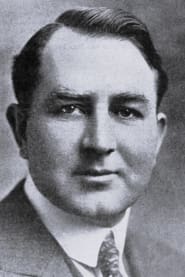
More from Frank Powell
View all →

More about this film
About the production
Release dateOctober 10, 1910
ProductionBiograph Company
Filmed inNew York City, Fort Lee, New Jersey
This was one of many short comedies produced by Biograph during their prolific period. The film was shot on location at Biograph's studio facilities and on location in the New York area. Like many films of this era, it was produced quickly and efficiently as part of Biograph's factory-like production system, turning out multiple films per week.
Themes
Class identityMistaken identitySocial mobilityRomance across class linesAppearance vs. reality
Themes & topics
Historical background
Biograph's 1910 split-reel comedy played to audiences fascinated by upstairs-downstairs romance in the Progressive Era.
Why this film matters
Such mistaken-identity shorts trained performers like Florence Lawrence in the rapid-fire gag structure of pre-feature cinema.
Making of
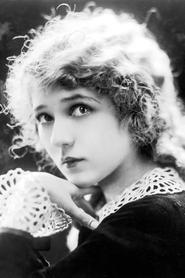
The film was made during Biograph's golden age under the supervision of D.W. Griffith, who was the studio's principal director. Although Frank Powell is credited as director, Griffith likely had significant creative input as head of production. Mary Pickford was still early in her career at Biograph, having joined the company in 1909, and was rapidly becoming one of their most reliable actresses. The production would have been completed in just a few days, typical of Biograph's efficient workflow. The cast and crew were essentially a repertory company, working together on multiple projects, which created a familiar and efficient working environment. The film was shot on location and at Biograph's indoor facilities, utilizing natural lighting and simple camera setups characteristic of the period.
What critics said
Exhibitors booked it as light filler; historians cite it as typical Griffith-era class farce.
Did you know?
- the production represents an early example of Mary Pickford's work before she became known as 'America's Sweetheart' and especially powerful figures in Hollywood.
- Director Frank Powell was married to actress Linda Arvidson at the time, who also worked frequently with D.W. Griffith at Biograph.
- Blanche Sweet, who appears in the production, would later become one of D.W. Griffith's favorite actresses and star in his controversial 1915 film 'The Birth of a Nation'.
- The film was released during the peak of Biograph's production period when the company was releasing 2-3 films per week.
- Like many films of 1910, 'All on Account of the Milk' was likely shot on 35mm film at approximately 16 frames per second.
- The mistaken identity premise was a popular trope in early cinema, allowing for simple visual gags that worked well in the silent medium.
- the production was produced before the film industry's migration to Hollywood, making it part of the East Coast film production era.
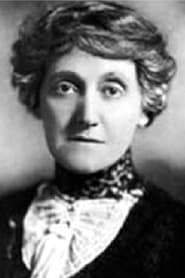
- Kate Bruce was a favorite of D.W. Griffith and appeared in over 150 films between 1908 and 1931.
- The film's title refers to a plot device involving milk delivery, which serves as the catalyst for the characters' initial meeting and misunderstanding.
Visual style
The cinematography by G.W. Bitzer (likely) employs the stationary camera techniques typical of 1910, with careful composition and framing to tell the story visually. The film uses medium shots and close-ups strategically to highlight character reactions and emotions, a technique being pioneered by Biograph directors. Natural lighting was used for outdoor scenes, while artificial lighting illuminated indoor sets. The visual style emphasizes clarity and readability, ensuring the audience could follow the mistaken identity premise without dialogue.
Innovations
While not technically groundbreaking, the film demonstrates the sophisticated editing techniques being developed by Biograph in 1910. The use of cross-cutting between different characters and locations helps build the comedy of errors. The film's narrative structure shows the evolution beyond simple single-scene films to more complex storytelling. The effective use of visual storytelling without reliance on intertitles represents an advancement in cinematic language.
Music
As a silent film, 'All on Account of the Milk' would have been accompanied by live musical performance during exhibition. The theater pianist or organist would have selected appropriate popular songs and classical pieces to match the mood of each scene. The score would have been lighter and more comedic during the mistaken identity scenes, with more romantic themes during the tender moments between the leads. No original composed score was created for the film.
Famous quotes
(Silent film - no dialogue quotes available)
Memorable scenes
- The initial meeting where the contractor mistakes the manor's daughter for the maid, setting up the entire mistaken identity premise. The scene where the daughter borrows the maid's clothes to continue her deception. The final revelation scene where both characters' true identities are exposed to their mothers' approval.
What audiences thought
Audiences in 1910 would have found the film entertaining and relatable, with its light-hearted approach to class distinctions appealing to both working-class and middle-class viewers. The comedy of mistaken identity was a popular formula that worked well in the silent medium, requiring no intertitles to understand the basic premise. Mary Pickford's growing popularity would have attracted viewers to the film. Like most Biograph productions of this era, it would have played in nickelodeons and small theaters as part of a varied program of short films.
Film connections
Influenced by
- Shakespearean comedy of errors
- French theatrical traditions
- Earlier Biograph comedies
This film influenced
- Later romantic comedies featuring mistaken identity
- Mary Pickford's later star vehicles
Film restoration
The preservation status of 'All on Account of the Milk' is unclear. Many Biograph films from this period have survived, but some remain lost. The film may exist in archives such as the Library of Congress, Museum of Modern Art, or the British Film Institute, but its current preservation status would need verification from film archives.
Where to watch
- As a rare 1910 film, viewing opportunities are extremely limited. Potential sources include: The Library of Congress's moving image collection, The Museum of Modern Art's film archives, The British Film Institute's collection, Specialized film archive screenings, Potential inclusion in early cinema collections or DVD compilations of Mary Pickford's early work.