
At Bear Track Gulch
"This western, with its simple story set in a gold"
Keys: Space play/pause · ←/→ 10s · F fullscreen · M mute · </> speed
About this film
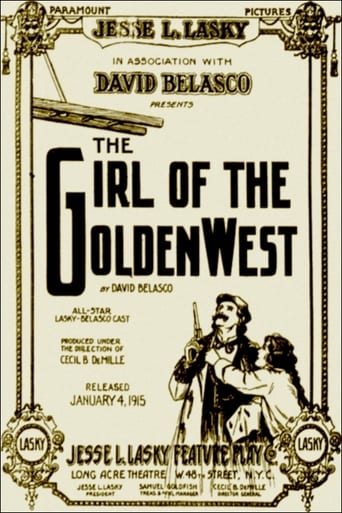
This western, with its simple story set in a gold mining camp, recycles many of the elements found in David Belasco's influential play, THE GIRL OF THE GOLDEN WEST, produced a decade earlier.
Cast & crew
More films like this
More Comedy films
View all →







More from Harold M. Shaw
View all →
More about this film
About the production
Release dateMarch 1913
ProductionEdison Manufacturing Company
Filmed inNew York/New Jersey area (likely Edison studios)
This was one of many short westerns produced by Edison Studios during the early 1910s, taking advantage of the popular western genre. The picture was likely shot on studio sets rather than on location, which was common practice for the era. The recycling of plot elements from 'The Girl of the Golden West' was typical of early cinema, which often adapted successful stage plays for the screen.
Themes
Gold rush and prospectingFrontier romanceComedy of errorsMining camp lifeWestern justice
Themes & topics
Historical background
By 1913, Edison Manufacturing Company was supplying United States theaters with titles like At Bear Track Gulch, part of the broader expansion of filmed entertainment into working-class districts and small towns.
Why this film matters
Programmers and historians revisit At Bear Track Gulch (1913) because its story—this western, with its simple story set in a gold mining camp, recycles many of the elements found in david belasco's influential play, the girl of the golden west, produced a decade earlier—illustrates popular narrative habits and production norms of the period.
Making of
The production of 'At Bear Track Gulch' took place during the transitional period when American cinema was moving from simple actualities to more complex narrative films. Director Harold M. Shaw, who was originally from England, brought a theatrical sensibility to his film work, which explains the adaptation of stage play elements. The cast were all regular players in the Edison stock company, which meant they had established chemistry from working together on numerous productions. the picture was likely shot quickly over a few days, as was typical for Edison shorts of this era, with minimal sets and props reused from other western productions.
What critics said
English-language trade reviews of At Bear Track Gulch are limited for 1913. Where notices survive, they stress pacing and photographic clarity; later criticism values the title as archival evidence of studio style.
Did you know?
- Director Harold M. Shaw was a prolific filmmaker who directed over 200 films between 1910 and 1920
- the picture was part of Edison Studios' extensive catalog of western shorts, which were extremely popular in the early 1910s
- William West, one of the stars, was a regular character actor in Edison productions and appeared in dozens of their westerns
- The influence of David Belasco's 'The Girl of the Golden West' was significant in early western cinema, with many films borrowing its plot elements
- Edison Studios was one of the earliest film production companies in America, founded by Thomas Edison
- 1913 was a pivotal year in cinema, with feature-length films beginning to emerge while shorts like this were still the norm
- the picture likely used intertitles for dialogue, as was standard practice in the silent era
- Gold mining themes were extremely popular in early westerns, reflecting America's fascination with frontier history
Visual style
The cinematography would have been typical of Edison Studios productions in 1913, using stationary cameras with basic movement techniques. the picture was likely shot in black and white on 35mm film using Edison's own equipment. Visual storytelling would have relied on wide shots to establish the mining camp setting and medium shots for character interactions, with close-ups used sparingly for dramatic emphasis. The lighting would have been natural or basic artificial lighting, reflecting the technical limitations of the period.
Music
As a silent film, 'At Bear Track Gulch' would have been accompanied by live music during theatrical exhibitions. The score would typically have been provided by a house pianist or small theater orchestra, using popular melodies of the era or classical pieces appropriate to the western setting. The music would have been cued to the on-screen action, with faster tempos for comedic moments and more dramatic music for romantic scenes.
Famous quotes
No specific recorded quotes are available from this lost film, as intertitles and dialogue from early shorts were rarely preserved in documentation
Memorable scenes
- While specific scenes are not documented due to the picture's obscurity, typical memorable moments would have included comedic gold mining sequences, romantic encounters in the mining camp setting, and mistaken identity situations common to western comedies of the era
What audiences thought
Audiences in 1913 would have viewed 'At Bear Track Gulch' as part of a varied program of short films shown at nickelodeons and early movie theaters. Western comedies were consistently popular with working-class audiences, and the familiar plot elements borrowed from 'The Girl of the Golden West' would have provided comfortable entertainment. the picture's short length and straightforward story would have made it accessible to the diverse audiences of early cinema, many of whom were recent immigrants with limited English proficiency.
Film connections
Influenced by
- The Girl of the Golden West (stage play by David Belasco)
- Popular western literature of the early 1900s
- Earlier Edison western shorts
This film influenced
- Later Edison western shorts
- Other western comedies of the 1910s
Film restoration
the picture is considered lost, as is the case with the majority of Edison Studios productions from this period. No known copies survive in film archives or private collections. Like approximately 75% of American silent films, 'At Bear Track Gulch' has likely been lost to time due to the unstable nature of early nitrate film stock and lack of preservation efforts in the early 20th century.
Where to watch
- No known viewing options exist as the picture is considered lost. Film historians may be able to access production stills or promotional materials through specialized archives such as the Museum of Modern Art's film collection or the Library of Congress's motion picture holdings.