
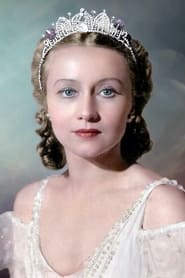

Ballerina
"A graduate of a choreographic school is looking for a new style for her part in the ballet."
Keys: Space play/pause · ←/→ 10s · F fullscreen · M mute · </> speed
About this film
Alexei, a conservatory student, falls in love with the young ballerina. A graduate of a choreographic school is looking for a new style for her part in the ballet "Sleeping Beauty".
Cast & crew
More Comedy films
View all →






More from Aleksandr Ivanovsky
View all →
More about this film
About the production
Release dateDecember 29, 1947
ProductionLenfilm Studio
Filmed inLeningrad, Soviet Union, Leningrad Conservatory, Kirov Ballet Theatre
The film was produced during the early post-war period in the Soviet Union, when the cultural industry was focused on creating uplifting entertainment. The production featured actual professional ballet dancers and musicians from Leningrad's cultural institutions, lending authenticity to the performances. The ballet sequences were choreographed by renowned ballet masters of the era, and the film utilized the grand interiors of Leningrad's historic theaters and conservatories.
Themes
Artistic innovation vs. traditionRomance and professional ambitionPost-war cultural renewalThe artistic process and creative struggleFemale empowerment through art
Themes & topics
balletconservatorySleeping Beauty balletartistic developmentromancepost-war Soviet Unionclassical musicdance educationtheatercreative inspiration
Historical background
Made in 1947, in Soviet Union, under Aleksandr Ivanovsky, Ballerina belongs to musical film filmmaking as studio systems and national cinemas competed for audiences. Russian Ballerina is a 1947 Soviet musical film directed by Aleksandr Ivanovsky.
Why this film matters
Within musical film history, Aleksandr Ivanovsky's name attaches to the work; 1947 film by Aleksandr Ivanovsky.
Making of
The production of 'Ballerina' took place during a challenging period in Soviet cinema, immediately following World War II. Director Aleksandr Ivanovsky, a veteran of Soviet filmmaking since the silent era, brought his extensive experience to create a film that would both entertain and inspire audiences recovering from the war. The casting process was particularly rigorous, as the filmmakers sought actors who could convincingly portray both the technical aspects of ballet and the emotional depth required for the romantic storyline. Many of the ballet sequences were performed by professional dancers from the Kirov Ballet, with the main actors learning basic ballet techniques for their roles. The film's production benefited from access to Leningrad's premier cultural venues, which had survived the siege during the war. The musical arrangements required close collaboration between the film's composers and conductors from the Leningrad Conservatory to ensure authentic classical music interpretation.
What critics said
Contemporary reviews of Ballerina are sparse in open sources; later catalog entries chiefly summarize plot and credits.
Did you know?
- The film was one of the first Soviet musical comedies to focus specifically on the world of classical ballet
- Director Aleksandr Ivanovsky was already in his 60s when he made this film, bringing decades of experience in Soviet cinema
- The ballet sequences featured authentic choreography from the Kirov Ballet repertoire
- The film was released during the height of Stalin's cultural policy, which emphasized accessible art for the masses
- Tatyana Piletskaya, who played the lead, was only 19 years old when the film was made
- The musical score incorporated adaptations of Tchaikovsky's 'Sleeping Beauty' ballet
- The film was shot on location at actual cultural institutions in Leningrad, including the famous Mariinsky Theatre
- It was one of the few Soviet films of the era to directly address the artistic process and creative struggle
- The production coincided with the 100th anniversary of the Mariinsky Ballet company
- The film's release came just two years after the end of World War II, reflecting the Soviet Union's cultural recovery
Visual style
The cinematography of 'Ballerina' employed advanced techniques for capturing dance movement, using wide shots to showcase full ballet sequences and close-ups to highlight the emotional expressions of the performers. The camera work emphasized the grandeur of Leningrad's historic theaters and conservatories, utilizing the architectural beauty of these locations to enhance the film's visual appeal. The lighting techniques were particularly sophisticated for the time, creating dramatic effects during the ballet performance scenes that mirrored stage lighting while adapting for the camera medium. The cinematographers used tracking shots and fluid camera movements to follow the dancers, creating a sense of dynamism that brought the ballet sequences to life on screen.
Innovations
The film achieved significant technical advances in capturing ballet on camera, developing new methods for filming dance that influenced later Soviet dance films. The production team pioneered techniques for synchronizing camera movements with dance choreography, allowing for more dynamic and engaging ballet sequences. The sound recording systems used were particularly advanced for their time, enabling high-quality capture of both orchestral music and dialogue in the challenging acoustic environments of theaters and concert halls. The film's editing techniques, especially in the ballet performance scenes, created seamless transitions between wide shots and close-ups while maintaining the rhythm and flow of the dance. These technical innovations helped establish new standards for filming performance art in Soviet cinema.
Music
The film's soundtrack prominently featured adaptations of Pyotr Ilyich Tchaikovsky's 'Sleeping Beauty' ballet score, arranged specifically for the film by Soviet composers. The musical direction emphasized both the grandeur of the classical compositions and the intimate moments of the romantic storyline. Original musical pieces were composed to accompany scenes outside the ballet performances, creating a cohesive musical narrative throughout the film. The sound recording quality was notably high for the period, particularly in capturing the nuances of orchestral performances during the ballet sequences. The film also featured performances by musicians from the Leningrad Conservatory, adding authenticity to the musical elements of the story.
Famous quotes
Art is not just technique, it's the soul speaking through movement
Every dancer must find their own voice, even when dancing to old music
Love doesn't distract from art - it gives it meaning
The stage is not just a platform, it's a world where dreams become reality
Memorable scenes
- The opening sequence showcasing the grand architecture of the Leningrad Conservatory as young musicians and dancers begin their day
- The protagonist's emotional breakthrough during her solo rehearsal of the 'Sleeping Beauty' variation
- The romantic meeting scene in the conservatory courtyard where Alexei first sees the ballerina practicing
- The climactic performance scene where the ballerina debuts her innovative interpretation of Aurora
- The final scene showing the successful performance and the couple's reunion backstage
What audiences thought
The film was well-received by Soviet audiences upon its release in late 1947, particularly in Leningrad where it was filmed and where audiences had a special appreciation for ballet culture. Moviegoers praised the beautiful ballet sequences and the romantic storyline, which provided welcome entertainment during the difficult post-war recovery period. The film's portrayal of young artists striving for excellence resonated with audiences who understood the importance of cultural rebuilding after the war. Many viewers, especially young women, found inspiration in the protagonist's dedication to her art and her pursuit of both professional and personal fulfillment. The film's success at the box office demonstrated the Soviet public's appetite for films that combined artistic sophistication with accessible entertainment.
Film connections
Influenced by
- Classical Russian ballet tradition
- Soviet socialist realism in art
- Pre-revolutionary Russian cultural heritage
- 19th-century romantic literature
- Tchaikovsky's ballet compositions
This film influenced
- The Bright Path (1940)
- The Russian Ballet (1953)
- Carmen (1954)
- The Bolshoi Ballet (1957)
Film restoration
The film has been preserved in the Russian State Film Archive (Gosfilmofond) and has undergone digital restoration as part of efforts to preserve classic Soviet cinema. Original nitrate prints have been carefully maintained, and digital copies are available through Russian film archives and specialized cinema collections.
Where to watch
- Russian State Film Archive screenings
- Specialized classic film streaming platforms
- Soviet film festivals and retrospectives
- Academic film collections and university archives
- Museum of Cinema in Moscow special screenings