By the Sun's Rays
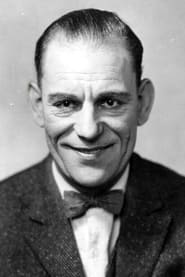
"Chaney before the mask"
Keys: Space play/pause · ←/→ 10s · F fullscreen · M mute · </> speed
About this film
Lon Chaney supports Murdock MacQuarrie as a detective probing gold-shipment robberies at a mine. The earliest surviving film featuring Lon Chaney in a major role, By the Sun's Ray's was but one of several 2-reel westerns starring the florid Murdock MacQuarrie. MacQuarrie plays a detective investigating a series of gold shipment robberies.
Cast & crew
More films like this
More Western films
View all →

More from Charles Giblyn
View all →
More about this film
About the production
Release dateNovember 1914
Box officeUnknown - box office records from this period are scarce
ProductionUniversal Film Manufacturing Company
Filmed inUniversal City, California, Various California locations
This was one of several two-reel Westerns starring Murdock MacQuarrie produced by Universal in 1914. The film was shot during the early days of Universal City when the studio was still developing its production facilities. Chaney, who would later become known as 'The Man of a Thousand Faces,' was still a relatively unknown character actor at this point in his career. The film was typical of the short-form Westerns that dominated American cinema in the early 1910s, designed to fill out theater programs alongside longer features.
Themes
Justice and law enforcementLove triangles and romantic rivalryFrontier justiceGreedy vs. honorable charactersThe moral complexity of the American West
Themes & topics
detectivegold robberylove trianglewesternmineinvestigationrivalryjusticefrontiercrimeromancebetrayal
Historical background
1914 placed By the Sun's Rays within United States cinema as Universal Film Manufacturing Company navigated wartime markets, immigration audiences, and the shift from intertitles to sound.
Why this film matters
Archivists revisit By the Sun's Rays (1914) for Charles Giblyn style, genre norms at Universal Film Manufacturing Company, and the exhibition context of Approximately 20 minutes (2-reel format) programming.
Making of
The production of 'By the Sun's Rays' took place during a pivotal moment in American cinema history, as the industry was transitioning from short films to feature-length productions. Director Charles Giblyn was a prolific filmmaker who directed dozens of shorts for Universal during this period. The casting of Lon Chaney, who was still building his reputation in Hollywood, demonstrates Universal's practice of using contract players across multiple productions. The film was shot on location in the hills surrounding Universal City, taking advantage of the natural California landscape that could double for the American West. The production would have been completed in just a few days, typical for two-reel productions of the era. The cast and crew worked long hours under primitive conditions, as the studio infrastructure was still being developed. Chaney's performance in this film helped establish his reputation for playing complex, often villainous characters that would become his trademark.
What critics said
Retrospective writing on By the Sun's Rays stresses craft by Charles Giblyn, print survival, and repertory value rather than opening-week gross alone.
Did you know?
- This is one of the earliest surviving films featuring Lon Chaney in a substantial role, predating his rise to stardom
- The film was part of Universal's popular 'Jack Murdock' detective series starring Murdock MacQuarrie
- Lon Chaney plays the villain in this film, showcasing his early talent for playing dark, tormented characters
- The film's title has sometimes been misspelled as 'By the Sun's Ray's' with an extra apostrophe
- Only a portion of the original film survives today, with some scenes lost to time
- Murdock MacQuarrie was a highly respected stage actor before transitioning to films
- The film was released during the early days of World War I, though America had not yet entered the conflict
- Universal Film Manufacturing Company was less than two years old when this film was produced
- The gold shipment robbery plot was a common trope in early Westerns, reflecting real concerns about frontier lawlessness
- Agnes Vernon, who plays the love interest, was one of Universal's most popular actresses of the period
Visual style
The cinematography of 'By the Sun's Rays' reflects the standard practices of 1914 filmmaking, with static camera positions and basic lighting techniques. The film was likely shot on 35mm black and white film using hand-cranked cameras. Outdoor scenes take advantage of natural sunlight, hence the title's reference to 'the sun's rays,' which was common practice for location shooting in this era. Interior scenes would have used basic artificial lighting, creating dramatic contrasts between light and shadow that foreshadowed the expressionistic lighting Chaney would later become famous for. The camera work is straightforward and functional, focusing on clear storytelling rather than artistic experimentation, which was typical for commercial Western productions of the period.
Innovations
While 'By the Sun's Rays' does not represent a major technical breakthrough, it demonstrates the professionalization of filmmaking that was occurring in 1914. The film shows competent editing techniques for the period, including cross-cutting between different storylines to build suspense. The production values reflect Universal's commitment to quality commercial filmmaking, with proper lighting, costumes, and location work. The film's survival, even in incomplete form, is itself an achievement, given the high rate of film loss from the silent era. The movie represents the standardization of film grammar that had developed by the mid-1910s, with clear narrative structure and visual storytelling techniques that would influence future Westerns.
Music
As a silent film, 'By the Sun's Rays' would have been accompanied by live musical performance during its original theatrical run. The score would have been provided by a theater's pianist or small orchestra, using compiled music appropriate to the action on screen. Romantic scenes would have been accompanied by sentimental melodies, while action sequences would have featured more dramatic, rhythmic music. The specific musical selections would have varied by theater and musician, as standardized film scores were not yet common practice. Modern screenings of the film typically feature newly composed scores or carefully selected period-appropriate music to recreate the authentic silent film experience.
Famous quotes
The sun reveals all truths, even those hidden in the darkest corners of the human heart
Gold makes men blind to everything but their own greed
In the West, justice is swift and certain
Love and loyalty are tested when gold is at stake
A detective's work is never done, especially when hearts are involved
Memorable scenes
- The tense confrontation between Chaney's character and MacQuarrie's detective over Agnes Vernon's affections
- The dramatic gold shipment robbery sequence, showcasing early action filmmaking techniques
- The climactic revelation of the true culprit, bringing the investigation to its resolution
- Romantic scenes between MacQuarrie and Vernon, providing emotional depth to the Western narrative
What audiences thought
Audiences in 1914 would have viewed 'By the Sun's Rays' as part of a typical theater program, likely shown alongside a feature film and other short subjects. The Western genre was extremely popular during this period, and the combination of action, romance, and mystery would have appealed to broad audiences. The film's 20-minute runtime was standard for the format, providing satisfying entertainment without overstaying its welcome. Modern audiences who have seen the surviving footage often express fascination with seeing a young Lon Chaney before his rise to stardom, as well as interest in the film's documentation of early filmmaking techniques and storytelling conventions.
Film connections
Influenced by
- Popular detective fiction of the early 1900s
- Classic Western tropes from dime novels
- Earlier Universal Western productions
- Stage melodrama conventions
- Contemporary crime stories in popular media
This film influenced
- Later Universal Western productions
- Subsequent detective-Western hybrids
- Early films featuring Lon Chaney in similar roles
- Other two-reel Westerns of the mid-1910s
Film restoration
The film survives in an incomplete form, with portions preserved by film archives. While not entirely lost, some scenes are missing, which is common for films of this era. The surviving footage has been preserved by major film archives and is occasionally screened at silent film festivals and special events. The incomplete nature of the surviving print means that some plot details may be unclear to modern viewers. The film represents one of the lucky few from 1914 to have any surviving material at all, given the high rate of film loss from the silent era.
Where to watch
- The film is occasionally screened at silent film festivals and special cinema events
- Some archives may provide access for research purposes
- Select film preservation organizations occasionally include it in retrospectives
- The film may be available through specialized film archives and libraries
- Occasionally appears in collections of early Lon Chaney works or Universal Westerns