
No Poster
Chandidas
"The story revolves around the 15th century poet-saint Chandidas who acts out against the"
Keys: Space play/pause · ←/→ 10s · F fullscreen · M mute · </> speed
About this film
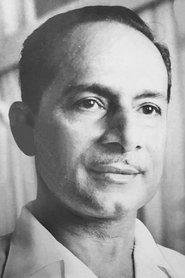
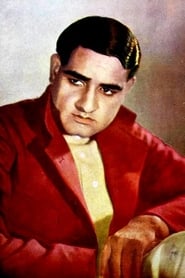
's credit roll states that the film is "Based on the life problems of the poet Chandidas –A problem India has not been able to solve", which involved the caste schism in India. The story revolves around the 15th-century poet-saint Chandidas, who stands up against the deep-rooted bigotry against caste, untouchability, and the hypocrisy of society, and a washerwoman with whom he falls in love. This 1934 Hindi version starred K. Saigal, Uma Sashi, Pahari Sanyal, Nawab and H.
Cast & crew
More films like this
More Drama films
View all →







More from Nitin Bose
View all →
More about this film
About the production
Release date1934
Box officeCommercially successful, particularly in Bengal and other regions where it was distributed
ProductionNew Theatres
Filmed inCalcutta (now Kolkata), India
Filmed during the early transition to sound in Indian cinema, this production faced technical challenges common to the period. The film was shot in Bengali but also had Hindi versions created to reach broader audiences. Director Nitin Bose experimented with mobile camera movements, which was innovative for the time. The production took advantage of New Theatres' state-of-the-art facilities in Tollygunge, Calcutta.
Themes
Caste discrimination and social hierarchyLove transcending social barriersReligious hypocrisy vs. true spiritualitySocial reform and progressIndividual conscience vs. social conformity
Themes & topics
caste systemforbidden lovesocial reformpoet-saintreligious hypocrisyuntouchabilitymedieval BengalBrahminismwasher womansocial hierarchylove storytragedyspiritual awakening
Historical background
Chandidas (1934) circulated in studio-era and wartime programming. The film's credit roll states that the film is "Based on the life problems of the poet Chandidas –A problem India has not been able to solve", which involved the caste schism in India. Contemporary trade papers and later preservation notes document its place among theatrical and archive releases.
Why this film matters
Chandidas remains accessible to researchers and viewers as a screen title in museum, archive, and streaming collections. The film was produced by New Theatres, Calcutta, and became the studio's first major success.
Making of
The production of Chandidas was a significant undertaking for New Theatres, representing the studio's commitment to socially relevant cinema. Director Nitin Bose, who came from a family of filmmakers, brought his technical expertise to the project, experimenting with lighting techniques and camera movements that were ahead of their time. The casting of K.L. Saigal, though primarily a Hindi film actor, was a strategic decision to give the film broader appeal. Saigal had to learn Bengali phonetically for his role. The music direction by R.C. Boral was groundbreaking, as he successfully blended classical Bengali folk traditions with contemporary film music. The film's lengthy production schedule was partly due to the technical challenges of early sound recording, which required precise synchronization and often multiple takes. The intimate scenes between Chandidas and Rami were considered bold for their time and required careful handling to pass censorship while maintaining the film's social message.
What critics said
Day-one reviews for Chandidas are sparse in digitized press archives; later criticism treats it as a reference point for 1934 cinema programming and preservation.
Did you know?
- This was one of the earliest Indian films to tackle the sensitive subject of caste discrimination and untouchability
- K.L. Saigal, though primarily known as a Hindi film star, delivered a powerful performance in this Bengali film
- The film's music became extremely popular, with several songs becoming classics of Bengali cinema
- Director Nitin Bose was a pioneer in Indian cinema, known for his technical innovations
- The historical Chandidas was a real 15th-century poet-saint whose works influenced the Bhakti movement
- The film was simultaneously shot in both Bengali and Hindi versions to maximize its reach
- New Theatres, the production company, was considered the MGM of Indian cinema in the 1930s
- The film's success helped establish the social reform genre in Indian cinema
- The character of Rami was played by Umasashi, one of the earliest prominent actresses in Bengali cinema
- The film's release coincided with growing social reform movements across India
Visual style
The cinematography of Chandidas was notable for its time, featuring innovative techniques that enhanced the film's emotional impact. Nitin Bose, who had a background in photography, employed mobile camera movements that were relatively rare in Indian cinema of the 1930s. The film used dramatic lighting to create mood and emphasize the emotional states of the characters, particularly in the intimate scenes between Chandidas and Rami. The visual composition carefully contrasted the opulent settings of the temple and upper-class spaces with the humble environment of the washer community, visually reinforcing the social divide. The cinematography also made effective use of close-ups to capture the nuanced performances of the actors, a technique that was still being perfected in early sound cinema.
Innovations
Chandidas showcased several technical achievements for its time, particularly in the realm of sound recording and synchronization. The film was produced during the early years of sound cinema in India, and New Theatres was at the forefront of this technical revolution. The production employed advanced sound recording equipment that allowed for clearer dialogue and music reproduction than many contemporary films. The film also featured innovative editing techniques that helped maintain narrative flow despite the technical limitations of early sound equipment. The use of dubbing techniques for creating multiple language versions was particularly noteworthy. The film's lighting techniques, which enhanced the dramatic impact of key scenes, were considered advanced for Indian cinema of the 1930s.
Music
The music of Chandidas was composed by R.C. Boral, one of the pioneers of film music in India. The soundtrack featured a blend of traditional Bengali folk music and classical elements, creating a distinctive sound that enhanced the film's emotional and narrative impact. K.L. Saigal's renditions of the songs became particularly famous, with tracks like 'Dukher din' and 'Prem ki maya' becoming timeless classics. The music was not merely decorative but integral to the storytelling, with songs often advancing the plot or revealing character motivations. The sound design was innovative for its time, with careful attention to ambient sounds and the use of silence to create dramatic effect. The soundtrack was recorded using the latest technology available at New Theatres, ensuring high audio quality for the period.
Famous quotes
Love knows no caste, no creed, no boundaries - it only knows the heart
When society's laws conflict with humanity's laws, a true poet must choose humanity
The purity of love is greater than the purity of birth
In the eyes of God, all souls are equal - only man creates divisions
A poet's duty is to speak truth to power, even when power refuses to listen
Memorable scenes
- The first meeting between Chandidas and Rami by the riverbank, where their eyes meet across social divides
- The temple scene where Chandidas questions the Brahmins about their hypocrisy
- The emotional confrontation when the villagers discover their forbidden relationship
- The final scene where Chandidas chooses exile over renouncing his love and principles
- The musical sequences where Chandidas's poetry becomes a voice for social reform
What audiences thought
Chandidas was received with enthusiasm by audiences across India, particularly in Bengal where it resonated with local cultural sensibilities. The film's emotional core and social message struck a chord with viewers, many of whom were grappling with similar social issues in their own lives. The music was especially popular, with songs from the film becoming widely sung and remembered. The chemistry between the lead actors was appreciated by audiences, and the film's tragic elements evoked strong emotional responses. The film's success at the box office demonstrated that audiences were ready for socially relevant content, challenging the prevailing notion that entertainment and social commentary couldn't coexist. The film ran for extended periods in theaters and was later re-released in some markets due to popular demand.
Film connections
Influenced by
- Bhakti movement literature
- Traditional Bengali folk tales
- Works of Bankim Chandra Chattopadhyay
- Rabindranath Tagore's social reform writings
- Indian religious texts and puranas
- Western social realist cinema of the 1930s
This film influenced
- Later Bengali social reform films
- Devdas (1935 and later versions)
- Sujata (1959)
- Bandini (1963)
- Ankur (1974)
- Numerous Indian films addressing caste and social issues
Film restoration
Chandidas is considered partially preserved, with some reels surviving in the National Film Archive of India. However, like many films from this era, complete copies are rare, and some portions may be lost or damaged. Restoration efforts have been undertaken by film archives, but the film remains difficult to access in its complete form. Some versions exist in private collections and film archives, but quality varies significantly.
Where to watch
- National Film Archive of India (for research purposes)
- Film heritage festivals and retrospectives
- Some versions may be available on specialized streaming platforms for classic Indian cinema
- Academic institutions with film studies programs
- Occasionally broadcast on classic film television channels