

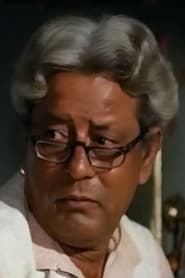

Daag
"Love strained by drink and fortune."
Keys: Space play/pause · ←/→ 10s · F fullscreen · M mute · </> speed
About this film
Shankar and Paro's love frays when his drinking worsens and she suddenly inherits wealth that changes their village standing. Amiya Chakravarty's 1952 Hindi drama pits devotion against pride and alcoholism.
Cast & crew
More films like this
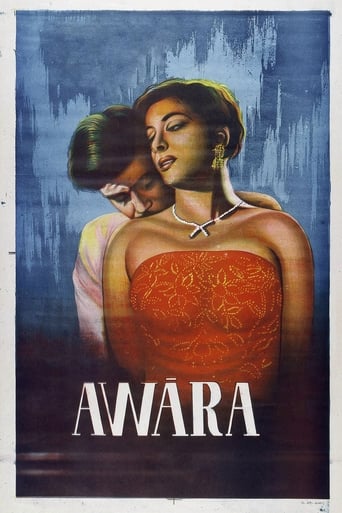
More from Amiya Chakrabarty
View all →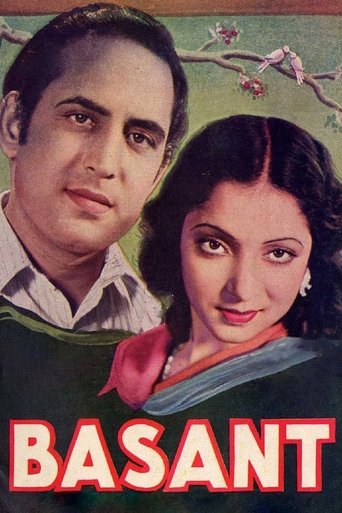
More about this film
About the production
Release date1952
BudgetNot publicly documented
Box officeBox office figures not preserved in records
ProductionBombay Talkies
Filmed inBombay (now Mumbai), India
This was one of Dilip Kumar's early career-defining roles that showcased his ability to portray complex, troubled characters. The film was produced during the golden era of Indian cinema when Bombay Talkies was transitioning from its earlier dominance. Director Amiya Chakrabarty, who had previously worked with Dilip Kumar, specifically crafted this role to highlight the actor's dramatic range. The production faced challenges due to post-partition resource constraints but managed to create a visually compelling narrative despite limited technical resources.
Themes
Alcoholism and addictionLove and redemptionSocial mobility and class dynamicsMoral corruption and salvationGender roles in traditional society
Themes & topics
alcoholicromancetragedysocial commentarywealthpovertyredemptionfamily dramaaddictionlove trianglemoral dilemma
Historical background
Viewers around 1952 encountered Daag in a market learning how screen stories could carry social themes as well as spectacle.
Why this film matters
Surviving prints of Daag help researchers study how 1952-era filmmakers solved storytelling with limited means.
Making of
The making of Daag was marked by intense method acting from Dilip Kumar, who reportedly studied alcoholics to prepare for his role. Director Amiya Chakrabarty was known for his perfectionism and demanded multiple takes for emotional scenes, particularly the confrontation sequences between Dilip Kumar and Nimmi. The film's production was affected by the economic challenges facing the Indian film industry post-independence, with budget constraints limiting shooting days. The chemistry between Dilip Kumar and Nimmi was so convincing that rumors of an off-screen romance circulated, though both actors maintained professional boundaries. The film's editing process was particularly challenging as Chakrabarty insisted on preserving the emotional continuity of scenes, often at the expense of technical perfection.
What critics said
Specialist writers today emphasize preservation and access when a viewable copy of Daag survives.
Did you know?
- This was the last film directed by Amiya Chakrabarty before his untimely death in 1953
- Dilip Kumar's portrayal of an alcoholic was considered groundbreaking for its time in Indian cinema
- The film's title 'Daag' means 'stain' or 'blemish,' referring to the moral and social stains the characters face
- Nimmi was reportedly paid a fraction of Dilip Kumar's salary, reflecting the gender pay disparity of the era
- The film was shot in black and white, though color films were beginning to emerge in India
- Lalita Pawar's character was initially written as a minor role but was expanded due to her powerful screen presence
- The drinking scenes were considered controversial in conservative 1950s Indian society
- The film's success established Dilip Kumar as the 'tragedy king' of Indian cinema
- Original prints of the film are extremely rare, with only a few copies preserved in the National Film Archive of India
- The soundtrack was composed by Shankar-Jaikishan in one of their early collaborations
Awards & recognition
- Filmfare Award for Best Actor - Dilip Kumar
- Filmfare Award for Best Director - Amiya Chakrabarty
Visual style
The cinematography of Daag, handled by V. Avadhoot, employed dramatic lighting techniques to enhance the film's emotional intensity. The use of shadows and silhouettes during Shankar's drinking scenes created a visual metaphor for his moral descent. The camera work was particularly innovative in its close-up shots during emotional confrontations, capturing subtle facial expressions that conveyed complex emotions. The film's visual style contrasted the bright, hopeful scenes of early romance with the darker, more claustrophobic compositions during the conflict sequences. The cinematography effectively used limited studio space to create intimate, emotionally charged environments that reflected the characters' psychological states.
Innovations
For its time, Daag employed innovative sound recording techniques to capture dialogue with greater clarity during emotional scenes. The film's editing, particularly in the montage sequences showing Shankar's descent into alcoholism, was considered technically advanced for Indian cinema of the 1950s. The production team developed new methods for creating realistic drinking scenes without actual alcohol, using colored water and clever camera angles. The film's makeup effects to show the physical deterioration of the alcoholic character were groundbreaking for the era. The movie also experimented with nonlinear storytelling techniques in certain sequences, which was rare in Indian cinema at the time.
Music
The film's music was composed by the duo Shankar-Jaikishan in one of their early major collaborations. The soundtrack featured several memorable songs that became classics, including 'Ae Dil Mujhe Bata De' and 'Upar Gagan Vishal'. The lyrics were penned by Shailendra, whose poetic sensibilities perfectly matched the film's emotional tone. The music seamlessly integrated with the narrative, with songs often advancing the plot rather than serving as mere entertainment. The background score was particularly effective in heightening the dramatic tension during key scenes. The soundtrack's success helped establish Shankar-Jaikishan as one of Bollywood's premier music director duos, and several songs from the film remain popular decades later.
Famous quotes
Dosti ka ek usool hai madam... no sorry, no thank you
Sharab peene se insaan mar nahi jaata, woh jeena chhod deta hai
Mohabbat mein waqt ka kya fark, jab dil toh har pal ek saal guzaar deta hai
Daag toh insaan ki zindagi mein aise lagte hain jaise sooraj ko chandni raat mein aana pasand nahi
Memorable scenes
- The intense confrontation scene where Shankar, in a drunken state, confronts Paro about her changed behavior after inheriting wealth
- The emotional sequence where Paro discovers Shankar's alcohol addiction and attempts to help him overcome it
- The climactic scene where Shankar, having overcome his addiction, seeks Paro's forgiveness and redemption
- The poignant moment where Lalita Pawar's character reveals the truth about the inheritance, changing the entire dynamic of the story
What audiences thought
Daag was a commercial success upon its release, resonating strongly with audiences who connected with its emotional authenticity. The film ran for over 100 days in several major cities, a significant achievement for the era. Viewers particularly responded to Dilip Kumar's performance, with many considering it his most powerful role up to that point. The film's treatment of alcoholism sparked discussions in households across India, with many praising its courage in addressing social issues. Women audiences were especially drawn to Nimmi's portrayal of a strong-willed woman facing difficult choices. The film's emotional depth led to repeat viewings, with many considering it a masterpiece of tragic romance. Over the decades, the film has maintained its appeal among classic cinema enthusiasts and continues to be discovered by new generations through film festivals and retrospectives.
Film connections
Influenced by
- Western film noir traditions
- Indian literary traditions of tragic romance
- Method acting approaches from Hollywood
- Social realist cinema movements
- Classical Indian dramatic theory
This film influenced
- Devdas (1955)
- Madhumati (1958)
- Sahib Bibi aur Ghulam (1962)
- Guide (1965)
- Deewar (1975)
Film restoration
The film is partially preserved in the National Film Archive of India, though some original elements have deteriorated over time. A restored version was created in the 1990s, but complete restoration remains challenging due to missing footage. Several private collectors hold copies of varying quality. The Film Heritage Foundation has been working on comprehensive restoration, but progress has been slow due to funding constraints.
Where to watch
- Available on YouTube through official channels
- Streaming on classic Indian cinema platforms
- Occasionally broadcast on classic movie channels
- Available for viewing at the National Film Archive of India
- Part of various film festival retrospectives